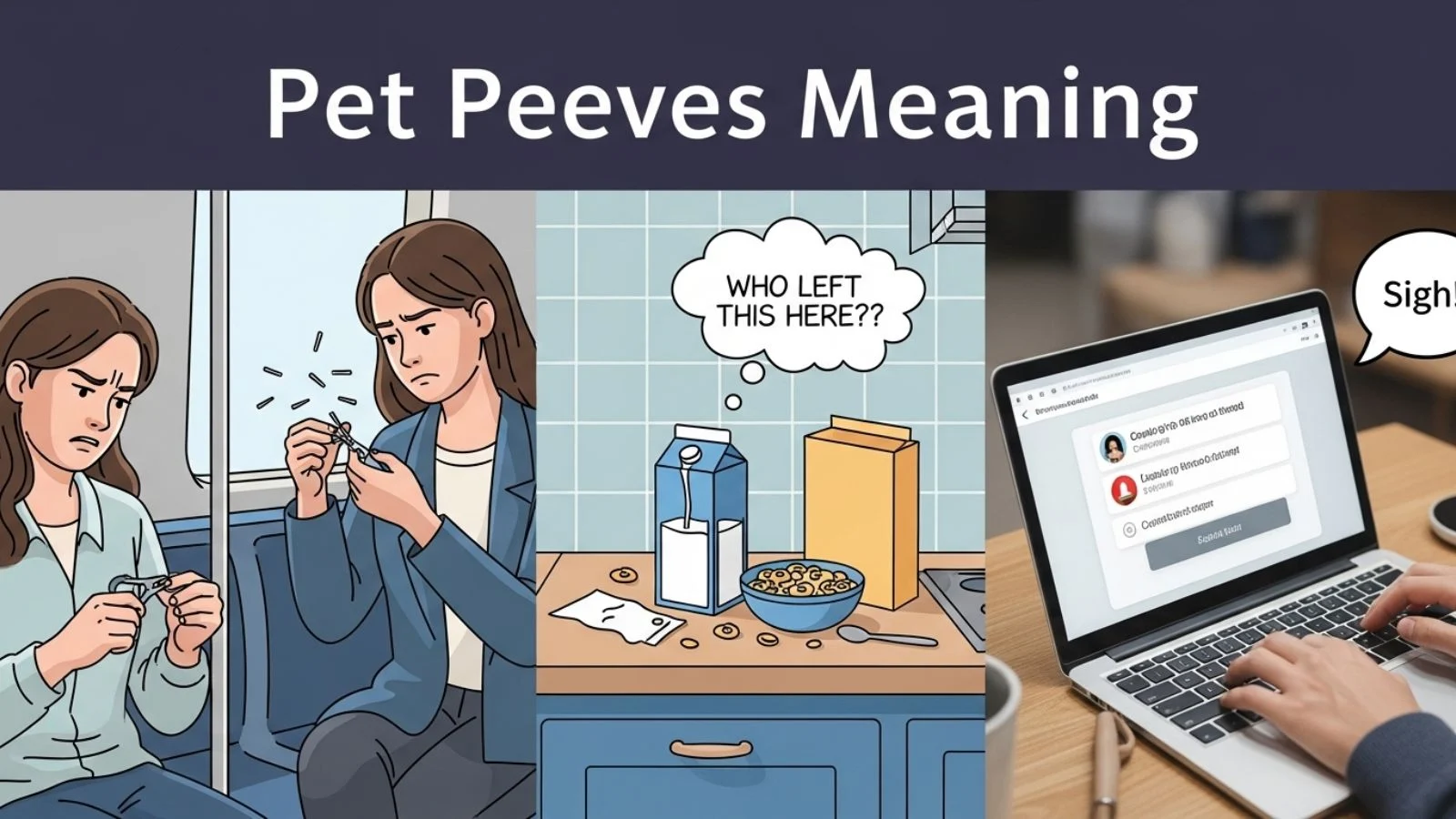
The phrase pet peeves is common in daily English. People use it in school, at work, and online. But what does it really mean?
In this complete guide, you will learn:
- The clear and simple meaning
- The origin and history
- Real-life examples with short dialogues
- Personality traits linked to pet peeves
- Modern 2026 examples
- Common mistakes
- FAQs people often ask
This article uses simple English so everyone can understand.
What Does “Pet Peeves” Mean?
A pet peeve is something small that annoys or irritates a person a lot.
It is not a big problem.
It is not something serious.
It is just a small thing that bothers someone again and again.
Simple Definition
A pet peeve is a small habit, action, or behavior that makes you feel annoyed.
Easy Example
If someone chews food loudly and it makes you angry, loud chewing may be your pet peeve.
It is personal.
Other people may not feel annoyed by it.
Why Is It Called “Pet Peeve”?
The phrase has two words:
1. Pet
In this phrase, pet means something special or personal.
It does not mean an animal here.
For example:
- Pet project = a special project you care about
- Pet topic = a topic you often talk about
So a pet peeve is a personal annoyance.
2. Peeve
The word peeve means to annoy or irritate someone.
It became popular in the early 1900s in American English.
Origin and History
The phrase pet peeve first appeared in the early 20th century.
In 1919, a comic strip called The Little Pet Peeve helped make the phrase popular in the United States.
Over time, the phrase became common in daily conversation.
Today, in 2026, it is widely used in:
- Social media posts
- Job interviews
- Podcasts
- School discussions
- Online surveys
Is “Pet Peeves” Singular or Plural?
- Pet peeve = one annoyance
- Pet peeves = more than one annoyance
Examples
- “One of my pet peeves is loud music.”
- “I have many pet peeves.”
Common Real-Life Examples of Pet Peeves
Below is a table of common pet peeves and why they annoy people.
| Pet Peeve | Why It Annoys People |
|---|---|
| Loud chewing | The sound feels disturbing and distracting. |
| Being late | It feels disrespectful and careless. |
| Not replying to messages | It feels like you are being ignored. |
| Interrupting | It feels rude and unfair. |
| Leaving lights on | It wastes electricity and money. |
| Slow internet | It delays work and causes stress. |
| Typing loudly | The sound can break concentration. |
Each example is a small issue. But for some people, it causes strong irritation.
Short Dialogues with Explanation
Here are simple conversations to help you understand better.
Example 1: Loud Chewing
A: “Why are you upset?”
B: “Loud chewing is my pet peeve.”
Explanation: Person B feels annoyed by the sound of chewing.
Example 2: Being Late
A: “Sorry I’m late again.”
B: “You know that’s my biggest pet peeve.”
Explanation: Person B dislikes when people do not come on time.
Example 3: Not Using Turn Signals
A: “Why are you complaining about traffic?”
B: “Drivers who don’t use signals are my pet peeve.”
Explanation: The behavior feels careless and unsafe.
Example 4: Messy Workspace
A: “Why do you keep cleaning your desk?”
B: “A messy desk is my pet peeve.”
Explanation: The person feels uncomfortable in messy spaces.
Are Pet Peeves the Same for Everyone?
No.
Pet peeves are personal.
What annoys one person may not bother another person.
For example:
- Some people hate background noise.
- Others can work easily in noisy places.
This shows pet peeves depend on personality.
Personality Traits and Pet Peeves
Your pet peeves often connect to your personality.
1. Organized People
They dislike:
- Messy rooms
- Late arrivals
- Missed deadlines
Why?
They value order and planning.
2. Sensitive People
They dislike:
- Harsh tone
- Interruptions
- Being ignored
Why?
They value respect and emotions.
3. Detail-Oriented People
They dislike:
- Grammar mistakes
- Wrong information
- Poor formatting
Why?
They care about accuracy.
4. Introverts
They dislike:
- Loud talking
- Unexpected visits
- Too many phone calls
Why?
They prefer calm and quiet.
5. Extroverts
They may dislike:
- Very quiet people
- One-word replies
- No eye contact
Why?
They enjoy interaction and energy.
Pet Peeves in Modern Life (Updated for 2026)
In 2026, technology has created new pet peeves.
Social Media Pet Peeves
- Posting fake news
- Overusing filters
- Long voice notes
- Not crediting original creators
Explanation: People feel annoyed when content is dishonest or too long.
Workplace Pet Peeves (Remote Work)
- Not muting the microphone
- Camera always off
- Late email replies
- Last-minute meeting invites
Explanation: These habits waste time and reduce professionalism.
School and College Pet Peeves
- Group members not doing work
- Copying homework
- Teachers changing deadlines
Explanation: It feels unfair and stressful.
Online Shopping Pet Peeves
- Hidden delivery charges
- Fake reviews
- Slow refunds
Explanation: These create trust problems.
Pet Peeves vs. Serious Problems
A pet peeve is small.
A serious problem is bigger.
Example Comparison
| Situation | Pet Peeve or Serious Problem? |
|---|---|
| Loud chewing | Pet peeve |
| Cheating in exam | Serious problem |
| Forgetting to say thank you | Pet peeve |
| Physical bullying | Serious problem |
A pet peeve causes irritation.
A serious problem causes harm.
Common Mistakes About “Pet Peeves”
Many learners make small mistakes.
Mistake 1: Thinking It Means Anger
Wrong: Pet peeve means you hate someone deeply.
Correct: It means small annoyance, not deep hatred.
Mistake 2: Using It for Big Issues
Wrong: “War is my pet peeve.”
Correct: Pet peeves are small daily annoyances.
Mistake 3: Wrong Grammar
Wrong: “My pet peeves is loud music.”
Correct: “My pet peeve is loud music.”
Remember:
- One = peeve
- Many = peeves
How to Talk About Your Pet Peeves Politely
It is okay to have pet peeves.
But it is important to speak kindly.
Polite Ways to Say It
- “It slightly bothers me when…”
- “I prefer when people…”
- “Can we avoid…”
Example:
Instead of:
“You are so annoying when you chew loudly.”
Say:
“I feel distracted by loud chewing.”
This keeps the relationship healthy.
Why Do People Have Pet Peeves?
There are many reasons.
1. Personal Experience
Maybe you grew up in a strict home.
Now you dislike mess.
2. Habits
If you are used to silence, noise feels disturbing.
3. Values
If you value respect, interruptions feel rude.
4. Stress
When you are stressed, small things annoy you more.
Are Pet Peeves Normal?
Yes.
Everyone has them.
They are part of human behavior.
But if small things make you extremely angry all the time, it may show stress or anxiety.
In that case, relaxation or talking to someone can help.
Fun Activity: Discover Your Pet Peeves
Ask yourself:
- Do I dislike noise?
- Do I hate waiting?
- Do I get upset about grammar mistakes?
- Do I feel annoyed when someone is late?
Write down your answers.
You may discover patterns about your personality.
Pet Peeves in Job Interviews
Interviewers sometimes ask:
“What are your pet peeves?”
They want to know:
- How you handle small problems
- Whether you are flexible
- If you complain too much
Good Example Answer
“One of my pet peeves is missed deadlines. I solve it by planning early and communicating clearly.”
This shows maturity.
Cultural Differences in Pet Peeves
Different cultures have different norms.
In some countries:
- Being late is normal.
- Speaking loudly is common.
In others:
- Time is strict.
- Quiet behavior is valued.
So what is a pet peeve in one place may be normal in another.
Synonyms of Pet Peeve
Here are simple similar words:
- Annoyance
- Irritation
- Nuisance
- Bother
- Complaint
But remember:
Pet peeve is more personal and emotional.
Can Pet Peeves Change?
Yes.
As you grow, your pet peeves may change.
For example:
- As a child, you may hate vegetables.
- As an adult, you may dislike messy emails.
Life experience changes reactions.
FAQs About Pet Peeves
1. What is the simple meaning of pet peeves?
A pet peeve is a small thing that annoys someone a lot.
2. Is a pet peeve a serious problem?
No. It is usually a small daily irritation.
3. Can everyone have pet peeves?
Yes. Almost everyone has at least one.
4. Is it rude to talk about pet peeves?
No, but you should speak politely and respectfully.
5. Why do small things annoy me so much?
Stress, habits, or personality traits can make small things feel bigger.
6. What is the difference between hate and pet peeve?
Hate is strong and serious.
A pet peeve is mild and personal.
7. Can pet peeves affect relationships?
Yes, if not discussed calmly. Communication helps reduce conflict.
Conclusion
The phrase pet peeves means small personal annoyances that bother someone again and again. It is not about hate or serious problems. It is about daily habits that feel irritating. The phrase began in the early 1900s and is still widely used in 2026, especially in social media, schools, and workplaces. Everyone has pet peeves, and they often connect to personality and values. Understanding your pet peeves can help you grow, improve communication, and build stronger relationships. If you found this guide helpful, explore more simple English explanations to expand your vocabulary with confidence.
Discover More Post
Tit for Tat Meaning: Simple Definition, Origin, Examples, and Modern Use (2026 Guide)
TDY Meaning in Text – Full Guide to What “TDY” Means in 2026
Vosotros Meaning: Simple Definition, Usage, Examples, and Complete Beginner Guide