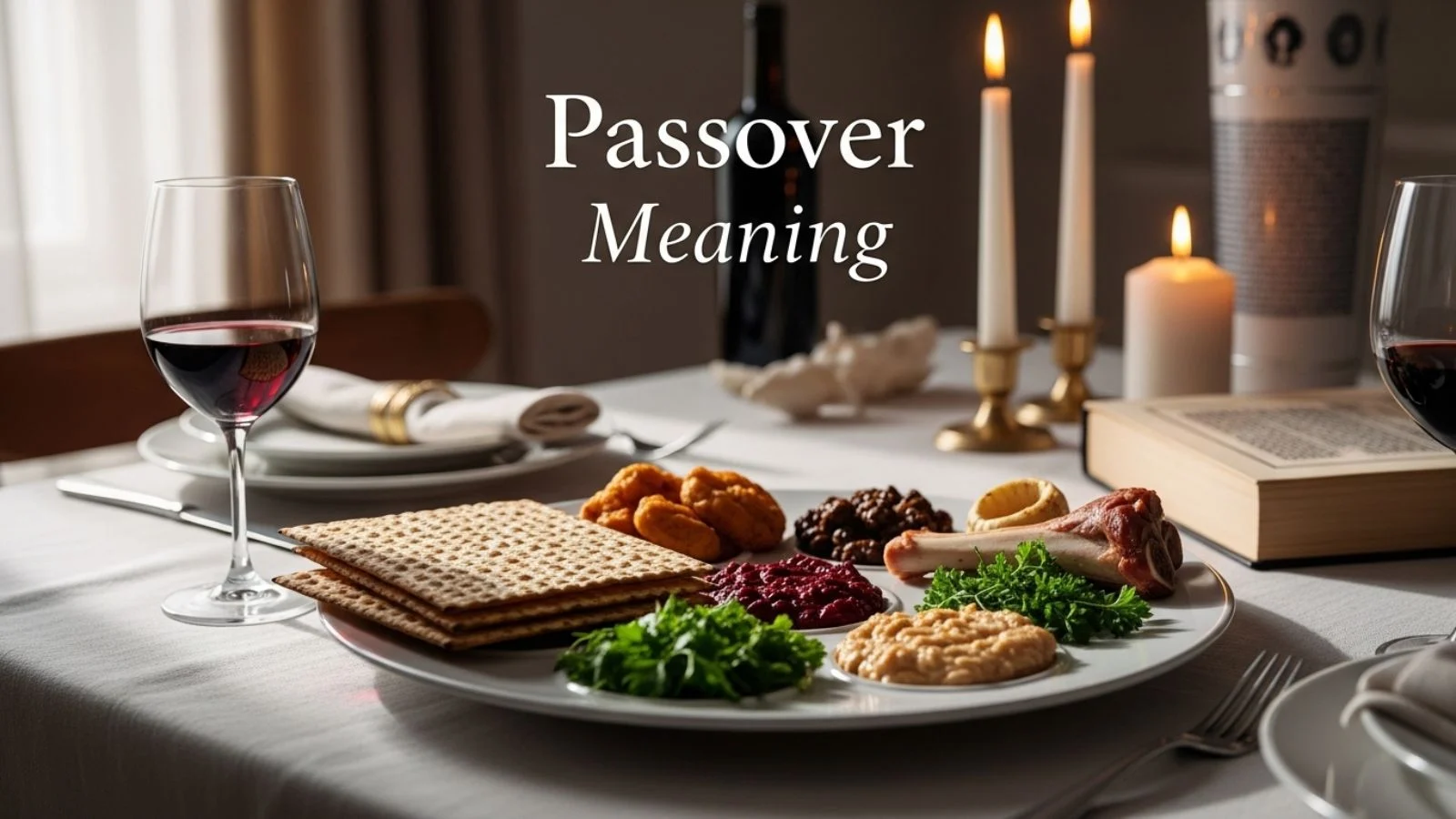
What Is the Meaning of Passover?
Passover is a major Jewish holiday. It remembers the time when the Jewish people were freed from slavery in Egypt.
In simple words, Passover means freedom.
The word “Passover” comes from a story in the Bible. In that story, God “passed over” the homes of the Israelites during the last plague in Egypt. Their homes were marked, so they were saved.
So, the Passover meaning includes:
- Freedom from slavery
- God’s protection
- Hope and new beginnings
- Faith and courage
Passover is called Pesach in Hebrew. It is one of the most important festivals in Judaism.
Simple Definition of Passover
Here is a clear and easy definition:
Passover is a Jewish holiday that celebrates the freedom of the Israelites from slavery in ancient Egypt.
It lasts for seven or eight days, depending on where it is celebrated.
During Passover, families:
- Eat special foods
- Tell the story of freedom
- Gather for a special meal called the Seder
- Avoid eating bread made with yeast
The Origin and History of Passover
To understand Passover meaning fully, we must look at its history.
The Story of Slavery in Egypt
Thousands of years ago, the Israelites lived in Egypt. Over time, they became slaves.
They worked very hard. Life was painful and unfair.
God chose a leader named Moses to free them.
Moses asked the Egyptian king, Pharaoh, to let the people go. Pharaoh refused.
The Ten Plagues
God sent ten plagues to Egypt. These were terrible events meant to convince Pharaoh.
The last plague was the most serious. The firstborn sons in Egypt would die.
But God told the Israelites to:
- Put lamb’s blood on their doorposts
- Stay inside their homes
When the angel of death came, it passed over those marked homes.
That is where the name Passover comes from.
After this plague, Pharaoh finally let the Israelites leave Egypt.
The Exodus
The escape from Egypt is called the Exodus.
The Israelites left in a hurry. They did not have time to let their bread rise. So they ate flat bread.
That is why Jewish people eat matzah, which is unleavened bread, during Passover.
Why Is Passover Important?
Passover is not just about history. It teaches strong life lessons.
Here is why it matters:
- It celebrates freedom
- It reminds people to fight against injustice
- It teaches gratitude
- It strengthens family bonds
- It builds faith
The Passover meaning is about remembering the past and building a better future.
When Is Passover Celebrated?
Passover begins on the 15th day of the Hebrew month of Nisan.
It usually falls in:
- March
- Or April
The exact date changes every year because the Jewish calendar is different from the regular calendar.
What Happens During Passover?
The Seder Meal
The first night (or first two nights outside Israel), families gather for a special meal called the Seder.
Seder means “order” in Hebrew. The meal follows a special order.
During the Seder:
- The Exodus story is told
- Special foods are eaten
- Songs are sung
- Questions are asked
This keeps the story alive for each new generation.
The Meaning of Passover Foods
Each food on the Seder plate has a meaning.
Here is a simple table:
| Food | Name | Meaning |
|---|---|---|
| Unleavened bread | Matzah | Reminds people they left quickly |
| Bitter herbs | Maror | Reminds people of the pain of slavery |
| Sweet paste | Charoset | Looks like bricks used by slaves |
| Roasted bone | Zeroa | Symbol of sacrifice |
| Egg | Beitzah | New life and hope |
| Salt water | — | Tears of slaves |
Each food tells part of the story.
Example:
If a child asks, “Why do we eat bitter herbs?”
The answer: “They remind us that slavery was painful.”
This makes learning simple and meaningful.
Real-Life Example of Passover Meaning
Example 1: Family Conversation
Child: “Why do we eat this flat bread?”
Parent: “Because our people had to leave Egypt fast. The bread did not rise.”
Explanation: This shows how Passover teaches history through food.
Example 2: Modern Classroom
Teacher: “Passover is about freedom. What does freedom mean to you?”
Student: “It means being safe and able to choose.”
Explanation: This connects ancient history to modern life.
Personality Traits Connected to Passover
Passover encourages strong character traits.
People who value Passover often show:
- Gratitude – Thankful for freedom
- Faith – Trust in God
- Courage – Standing up against wrong
- Family values – Spending time together
- Compassion – Caring about others who suffer
Passover meaning is not just a story. It shapes behavior.
Common Misconceptions About Passover
Many people misunderstand Passover.
Here are some common mistakes:
1. Passover Is the Same as Easter
This is not correct.
- Passover is a Jewish holiday.
- Easter is a Christian holiday.
They sometimes happen around the same time, but they are different.
2. Passover Is Only About Food
Food is important, but the main meaning is freedom and faith.
3. Only Religious Jews Celebrate It
Many Jewish families celebrate Passover culturally, even if they are not very religious.
Modern Relevance of Passover in 2026
In 2026, Passover is still very meaningful.
Social Justice
Many people connect Passover with:
- Fighting racism
- Helping refugees
- Supporting human rights
The message of freedom is still powerful today.
Digital Seders
Since the COVID-19 pandemic years, many families learned to use:
- Video calls
- Online Haggadahs (Passover prayer books)
Even in 2026, some families connect online if they live far apart.
Interfaith Families
Many modern families include people from different religions.
Passover becomes a time for:
- Learning
- Respect
- Cultural sharing
The Haggadah and Its Role
During the Seder, families read from a book called the Haggadah.
The Haggadah:
- Tells the Exodus story
- Includes prayers
- Guides the order of the meal
Each year, new versions are created to include modern themes like equality and freedom for all.
The Deeper Spiritual Meaning of Passover
Beyond history, Passover has a spiritual message.
It teaches:
- Everyone can leave their “personal Egypt”
- Slavery can be physical or emotional
- Growth comes from struggle
For example:
If someone feels stuck in a bad job, they may say,
“I need my own Exodus.”
Explanation: They compare personal struggle to the ancient story.
Key Symbols of Passover
Here are the main symbols and what they mean:
- Matzah – Simplicity and humility
- Wine (four cups) – Joy and celebration
- Reclining while eating – Sign of freedom
- Afikoman (hidden matzah) – Hope and future redemption
Each symbol teaches a lesson.
Passover Around the World
Jewish communities celebrate Passover in many countries:
- United States
- Israel
- France
- Canada
- United Kingdom
Traditions may change slightly, but the core meaning stays the same.
For example:
In some Middle Eastern Jewish homes, people act out the Exodus story.
This helps children understand better.
Differences Between Passover in Israel and Outside Israel
| Location | Length of Holiday |
|---|---|
| Israel | 7 days |
| Outside Israel | 8 days |
The reason is historical calendar differences.
How Children Learn the Meaning of Passover
Passover is very child-friendly.
Children:
- Ask the “Four Questions”
- Search for the Afikoman
- Sing songs
This keeps the tradition alive.
Example:
Child: “Why is this night different from other nights?”
Parent: “Because tonight we remember our freedom.”
Explanation: The question helps children think deeply.
How to Use the Word “Passover” in a Sentence
Here are simple examples:
- “We celebrate Passover in April.”
- “Passover reminds us to be grateful.”
- “During Passover, we do not eat bread.”
Each sentence shows correct usage.
Passover Meaning in One Paragraph
Passover is a Jewish holiday that remembers the time when God freed the Israelites from slavery in Egypt. It teaches freedom, faith, hope, and gratitude. Families celebrate with a special meal called the Seder, eat symbolic foods like matzah, and tell the story of the Exodus. The holiday reminds people to care about justice and value their freedom.
Frequently Asked Questions
1. What does Passover mean in simple words?
Passover means remembering when the Jewish people were freed from slavery in Egypt.
2. Why is it called Passover?
It is called Passover because God “passed over” the Israelite homes during the last plague in Egypt.
3. How long does Passover last?
It lasts seven days in Israel and eight days in many other countries.
4. What food is not allowed during Passover?
Leavened bread (food made with yeast that rises) is not eaten.
5. What is a Seder?
A Seder is a special meal on the first night(s) of Passover where the Exodus story is told.
6. Is Passover only a religious holiday?
It is religious, but many people celebrate it as a cultural tradition too.
7. What lesson does Passover teach today?
It teaches the importance of freedom, justice, gratitude, and family.
Conclusion: Why Passover Still Matters Today
The true Passover meaning is about freedom, hope, and faith. It tells the story of a people who moved from slavery to liberty. But it is more than history. It is a lesson for today. It reminds us to value our freedom and help others who suffer. It teaches courage, gratitude, and strong family bonds. In 2026, the message is still powerful. If you want to understand Jewish culture or explore the idea of freedom deeply, learning about Passover is a meaningful place to start.
Discover More Post
WBY Meaning: Simple Definition, Examples, Origin, and How to Use It in 2026
Feisty Meaning: Simple Definition, Origin, Examples, and Modern Usage (2026 Guide)
Nymphology Meaning: Simple Definition, Origin, Examples, and Modern Usage (2026)