Language changes every day.
Words travel from one country to another.
One such word is “vato.”
You may have seen it in movies, songs, or social media.
But what does it really mean?
In this complete guide, you will learn:
- The clear meaning of vato
- Its origin and history
- How people use it in real life
- Modern examples from 2026
- Common mistakes to avoid
- Frequently asked questions
Everything is written in simple English so anyone can understand.
What Does Vato Mean?
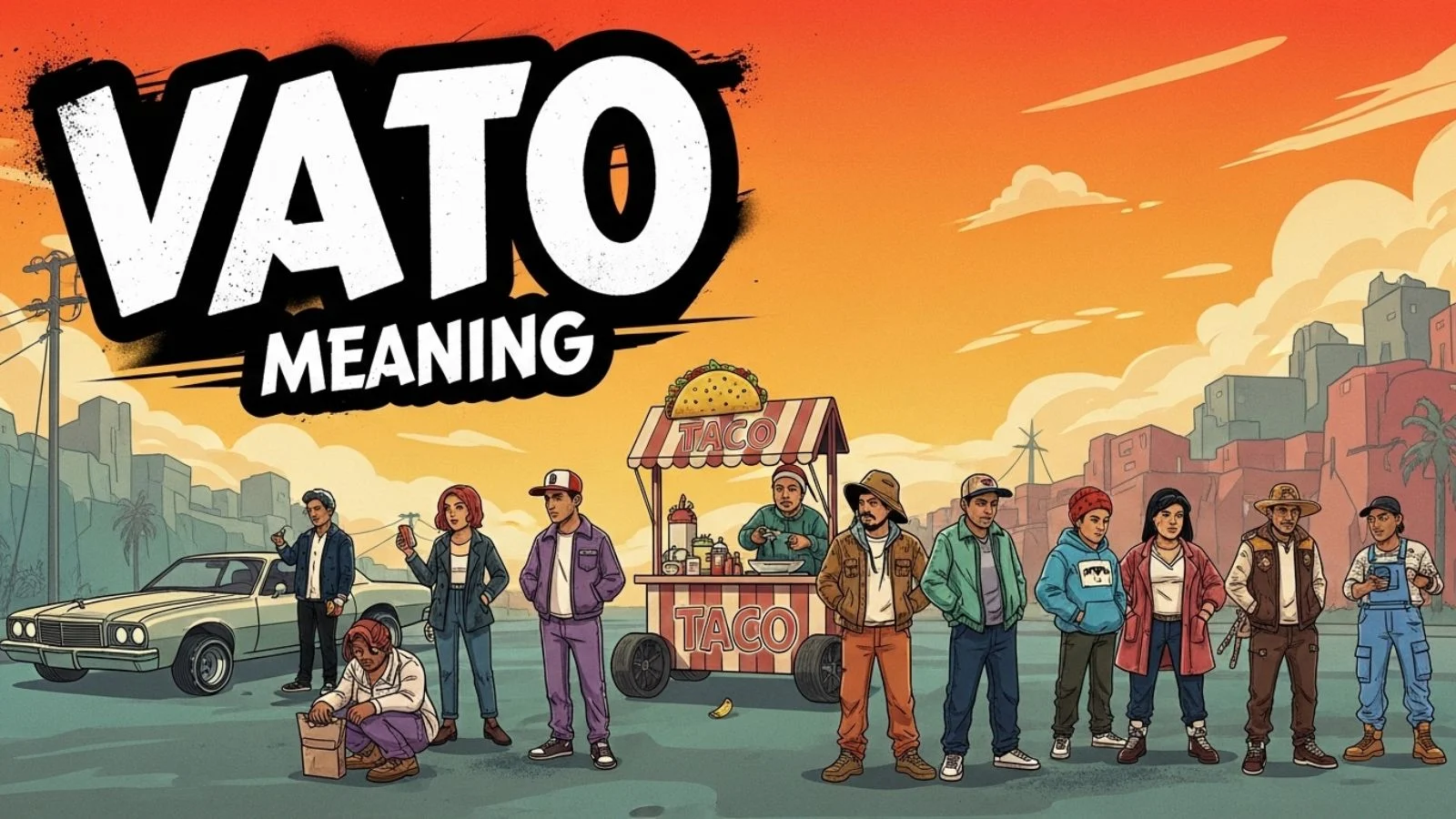
The word “vato” is a Spanish slang term.
In simple words, vato means “guy,” “dude,” or “man.”
It is often used in a friendly way between men.
Simple Definition
Vato = A man or guy (usually in casual or street language)
It can be:
- Friendly
- Neutral
- Sometimes disrespectful (depending on tone)
Tone matters a lot.
Short and Clear Meaning in One Line
Vato means a guy or dude, mostly used in Mexican or Chicano slang.
Where Does the Word Vato Come From?
Understanding a word’s origin helps you use it correctly.
Language Origin
The word vato comes from Mexican Spanish slang.
It is commonly used in:
- Mexico
- Mexican-American communities
- Chicano culture in the United States
Historical Roots
Some linguists believe “vato” developed from older Spanish street speech.
It became popular in:
- Urban neighborhoods
- Working-class communities
- Youth groups
Over time, it became part of Chicano identity and culture.
Vato in Popular Culture
The word became more famous through:
- Latin hip-hop
- Street films
- TV shows
- Social media
Movies about Chicano life often use “vato” in dialogue.
This helped spread the word worldwide.
Is Vato Positive or Negative?
It depends on how it is used.
Here is a simple table:
| Tone | Meaning | Example |
|---|---|---|
| Friendly | Dude / Bro | “That’s my vato.” |
| Neutral | Guy | “Some vato was asking for you.” |
| Angry | That guy (insult tone) | “Who does that vato think he is?” |
The word itself is not bad.
But tone changes everything.
Real-Life Examples of Vato (With Simple Explanation)
Let’s look at short dialogues.
Example 1: Friendly Use
Carlos: “Hey vato, what’s up?”
Miguel: “Not much, bro.”
Explanation: Here, “vato” means friend or dude.
Example 2: Talking About Someone
Ana: “Who fixed your car?”
Luis: “Some vato from my neighborhood.”
Explanation: It means “some guy.”
Example 3: Slightly Negative Tone
Man: “That vato cut me off in traffic.”
Explanation: Here it means “that guy,” with mild anger.
Example 4: Social Media Caption (2026)
“Shoutout to my vatos for always supporting me.”
Explanation: It means close male friends.
Personality Traits Associated With “Vato”
In many contexts, “vato” suggests certain personality traits.
These traits are cultural, not universal.
Often linked with:
- Street-smart
- Loyal
- Confident
- Tough
- Masculine
In Chicano culture, calling someone “vato” can show:
- Brotherhood
- Respect
- Shared identity
But outside that culture, people should be careful using it.
When Should You Use Vato?
Use it only in:
- Casual conversations
- Informal speech
- Cultural context where it fits
Do NOT use it in:
- Formal writing
- Academic essays
- Professional emails
- Interviews
Example of Wrong Usage
Incorrect:
“Dear Sir or Vato,”
Explanation: This is unprofessional and inappropriate.
Vato vs Other Similar Words
Here’s a comparison:
| Word | Meaning | Tone |
|---|---|---|
| Dude | Casual friend | Friendly |
| Bro | Close male friend | Friendly |
| Guy | Neutral male | Neutral |
| Vato | Guy (Mexican slang) | Friendly or street tone |
“Vato” carries cultural meaning.
It is not just another word for “guy.”
Modern Usage of Vato in 2026
Language keeps evolving.
In 2026, “vato” appears in:
- TikTok captions
- Instagram reels
- Latin rap lyrics
- Gaming streams
- Meme culture
Example (2026 Meme):
“When your vato says he’s on the way but still at home.”
Explanation: It refers to a boyfriend or male friend jokingly.
Is Vato Used for Boyfriend?
Sometimes, yes.
In some communities, “vato” can mean:
- Boyfriend
- Husband
- Partner
Example:
“She’s going out with her vato tonight.”
Explanation: It means her boyfriend.
But this is informal slang.
Cultural Importance of Vato
The word is important in:
- Chicano identity
- Mexican-American street culture
- Lowrider culture
- Latin rap communities
It reflects:
- Brotherhood
- Community
- Shared struggle
- Pride
Using it without understanding culture can sound awkward.
Common Mistakes About Vato
Many learners misunderstand this word.
Let’s correct them.
Mistake 1: Thinking It Means “Bad Guy”
Not always true.
It usually just means “guy.”
Mistake 2: Using It in Formal Situations
It is slang.
Never use it in formal settings.
Mistake 3: Assuming It Is Always Offensive
It is not automatically rude.
Tone and context decide meaning.
Mistake 4: Using It Without Cultural Awareness
If you are not part of the culture, use carefully.
It may sound forced.
Should Non-Spanish Speakers Use Vato?
It depends.
Ask yourself:
- Are you joking respectfully?
- Do you understand the culture?
- Are you using it with close friends?
If unsure, it’s better to say:
- Dude
- Bro
- Friend
Respect matters in language.
How to Pronounce Vato
Pronunciation: VAH-toh
Breakdown:
- “Va” sounds like “vah”
- “to” sounds like “toh”
Stress is on the first syllable.
Vato in Music and Media
Many Latin artists use the word in lyrics.
It appears in:
- Chicano rap
- West Coast hip-hop
- Street storytelling music
This helped global audiences learn the term.
Emotional Meaning Behind Vato
Words carry emotion.
When someone says:
“That’s my vato.”
It may express:
- Loyalty
- Brotherhood
- Pride
- Deep friendship
It can feel stronger than just saying “friend.”
How Context Changes Meaning
Same word. Different meaning.
Example 1:
“Come here, vato!”
Friendly tone → playful.
Example 2:
“Listen, vato.”
Serious tone → warning.
Always pay attention to:
- Voice
- Facial expression
- Situation
Regional Differences
In Mexico:
Common slang among men.
In the United States:
More common in Mexican-American communities.
Outside these areas:
Less common, mostly known from media.
Vato vs Ese
Another slang word is “ese.”
Quick comparison:
| Word | Meaning | Usage |
|---|---|---|
| Vato | Guy / dude | General slang |
| Ese | Dude (strong Chicano tone) | More cultural |
Both are informal.
Is Vato a Bad Word?
No.
It is slang, not profanity.
However:
- It can sound rough.
- It is not polite speech.
Think of it like “dude” with cultural flavor.
Social Media Examples (Updated 2026)
Here are modern uses:
- “My vato pulled up with tacos.”
Explanation: My male friend came over. - “That vato thinks he’s funny.”
Explanation: That guy is joking. - “Loyal vatos only.”
Explanation: Only true male friends allowed. - “Date night with my vato.”
Explanation: Spending time with boyfriend.
Quick Summary List
Vato means:
- Guy
- Dude
- Man
- Sometimes boyfriend
It is:
- Slang
- Informal
- Cultural
Do not use it in:
- Business emails
- School essays
- Formal meetings
Frequently Asked Questions
1. What does vato mean in English?
It means guy, dude, or man in Mexican slang.
2. Is vato offensive?
Not usually. It depends on tone and context.
3. Can girls say vato?
Yes, but it is mostly used to refer to men.
4. Does vato mean boyfriend?
Sometimes, in casual slang, yes.
5. Is vato used in Spain?
Not commonly. It is more Mexican slang.
6. Can I use vato in professional settings?
No. It is informal slang.
Final Thoughts on Vato Meaning
The word vato is a simple slang term that means “guy” or “dude,” but it carries strong cultural roots in Mexican and Chicano communities. It can express friendship, loyalty, or even mild frustration depending on tone. While it is not a bad word, it is informal and should not be used in professional settings. Understanding its origin helps you use it respectfully. Language is powerful, and words like “vato” show how culture shapes speech. If you enjoy learning modern slang meanings in clear, simple English, keep exploring and growing your vocabulary every day.
Discover More Post
5G UC Meaning: Full Form, Speed, Coverage, and Simple Explanation (2026 Guide)
MB Meaning in Text: Full Guide to MB Meaning in Chat (2026 Updated)
Oui Meaning: Simple Definition, Origin, Examples, and Modern Usage