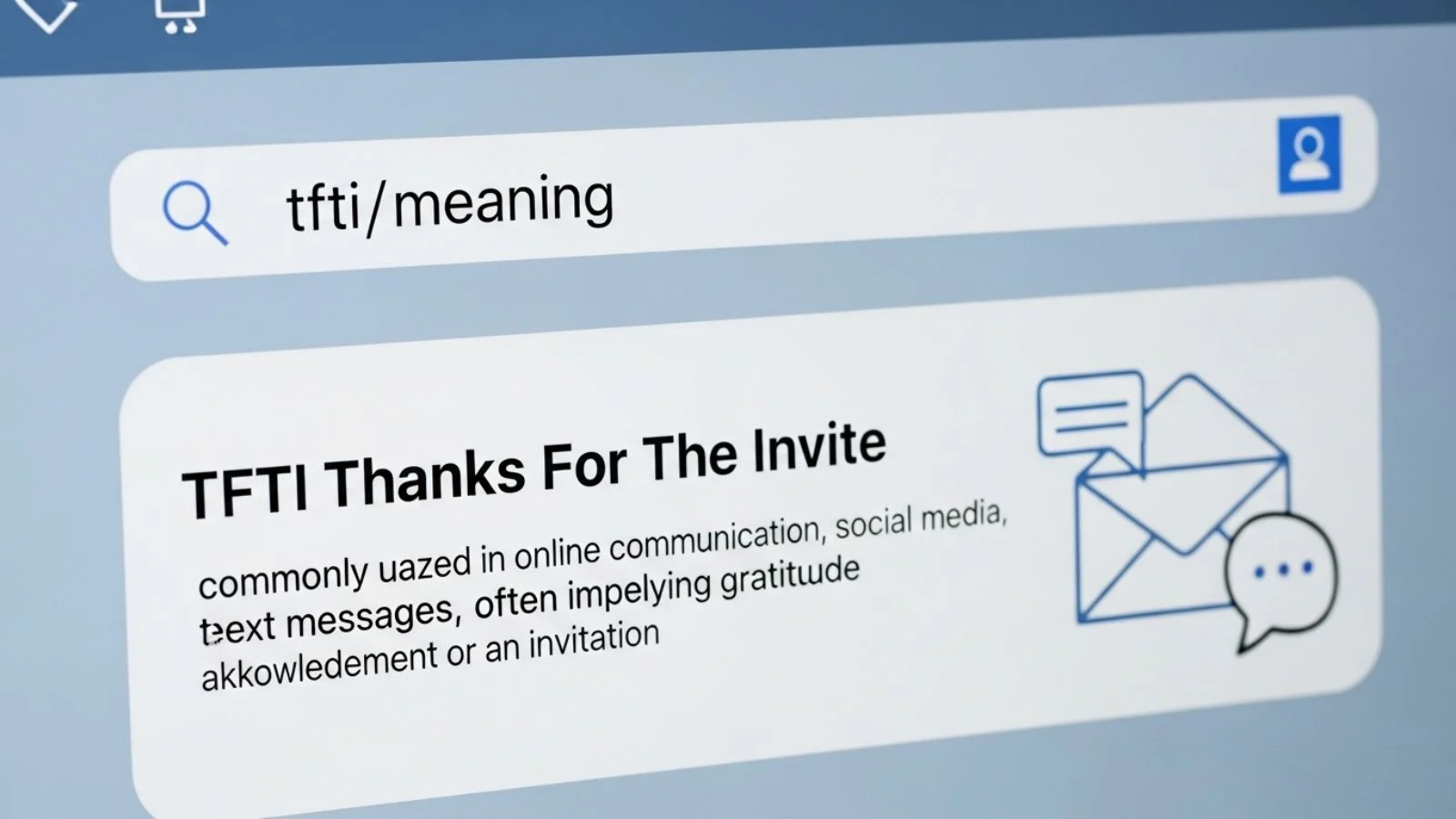
If you have seen “TFTI” in a text message, Snapchat, Instagram comment, or group chat, you may wonder what it means.
Let’s keep it simple.
TFTI means “Thanks For The Invite.”
But here is the important part:
Most of the time, TFTI is not serious. It is usually sarcastic.
That means the person was not invited, and they feel a little upset, left out, or jokingly annoyed.
In this complete 2026 guide, you will learn:
- The clear meaning of TFTI
- When it is serious and when it is sarcastic
- Where it came from
- Real-life examples with simple explanations
- Personality traits behind using TFTI
- Common mistakes
- Modern usage in 2026
- FAQs people ask online
Let’s start with the basics.
What Does TFTI Mean in Simple Words?
TFTI = Thanks For The Invite
It is a short form (acronym) used in texting and online chats.
Simple Definition:
TFTI is something you say when someone did not invite you somewhere.
It can mean:
- “I wish you invited me.”
- “Wow, you forgot me.”
- “I feel left out.”
- “I’m joking, but I noticed.”
Most of the time, it is said in a playful or sarcastic way.
Is TFTI Positive or Negative?
It depends on tone.
Here is a simple table to understand it:
| Situation | Meaning | Tone |
|---|---|---|
| Friend forgets to invite you | You feel left out | Light sarcasm |
| Someone excludes you on purpose | You feel hurt | Slightly negative |
| Close friend jokes | Funny reaction | Playful |
| Real invitation happened | Real thank you | Positive |
In most cases, TFTI is playful sarcasm, not serious anger.
The Origin and History of TFTI
TFTI became popular in the early 2010s.
It started growing on:
- SMS texting
- Instagram captions
- Snapchat stories
As smartphones became common, people began using short forms to type faster.
Like:
- LOL (Laugh Out Loud)
- BRB (Be Right Back)
- OMG (Oh My God)
TFTI followed the same pattern.
By 2015–2020, it became very common among:
- Teenagers
- College students
- Online gamers
- Friend groups
By 2026, TFTI is still used, but mostly in casual chats.
It is not formal English.
Why Do People Use TFTI?
People use TFTI for emotional reasons.
Here are the main reasons:
1. Feeling Left Out
They see friends hanging out without them.
So they reply:
“TFTI guys.”
This means:
“You forgot me.”
2. Playful Drama
Friends often tease each other.
TFTI becomes a funny way to create small drama.
3. Attention
Sometimes people want others to say:
“Oh sorry! Next time you’re coming!”
It can be a way to reconnect.
4. Expressing Mild Hurt Without Fighting
Instead of saying:
“Why didn’t you invite me?”
They say:
“TFTI.”
It feels softer.
Real-Life Examples with Short Dialogues
Each example includes a simple explanation.
Example 1: Party Photo
Ayesha posts on Instagram:
“Best night ever!”
Sara comments:
“TFTI.”
Explanation:
Sara was not invited. She feels left out but says it in a light way.
Example 2: Group Dinner
Ali: We went for burgers yesterday.
Hassan: Oh nice. TFTI.
Ali: Sorry bro! Next time.
Explanation:
Hassan was not invited. He is joking, not angry.
Example 3: Gaming Night
Group Chat:
“We played until 3 AM!”
Bilal: Wow. TFTI.
Explanation:
Bilal missed the game. He wishes he joined.
Example 4: Real Meaning (Rare Case)
Friend: I’m having a birthday dinner.
You: TFTI! I’ll be there.
Explanation:
Here it is real thanks. No sarcasm.
Example 5: Sibling Joke
Sister: We watched your favorite movie!
Brother: TFTI.
Explanation:
He feels jokingly ignored.
Personality Traits of People Who Use TFTI
The way someone uses TFTI tells us about their personality.
1. Playful Personality
They enjoy teasing.
They use TFTI in a funny way.
2. Sensitive but Calm
They feel left out but do not want to fight.
So they use sarcasm instead of anger.
3. Socially Aware
They want to stay included in group plans.
TFTI keeps them in the conversation.
4. Dramatic (In a Fun Way)
Some people love light drama.
TFTI adds humor to situations.
When Should You Not Use TFTI?
TFTI is informal.
Do not use it:
- In professional emails
- With your boss
- In job interviews
- In formal writing
- With people who do not understand sarcasm
Example of wrong use:
Email to manager:
“You had a team meeting? TFTI.”
This is rude and unprofessional.
Common Mistakes About TFTI
Let’s clear some confusion.
Mistake 1: Thinking It Is Always Serious
No. Most of the time it is a joke.
Mistake 2: Thinking It Means Real Gratitude
Usually, it does not.
It often means the opposite.
Mistake 3: Using It With Strangers
Strangers may misunderstand sarcasm.
Mistake 4: Using It in Serious Conflicts
If you are truly hurt, say your feelings clearly.
TFTI may sound passive-aggressive.
Tone Matters: How TFTI Changes Meaning
Tone is important.
Look at these versions:
- TFTI.
- TFTI 😂
- Wow, TFTI.
- Tfti…
Even punctuation changes emotion.
In 2026, people also use:
- “TFTI I guess.”
- “TFTI fr.” (fr = for real)
Tone shows whether it is playful or hurt.
Modern Usage of TFTI in 2026
In 2026, TFTI is used mostly in:
- Instagram story replies
- Snapchat
- WhatsApp groups
- Gaming chats
- TikTok comments
It is less common on formal platforms like LinkedIn.
Younger users still understand it.
Older adults may not.
Similar Slang Words
Here are similar expressions:
| Slang | Meaning | Difference |
|---|---|---|
| FOMO | Fear of missing out | Feeling left out |
| SMH | Shaking my head | Disappointment |
| Wow ok | Passive sarcasm | Short reaction |
| Nice invite | Direct sarcasm | Not abbreviated |
TFTI is softer than “Nice invite.”
Emotional Meaning Behind TFTI
TFTI often hides small emotions:
- Wanting to belong
- Wanting attention
- Feeling forgotten
- Hoping to be included next time
It is social language.
It keeps friendships active.
Is TFTI Passive-Aggressive?
Sometimes, yes.
If someone says:
“TFTI. Whatever.”
That may show real hurt.
But if they say:
“TFTI lol.”
It is playful.
Context decides meaning.
How to Respond to TFTI
If someone says TFTI to you:
Friendly Response:
- “My bad! Next time you’re coming.”
- “Oops sorry!”
- “You’re invited next time!”
If It Was Serious:
- “I’m sorry. I didn’t know you wanted to come.”
- “Let’s plan something together.”
Do not ignore it.
It shows they care.
Why TFTI Became Popular
Three main reasons:
- Short texting culture
- Social media sharing
- Group events and photos
When people post everything online, others see what they missed.
TFTI became a quick reaction.
Generational Use of TFTI
| Age Group | Usage Level |
|---|---|
| 13–20 | Very common |
| 21–30 | Common |
| 31–40 | Moderate |
| 40+ | Rare |
Younger users understand it faster.
Cultural Impact of TFTI
TFTI reflects modern friendship culture.
Today:
- Plans are shared online
- Everyone sees everything
- Missing out feels public
TFTI is a digital reaction to social visibility.
Short Comparison: TFTI vs Real Communication
Instead of saying:
“TFTI.”
You could say:
“I would love to join next time.”
That is direct communication.
TFTI is lighter and less serious.
Frequently Asked Questions
1. Does TFTI always mean someone is angry?
No. Most of the time it is playful sarcasm.
2. Can TFTI be used seriously?
Yes, but rarely. It usually has a joking tone.
3. Is TFTI rude?
It can sound rude if tone is serious. With close friends, it is usually fine.
4. What should I reply when someone says TFTI?
Say sorry lightly and include them next time.
5. Is TFTI still used in 2026?
Yes, but mainly in casual chats among young people.
6. Can I use TFTI at work?
No. It is too informal.
7. Is TFTI passive-aggressive?
Sometimes. It depends on context and punctuation.
Quick Summary Points
- TFTI means Thanks For The Invite
- Mostly sarcastic
- Used when someone feels left out
- Popular in texting and social media
- Informal slang
- Tone changes meaning
- Not for professional settings
Conclusion
Now you fully understand the TFTI meaning in text. It stands for Thanks For The Invite, but it is usually said with sarcasm. People use it when they feel left out or want to joke about missing an event. Tone and context are very important. With close friends, it is playful. In serious settings, it can sound rude. Language keeps changing, and slang like TFTI shows how digital culture shapes communication. If you found this guide helpful, keep learning modern text slang to stay confident in online conversations and avoid misunderstandings in 2026 and beyond.
Discover More Post
Mamacita Meaning: Simple Definition, Origin, Examples & Modern Usage (2026 Guide)
Bugler Meaning: Simple Definition, History, Examples & Modern Usage (2026)
Ohana Meaning: Simple Definition, Origin, Examples & Modern Use (2026)