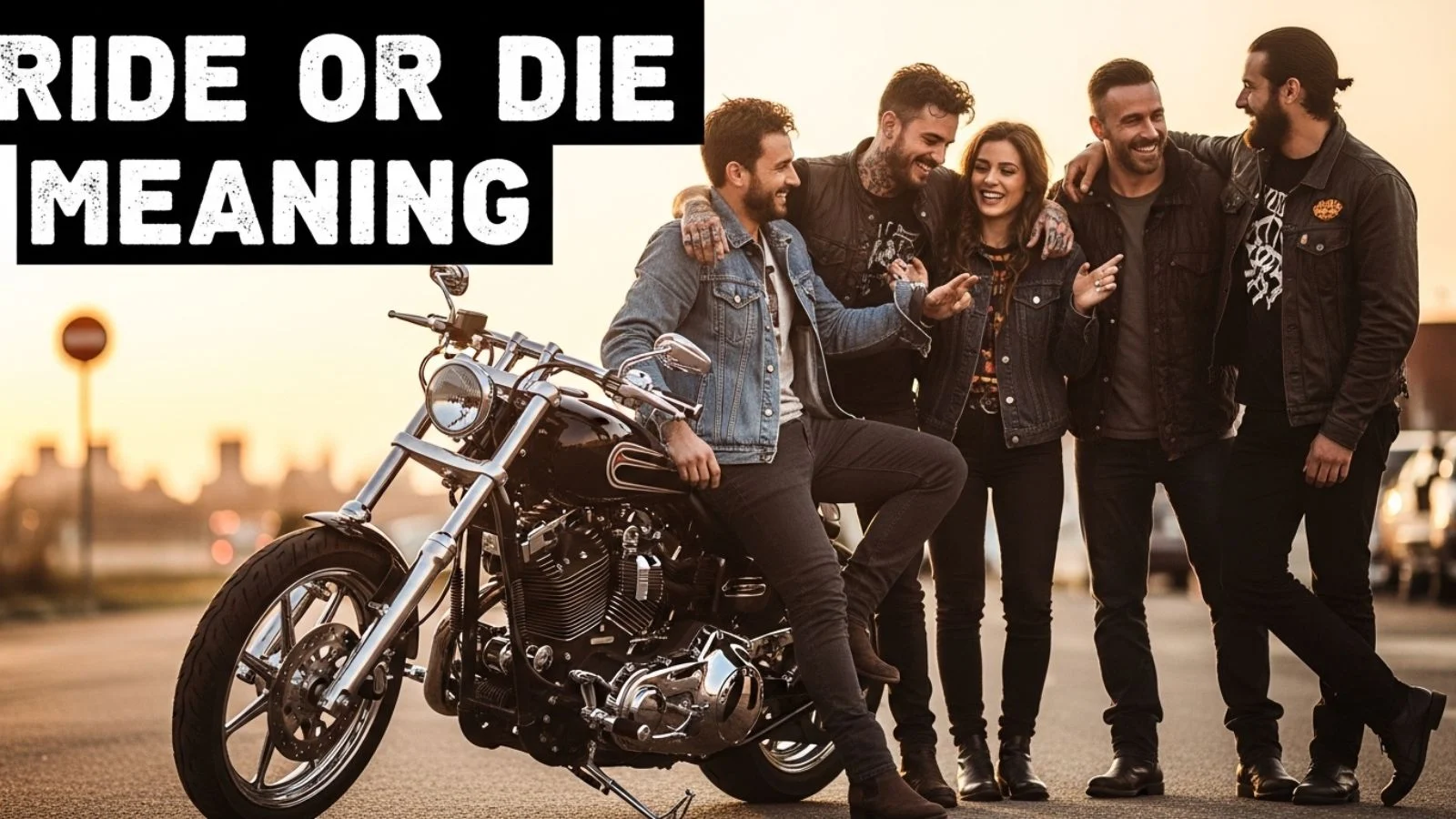
The phrase ride or die is very popular in movies, music, and social media. You may see it in captions, songs, or even daily talks between close friends.
But what does ride or die really mean?
In this easy guide, you will learn:
- The clear meaning in simple words
- Where the phrase came from
- Real-life examples and short dialogues
- Personality traits of a ride-or-die person
- Common mistakes
- Modern 2026 usage
- FAQs people often ask
Everything is explained in short, clear sentences. Let’s begin.
What Does Ride or Die Mean?
Ride or die means:
A person who stays loyal and supports you no matter what happens.
It describes someone who will:
- Stand by you in good times
- Stay with you in hard times
- Defend you
- Support you even when things go wrong
In simple words, a ride or die person never leaves your side.
Very Simple Definition
Ride or die = someone who is always loyal and never gives up on you.
What Does Ride or Die Mean in a Relationship?
In relationships, ride or die means:
- A partner who stays committed
- Someone who supports you through problems
- A person who believes in you
- Someone who does not leave when life gets hard
It can describe:
- Romantic partners
- Best friends
- Close family members
Example
“My sister is my ride or die.”
This means:
She is always there for me. She never leaves my side.
Origin and History of Ride or Die
Understanding the origin helps you understand the full meaning.
Where Did Ride or Die Come From?
The phrase ride or die comes from American street culture in the late 20th century.
It became popular in:
- Motorcycle culture
- Gang culture
- Urban communities
The idea was simple:
If someone “rides” with you, they stay with you.
If things go wrong, they are ready to face danger — even death — with you.
So the meaning was very serious at first.
Popular Culture Influence
The phrase became mainstream through:
- Hip-hop music in the 1990s
- Urban films
- Rap lyrics
- Street slang
Many rap artists used the term to describe loyalty in love and friendship.
Over time, the meaning became softer.
Today, in 2026, it usually just means strong loyalty, not real danger.
How the Meaning Changed Over Time
At first, ride or die meant:
- Extreme loyalty
- Facing danger together
- Risking life for someone
Now it usually means:
- Emotional support
- Strong friendship
- Deep commitment
Today, most people use it in a casual way.
Example:
“She’s my ride or die for life.”
This means:
She is my closest and most trusted friend.
Not:
We are doing something dangerous.
Ride or Die in Simple Words
Let’s break it down word by word.
| Word | Simple Meaning |
|---|---|
| Ride | Stay with someone |
| Die | Face any result, even bad ones |
| Ride or Die | Stay loyal no matter what |
The phrase does not mean real death in most cases today.
It means strong support and loyalty.
Real-Life Examples (With Clear Explanations)
Example 1: Best Friends
Ayesha: “Everyone left me when I failed.”
Sara: “I didn’t. I’m your ride or die.”
Explanation:
Sara means she stayed loyal and supported Ayesha when others left.
Example 2: Romantic Relationship
Ali: “Even when I lost my job, she stayed.”
Friend: “That’s a real ride or die partner.”
Explanation:
The partner stayed during hard times. That shows loyalty.
Example 3: Family Support
“He went through a tough divorce, but his brother was his ride or die.”
Explanation:
His brother supported him emotionally and did not leave him alone.
Example 4: Social Media Caption (2026 Style)
“Still with my ride or die since school days.”
Explanation:
The person is showing long-term friendship and loyalty.
Example 5: Workplace Context
“She defended her teammate during the meeting. Total ride or die energy.”
Explanation:
She supported her teammate when things were difficult.
Personality Traits of a Ride or Die Person
A ride-or-die person usually has strong character traits.
1. Loyalty
They do not easily leave people.
2. Trustworthy
They keep secrets safe.
3. Supportive
They help during emotional stress.
4. Protective
They defend you when others criticize unfairly.
5. Committed
They stay in long-term relationships.
When Should You Use Ride or Die?
Use it when talking about:
- Close friendships
- Deep romantic relationships
- Long-term loyalty
- Strong emotional support
Do not use it for:
- Casual friends
- New relationships
- People you barely know
Calling someone “ride or die” shows deep trust.
Modern Usage in 2026
In 2026, the phrase is very common on:
- Instagram captions
- TikTok comments
- WhatsApp statuses
- Wedding speeches
- Friendship reels
Modern Examples
- “Married my ride or die.”
- “Still my ride or die after 10 years.”
- “You need a ride or die in this world.”
Today, the meaning focuses on emotional loyalty, not danger.
Ride or Die vs Similar Phrases
Let’s compare it with similar terms.
| Phrase | Meaning | Difference |
|---|---|---|
| Best friend | Close friend | Not always extreme loyalty |
| Soulmate | Perfect romantic match | More romantic |
| Partner in crime | Fun companion | More playful |
| Ride or die | Loyal no matter what | Strongest loyalty meaning |
Ride or die shows the strongest level of loyalty.
Ride or Die in Romantic Relationships
In love, the phrase shows:
- Emotional strength
- Stability
- Long-term commitment
- Deep trust
But be careful.
It does NOT mean:
- Staying in toxic relationships
- Accepting abuse
- Ignoring red flags
True loyalty does not mean harming yourself.
Healthy ride-or-die love includes:
- Respect
- Safety
- Honesty
- Growth
Common Mistakes and Misconceptions
Mistake 1: Thinking It Means Real Death
Today, it rarely means real danger. It mostly means loyalty.
Mistake 2: Using It Too Early
Calling someone “ride or die” after one week is too soon.
Mistake 3: Supporting Wrong Behavior
Being ride or die does NOT mean helping someone do bad things.
Healthy loyalty has limits.
Mistake 4: Romanticizing Toxic Loyalty
If someone cheats or abuses you, you do not need to stay.
Ride or die should not mean self-damage.
Is Ride or Die Always Positive?
Usually yes.
But sometimes it can mean:
- Blind loyalty
- Ignoring bad behavior
- Staying in unhealthy situations
Healthy loyalty is good.
Blind loyalty can be harmful.
Balance is important.
Emotional Meaning Behind Ride or Die
The phrase connects to deep human needs:
- Safety
- Belonging
- Trust
- Emotional security
Everyone wants someone who stays.
That is why the phrase is powerful.
Short Dialogues for Beginners
Dialogue 1
Zara: “Why do you trust him so much?”
Mina: “Because he’s my ride or die.”
Explanation:
Mina trusts him deeply because he has proven loyalty.
Dialogue 2
Hassan: “She stood by you during the scandal?”
Omar: “Yes. She’s ride or die.”
Explanation:
She stayed even when things became difficult.
Dialogue 3
Friend: “Why didn’t you quit the team?”
Player: “My captain is my ride or die.”
Explanation:
The player stayed because of strong loyalty to the captain.
Psychological Meaning
Psychologically, ride-or-die relationships show:
- Emotional attachment
- Secure bonding
- High trust levels
But unhealthy attachment may include:
- Fear of being alone
- Codependency
Healthy ride-or-die means:
Support + Respect + Boundaries
Cultural Impact
The phrase became global because of:
- Music
- Social media
- Movies
- Celebrity culture
It is now used worldwide, including in:
- South Asia
- Europe
- Middle East
- Africa
The meaning stays mostly the same: deep loyalty.
Ride or Die in Social Media Language
In 2026, it is often used in:
- Friendship anniversary posts
- Wedding captions
- Throwback pictures
- Couple videos
Example caption:
“Found my ride or die at 16. Still here.”
This means long-term friendship or love.
Can Ride or Die Be Used for Family?
Yes.
You can say:
- “My mom is my ride or die.”
- “My brother is my ride or die.”
It shows strong emotional connection and loyalty.
Gender and Ride or Die
The phrase is used for:
- Men
- Women
- Couples
- Friends
It is not limited to one gender.
Anyone can be a ride-or-die person.
Healthy vs Unhealthy Ride or Die
Healthy
- Supportive
- Honest
- Respectful
- Encouraging growth
Unhealthy
- Covering lies
- Supporting crime
- Ignoring abuse
- Losing self-respect
True loyalty never harms you.
FAQs About Ride or Die Meaning
1. Does ride or die mean best friend?
Not always. It means stronger loyalty than just a best friend. It shows deep commitment.
2. Is ride or die romantic only?
No. It can describe friends, family, or partners.
3. Is ride or die slang?
Yes. It started as slang but is now widely used in normal conversation.
4. Can ride or die be negative?
Yes, if it means blind loyalty or staying in toxic situations.
5. Is it okay to call someone ride or die?
Yes, if the relationship is strong and long-term.
6. Does it mean risking your life?
Originally yes. Today, mostly no. It usually means emotional loyalty.
Why People Love the Phrase
People love it because it represents:
- Security
- Trust
- Long-term connection
- Emotional safety
In a world where people leave quickly, loyalty feels rare.
That is why ride or die is powerful.
Conclusion
The phrase ride or die means strong loyalty and deep support. It describes a person who stays with you in good times and bad times. The phrase started in street culture but now has a softer, emotional meaning. Today, in 2026, it is used mostly to show love, trust, and long-term commitment. A true ride-or-die person supports you but also respects healthy limits. Loyalty should never harm you. Now that you understand the meaning clearly, notice how people use it around you. And ask yourself: who is truly your ride or die?
Discover More Post
Petty Meaning: Simple Definition, Examples, Origin, and Modern Use (2026 Guide)
DILF Meaning: Simple Definition, Origin, Examples, and Modern Usage (2026 Guide)
EYP Meaning: Full Explanation, Examples, and How to Use It in Text (2026 Guide)