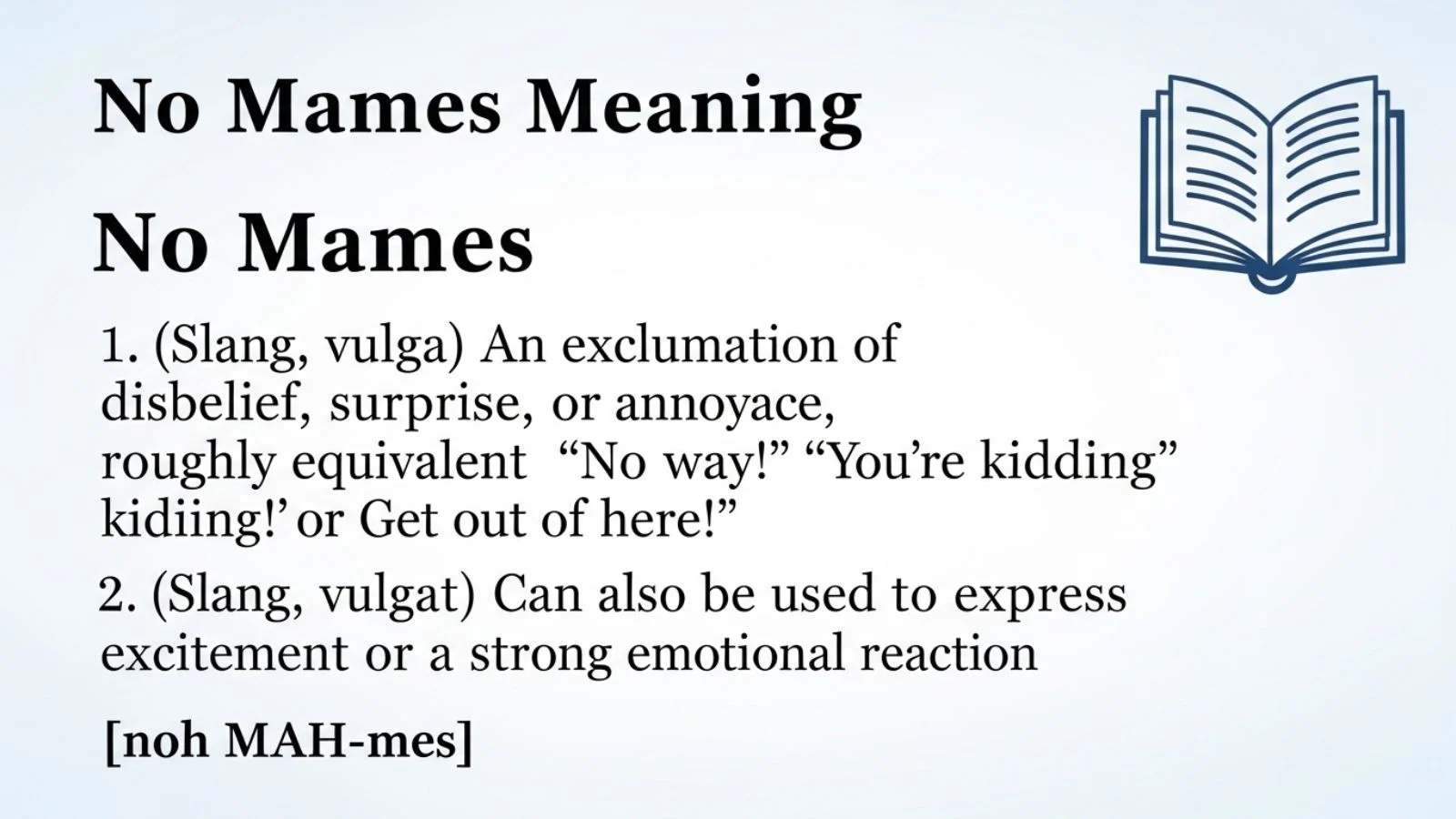
If you have heard someone say “no mames” in a movie, on TikTok, in a meme, or in real life, you may wonder what it means.
Is it rude?
Is it funny?
Can you say it in public?
In this complete guide, you will learn the no mames meaning in very simple English. We will explore its origin, history, real-life examples, personality context, and common mistakes. You will also see modern 2026 usage examples so you understand how people use it today.
Let’s start with the basics.
What Does “No Mames” Mean?
The Spanish phrase “no mames” is an informal expression. It is mostly used in Mexico.
In simple English, it can mean:
- “No way!”
- “You’re kidding!”
- “That’s crazy!”
- “Stop messing with me!”
Sometimes, it can also mean:
- “Don’t be stupid.”
- “You’re lying.”
The meaning depends on tone and situation.
Very Simple Definition
No mames = A strong way to show surprise, disbelief, or frustration.
It can be funny.
It can be rude.
It can be friendly.
It all depends on how and where you say it.
Is “No Mames” a Bad Word?
This is very important.
Yes, “no mames” is considered vulgar slang in many Spanish-speaking places, especially in Mexico.
It is not polite language.
You should not use it:
- At work
- In school presentations
- With teachers
- With elders
- In formal writing
But friends often use it casually.
Think of it like saying:
- “No freaking way!”
- Or a stronger version of “Are you serious?”
So it is informal and sometimes rude.
Literal Meaning of “No Mames”
To understand better, let’s break it down.
- “No” = No
- “Mames” comes from the verb mamar, which literally means “to suck.”
But here is the key point:
The phrase does NOT usually mean its literal meaning in real conversation.
It works as an expression. Over time, people stopped thinking about the literal meaning and used it for emotion instead.
So today, it is more about feeling than grammar.
Origin and History of “No Mames”
The phrase became popular in Mexico many decades ago.
It is part of Mexican Spanish slang. It is strongly linked to youth culture and street language.
How It Developed
- It started as crude slang.
- It spread in urban areas.
- Young people used it to show strong emotion.
- It became part of daily speech among friends.
Later, it became popular in:
- Mexican TV shows
- Comedy programs
- Social media
- Memes
- Viral videos
By 2026, many English speakers recognize it because of:
- TikTok trends
- Netflix shows
- Latino influencers
- Internet memes
Even people who do not speak Spanish sometimes say it for fun.
Where Is “No Mames” Most Common?
It is mostly used in:
- Mexico
- Mexican-American communities
- Spanish-speaking friend groups
In other Spanish-speaking countries, it may sound strange or too aggressive.
So context matters.
When Do People Use “No Mames”?
People use no mames in three main situations:
1. Surprise
When something shocking happens.
Example:
“You won the lottery?”
“No mames!”
Explanation: The speaker is very surprised.
2. Disbelief
When you think someone is lying or exaggerating.
Example:
“I ran 20 miles today.”
“No mames.”
Explanation: The speaker does not believe it.
3. Annoyance
When someone says something silly.
Example:
“You should quit your job tomorrow.”
“No mames.”
Explanation: The speaker thinks that idea is stupid.
Tone Changes the Meaning
Tone is very important.
Here is a quick table:
| Tone | Meaning | Emotion |
|---|---|---|
| Laughing | “No way!” | Friendly surprise |
| Angry | “Stop being stupid!” | Frustration |
| Shocked | “Are you serious?” | Disbelief |
| Playful | “You’re joking!” | Fun reaction |
Same words. Different feeling.
Real-Life Examples with Short Dialogues
Now let’s look at real conversations. Each example includes a short explanation so beginners understand clearly.
Example 1: Surprise
Carlos: “I met my favorite singer today!”
Luis: “No mames!”
Explanation: Luis is shocked and excited.
Example 2: Disbelief
Ana: “I finished the whole project in one hour.”
Sofia: “No mames.”
Explanation: Sofia thinks Ana is exaggerating.
Example 3: Annoyed Reaction
Miguel: “Let’s skip work and go to the beach.”
Raul: “No mames.”
Explanation: Raul thinks this idea is irresponsible.
Example 4: Funny Situation
Friend: “I forgot my own birthday.”
Other Friend: “No mames!”
Explanation: The reaction shows playful disbelief.
Example 5: Social Media (2026 Style)
Post: “He proposed after two days of dating.”
Comment: “No mames.”
Explanation: The commenter finds the situation crazy or shocking.
Personality Traits of People Who Use “No Mames”
Language shows personality.
People who use no mames often:
- Speak casually
- Feel comfortable in informal settings
- Express emotions strongly
- Enjoy humor and exaggeration
- Talk openly with friends
But remember:
Using this phrase in formal settings may make you seem:
- Unprofessional
- Immature
- Disrespectful
So choose wisely.
Modern Usage in 2026
In 2026, the phrase appears in:
- TikTok reaction videos
- Meme captions
- Instagram comments
- Gaming livestream chats
- Group chats
Example in a gaming stream:
Player: “I just beat the final boss with 1% health.”
Chat: “No mames!”
Explanation: Viewers are impressed and shocked.
It is often used in text form as:
- “No mms” (shortened version)
- “Nmms” (very informal spelling)
These short forms are even more casual.
Difference Between “No Mames” and “No Manches”
You may hear another phrase:
No manches
This is a softer, more polite version.
| Phrase | Level | Politeness |
|---|---|---|
| No mames | Strong slang | Vulgar |
| No manches | Mild slang | Safer |
If you want to avoid sounding rude, use no manches instead.
Common Mistakes and Misconceptions
Mistake 1: Thinking It Always Means “No Way”
It does not always mean excitement.
Sometimes it means anger.
Mistake 2: Using It in Formal Settings
Do not say it in:
- Job interviews
- Business emails
- School essays
It is slang, not professional language.
Mistake 3: Using It Without Understanding Tone
Tone changes everything.
If you say it angrily, it can hurt someone’s feelings.
Mistake 4: Using It in Every Spanish-Speaking Country
It is strongly Mexican slang.
In other countries, people may not use it the same way.
Cultural Importance
In Mexican culture, slang is expressive and emotional.
“No mames” is part of:
- Street conversations
- Comedy
- Youth identity
- Social bonding
It builds connection among friends.
When someone says it, they are often showing:
- Authentic reaction
- Honest feeling
- Strong emotion
Should English Speakers Use “No Mames”?
If you are not a Spanish speaker, be careful.
Ask yourself:
- Do I understand the tone?
- Am I with close friends?
- Is this informal?
- Could it offend someone?
If you are unsure, it is better to say:
- “No way!”
- “You’re kidding!”
- “Seriously?”
Respect always comes first.
Quick Summary List
Here is a simple recap:
- Language: Spanish (Mexican slang)
- Meaning: No way / Are you serious?
- Tone: Surprise, disbelief, or annoyance
- Formality: Very informal
- Politeness level: Often vulgar
- Safer alternative: No manches
- Used in 2026: Social media, memes, gaming, chats
Frequently Asked Questions
1. Is “no mames” a curse word?
Yes, it is considered vulgar slang in Mexico. It is not appropriate in formal situations.
2. Can I say “no mames” at school?
No. It is informal and may be seen as disrespectful.
3. What is the difference between “no mames” and “no manches”?
“No mames” is stronger and more vulgar. “No manches” is softer and more polite.
4. Does “no mames” always mean something negative?
Not always. It can show excitement, surprise, or humor. Tone decides the feeling.
5. Why do people shorten it to “no mms”?
It is faster to type in text messages and social media chats. It is very informal.
6. Is it okay to use it in front of parents?
Usually no, unless they are very casual. Many older people find it disrespectful.
7. Why is it so popular online in 2026?
It spreads through memes, Latino creators, and viral reaction videos. It sounds expressive and emotional.
Final Thoughts on “No Mames” Meaning
Now you understand the full no mames meaning in simple and clear English.
It is a strong Mexican slang phrase. It shows surprise, disbelief, or frustration. It is common among friends and online in 2026. But it is also vulgar and not suitable for formal situations.
Language reflects culture. Learning slang helps you understand real conversations. But using it wisely shows maturity and respect.
If you enjoy learning real-life English and Spanish expressions explained in simple words, keep exploring language guides like this. Understanding meaning, tone, and context will help you communicate with confidence anywhere in the world.
Discover More Post
GFE Meaning: Simple Definition, Origin, Examples, and Modern Usage (2026 Guide)
Pandering Meaning: Clear Definition, Examples, Origin, and Modern Usage (2026 Guide)
WBU Meaning in Text: Simple Definition, Examples, Origin & How to Use It (2026 Guide)