Language is full of warm and loving words. One such word is “mija.” Many people hear it in movies, songs, or daily talk. But what does it really mean?
In this detailed guide, you will learn:
- The clear meaning of mija
- Where it comes from
- How people use it in real life
- Personality traits linked to it
- Common mistakes
- Modern usage in 2026
- Helpful FAQs
Everything is explained in simple English so beginners can understand easily.
What Does Mija Mean?
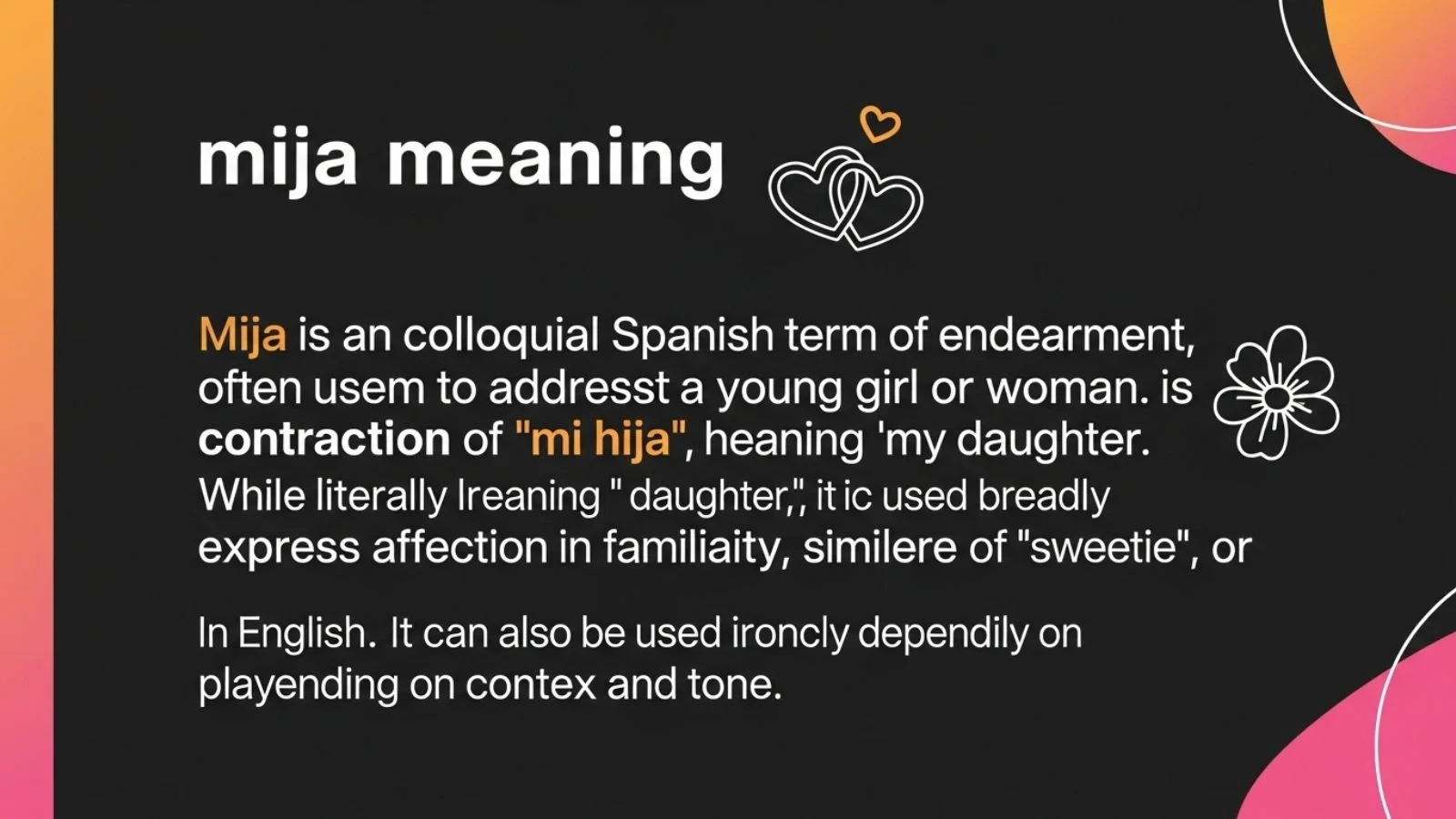
Mija is a Spanish word. It is a short form of “mi hija.”
- Mi = my
- Hija = daughter
So, mija literally means “my daughter.”
But here is something important:
In real life, people do not always use it for their real daughter.
Simple Definition
Mija means “my daughter” or “sweet girl.”
It is often used as a term of affection.
It shows:
- Love
- Care
- Warmth
- Protection
People use it to speak kindly to a girl or young woman.
Is Mija Only for Daughters?
No, not always.
In many Spanish-speaking families, especially in Mexico and Latin America, adults use mija for:
- Their real daughter
- A younger girl
- A niece
- A student
- A close family friend
- Sometimes even a grown woman (lovingly)
It is similar to saying:
- “Sweetie”
- “Honey”
- “My dear”
But it sounds more cultural and family-centered.
The Origin and History of Mija
Where Did Mija Come From?
The word mija comes from Spanish.
It is a contracted form of:
Mi hija → M’ija → Mija
Over time, people started saying it quickly in daily speech. The two words joined together.
This type of word shortening is common in Spanish.
Related Word: Mijo
There is also a male version.
- Mijo = mi hijo
- Mi hijo = my son
So:
- Mija = my daughter
- Mijo = my son
Both are affectionate words.
Cultural Importance of Mija
The word mija is very common in:
- Mexico
- Central America
- Parts of South America
- Latino communities in the United States
It reflects:
- Strong family bonds
- Respect for elders
- Warm communication
In many Latino families, language is soft and loving. Parents and grandparents often use affectionate words daily.
This shows emotional closeness.
When Do People Use Mija?
Let’s break it down into clear situations.
1. A Mother Talking to Her Daughter
Example:
Mother: “Mija, did you eat?”
Explanation: The mother is showing love and care.
2. A Grandmother Giving Advice
Grandmother: “Mija, always be kind.”
Explanation: She speaks warmly while giving life advice.
3. A Teacher Speaking Kindly
Teacher: “Mija, please finish your homework.”
Explanation: The teacher uses it gently to encourage the student.
4. An Older Woman Talking to a Younger Girl
Neighbor: “Mija, be careful crossing the street.”
Explanation: She uses it like “sweet girl” to show concern.
Real-Life Short Dialogues (With Explanation)
Dialogue 1: At Home
Mom: “Mija, come help me cook.”
Daughter: “Okay, Mama!”
Explanation: The word shows love and closeness in family life.
Dialogue 2: Giving Advice
Grandma: “Mija, study hard. Education is important.”
Girl: “Yes, Abuela.”
Explanation: The grandmother uses it warmly while guiding her.
Dialogue 3: Comforting Someone
Aunt: “Mija, everything will be okay.”
Girl: “Thank you.”
Explanation: The word makes the comfort feel softer and caring.
Dialogue 4: Friendly Tone
Shop owner: “Mija, you forgot your bag.”
Girl: “Oh! Thank you.”
Explanation: It shows friendly kindness, not ownership.
Personality Traits Connected to Mija
When someone uses the word mija, it often shows certain personality traits.
Traits of the Speaker
- Loving
- Protective
- Warm
- Family-oriented
- Gentle
Traits of the Person Called Mija
It does not describe personality directly.
But it suggests:
- Youth
- Sweetness
- Innocence
- Emotional closeness
Is Mija Romantic?
Usually, no.
It is mostly:
- Parental
- Family-based
- Protective
However, sometimes a romantic partner might jokingly say it. But this is rare and depends on culture.
Important: It is not a flirty word by default.
Mija in Modern Culture (Updated for 2026)
In 2026, the word mija appears in:
- Social media captions
- TikTok videos
- Instagram reels
- Latino podcasts
- TV shows
- Bilingual households
Modern Example 1
Instagram caption:
“Proud of you, mija!”
Explanation: A mother celebrating her daughter online.
Modern Example 2
TikTok video:
“POV: When your mom calls you mija but she’s about to scold you.”
Explanation: It shows humor about loving but strict moms.
Modern Example 3
Latina influencer:
“All my mijas out there chasing their dreams.”
Explanation: Used to motivate young girls.
Difference Between Mija and Hija
Here is a simple comparison:
| Word | Meaning | Usage | Tone |
|---|---|---|---|
| Hija | Daughter | Direct, formal | Neutral |
| Mija | My daughter | Affectionate | Warm and loving |
Hija is correct grammar.
Mija is emotional and sweet.
Is It Okay for Non-Spanish Speakers to Use Mija?
It depends.
If you:
- Understand the culture
- Use it respectfully
- Say it in a warm way
Then it can be okay.
But avoid using it:
- In a mocking tone
- As a stereotype
- Without cultural awareness
Respect is important.
Common Mistakes and Misconceptions
Mistake 1: Thinking It Means “Girlfriend”
Wrong.
It does not mean girlfriend.
Mistake 2: Thinking It Is Only for Kids
Not always.
Even adult daughters can be called mija.
Mistake 3: Using It in Formal Settings
Do not use it:
- In business emails
- In official meetings
It is informal and personal.
Mistake 4: Confusing Mija with Amiga
- Amiga = female friend
- Mija = my daughter / sweet girl
They are different.
Emotional Meaning Behind Mija
The word carries emotional weight.
It can mean:
- “You are important to me.”
- “I care about you.”
- “You are like my daughter.”
It builds emotional safety.
How Tone Changes the Meaning
Tone matters a lot.
Soft voice:
“Mija, come here.”
Meaning: Loving.
Strict voice:
“Mija!”
Meaning: You are in trouble.
So the same word can feel different based on tone.
When NOT to Use Mija
Avoid using it:
- With strangers in professional settings
- With someone older than you (unless cultural norm allows)
- In sarcastic or rude tone
Respect and context matter.
Similar Words in English
Here are English words close in feeling:
- Sweetie
- Honey
- Dear
- My girl
But none are exactly the same culturally.
Linguistic Structure of Mija
From a linguistic view:
- It is a contraction
- It combines possessive adjective + noun
- It shows informal speech evolution
Language changes naturally.
Mija is proof of that.
Gender Aspect
Mija is feminine.
Male version:
- Mijo
Plural forms:
- Mijas
- Mijos
Used when speaking to multiple children.
Quick Usage Summary
Use Mija When:
- You are older
- You care about the person
- You speak warmly
- You are in informal settings
Avoid Mija When:
- In professional emails
- With strangers formally
- In serious legal situations
Mija in Bilingual Families (2026 Trend)
Many families mix English and Spanish.
Example:
“Mija, dinner is ready!”
This is common in:
- U.S. Latino homes
- Multilingual communities
It keeps cultural identity alive.
Social Media Hashtags (2026)
Popular hashtag examples:
- #ProudMija
- #StrongMija
- #MijaMoments
- #LatinaMija
These celebrate culture and empowerment.
FAQs About Mija Meaning
1. Does mija always mean daughter?
No. It literally means “my daughter,” but people use it lovingly for other young girls too.
2. Is mija disrespectful?
No, when used correctly. It is affectionate. But tone and context matter.
3. Can a man say mija?
Yes. Fathers, uncles, teachers, and older men can say it warmly.
4. What is the male version of mija?
The male version is mijo, which means “my son.”
5. Is mija used in all Spanish-speaking countries?
It is most common in Mexico and Latino communities, but other regions may use it too.
6. Can friends call each other mija?
Sometimes yes, especially if one is older or joking lovingly.
7. Is mija formal or informal?
It is informal and emotional.
Final Thoughts on Mija Meaning
The word mija may look small, but it carries deep meaning. It literally means “my daughter,” yet it expresses love, protection, and warmth beyond family ties. It reflects strong cultural values in Spanish-speaking communities. Today, in 2026, it continues to live in homes, social media, and bilingual conversations. Understanding mija helps you understand Latino culture and emotional expression. When used respectfully and in the right context, it builds connection. Language is powerful, and words like mija remind us how simple terms can carry great affection. Keep learning, stay curious, and explore more meaningful words across cultures.
Discover More Post
Safety Pin Necklace Meaning: Simple Symbolism, History, and Modern Use (2026 Guide)
RCTA Meaning: Full Guide, Definition, Origin, Examples, and Modern Usage (2026)
IKYFL Meaning in Text: Full Guide, Usage, Examples & Explanation (2026)