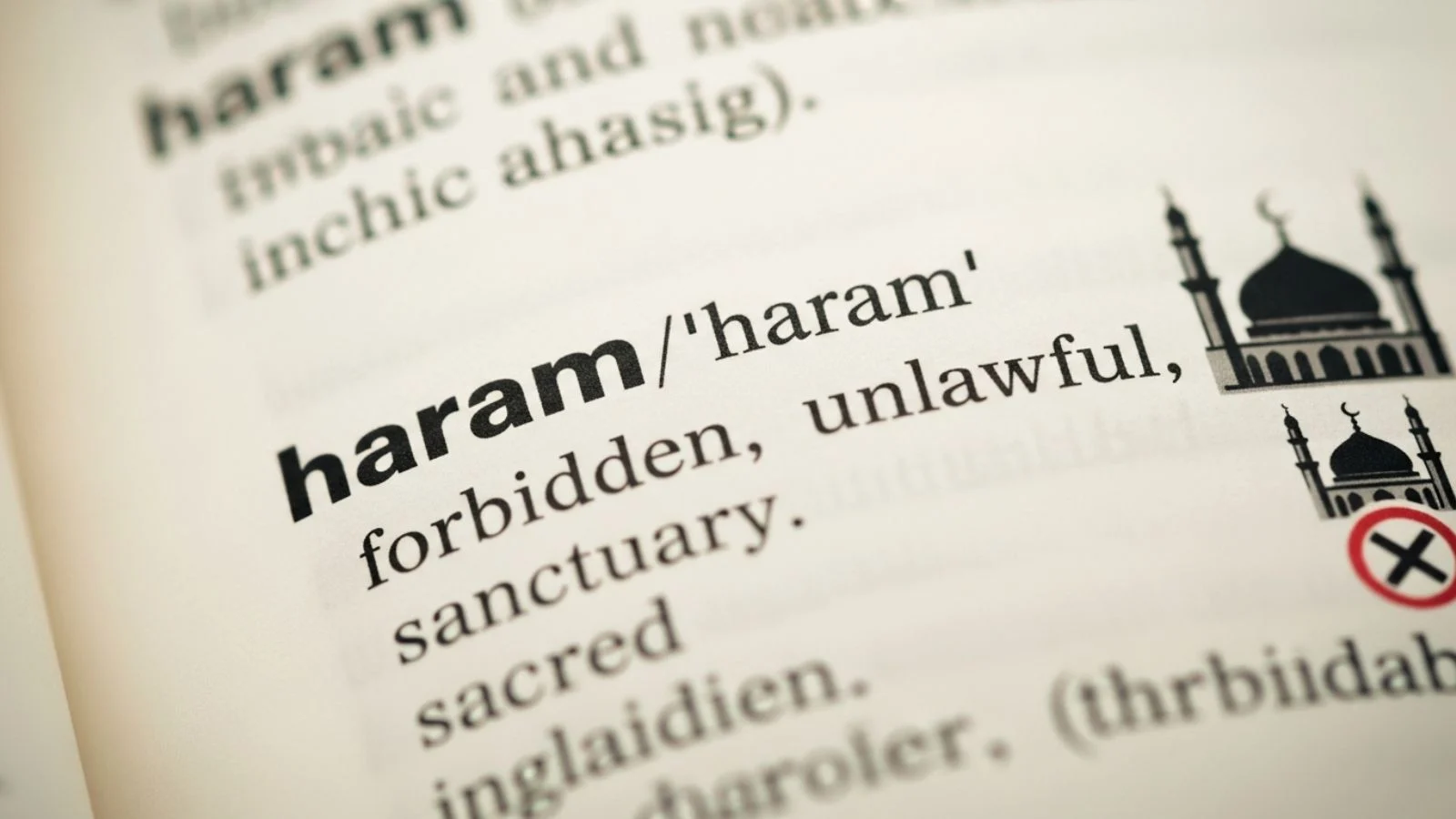
What Does Haram Mean?
The word haram is an Arabic term that literally means forbidden or prohibited. In Islamic culture, it refers to actions, foods, or behaviors that are not allowed according to Islamic law (Sharia). Using or performing something haram is considered sinful.
In simple words:
- Haram = Not allowed / Forbidden.
For example: Eating pork is considered haram in Islam because it is prohibited in the Quran.
Origin and History of the Word Haram
The word haram comes from the Arabic root ḥ-r-m (ح-ر-م). This root conveys the idea of forbidden, sacred, or protected. Historically, it was used in the Quran and Islamic texts to classify actions, foods, and behaviors that Muslims should avoid.
- In early Islamic history, haram was also associated with sacred places. For example, the Haram Mosque in Mecca is a holy place where Muslims are not allowed to commit any wrongdoing.
- Over centuries, the word expanded to describe anything that is morally, socially, or religiously forbidden.
Real-Life Examples of Haram
Here are some common examples of haram in everyday life:
| Action / Item | Explanation |
|---|---|
| Eating pork | Forbidden food in Islam; considered unhealthy and spiritually impure. |
| Drinking alcohol | Consuming alcohol is prohibited because it affects judgment and behavior. |
| Gambling | Considered haram as it promotes greed and loss of money unfairly. |
| Lying or cheating | Dishonest behavior is forbidden in Islam; harms trust and society. |
| Stealing | Taking someone else’s property is morally and legally prohibited. |
Short dialogue example:
- Ali: Can I eat this pork sandwich?
- Sara: No, Ali. It is haram, so you should avoid it.
Explanation: This shows a simple, everyday context of using haram.
Usage Context of Haram
The word haram can be used in different contexts:
1. Religious Context
Used to describe forbidden acts in Islam.
- Example: “Cheating on a test is haram.”
2. Moral Context
Used to describe something ethically wrong even outside religion.
- Example: “It’s haram to lie to your friends.”
3. Cultural or Social Context
In some societies, haram is used to describe behavior that is socially unacceptable.
- Example: “Skipping prayers is considered haram in our community.”
Personality Traits Associated with Haram
People often associate haram with behaviors that show weak self-control, dishonesty, or greed. Avoiding haram often reflects:
- Discipline: Following rules and moral standards.
- Respectfulness: Respecting others’ rights and societal norms.
- Spiritual Awareness: Awareness of Islamic laws and ethics.
Common Mistakes and Misconceptions
Misconception 1: Haram is only about food
Truth: While food rules are common, haram covers all forbidden actions, like lying, stealing, or harming others.
Misconception 2: Haram is only for Muslims
Truth: Anyone can understand or follow haram principles as moral guidance; it’s not limited to practicing Muslims.
Misconception 3: Minor mistakes are not haram
Truth: Even small actions can be haram if they clearly violate rules, like minor dishonesty or gossip.
Modern and Relatable Examples of Haram (2026 Update)
- Social media misuse: Sharing false news or private info can be considered haram because it harms others.
- Streaming pirated movies: Downloading illegally is haram as it is stealing intellectual property.
- Unethical AI usage: Using AI to cheat or manipulate people can also be considered haram.
Short dialogue example:
- Nadia: Is it okay to watch pirated movies online?
- Omar: No, Nadia. That is haram because it’s stealing content.
Explanation: These examples show how haram applies to modern life in 2026.
List of Haram vs Halal
| Concept | Haram (Forbidden) | Halal (Allowed) |
|---|---|---|
| Food | Pork, alcohol, certain meats | Fruits, vegetables, halal meat |
| Money | Interest (Riba), gambling | Honest business, fair trade |
| Behavior | Lying, stealing, cheating | Honesty, charity, helping others |
| Entertainment | Pornography, violent games | Reading, learning, sports |
| Technology use | Piracy, AI manipulation | Legal apps, learning, work tools |
How to Use Haram in a Sentence
- Eating alcohol is haram for Muslims.
- Cheating on exams is clearly haram.
- Sharing fake news online can be haram today.
- Gambling is haram because it wastes money.
- Using someone else’s ideas without credit is haram.
Explanation: These sentences show clear, practical use of haram in everyday language.
FAQs About Haram
1. What is the opposite of haram?
The opposite is halal, which means permitted or allowed in Islam.
2. Can haram differ by culture?
Yes, cultural norms may affect what is considered haram, but core Islamic rules remain the same globally.
3. Is haram only for adults?
No, children are taught what is haram as part of moral education.
4. Can something become haram over time?
Yes, new laws or technology may create situations where something becomes haram, like AI cheating.
5. Is eating haram food always a sin?
Yes, knowingly consuming haram food is considered a sin. Accidentally eating it may not carry the same responsibility.
6. Can haram affect health?
Yes, many haram actions, like drinking alcohol, have negative physical, mental, and spiritual effects.
7. How do I avoid haram in daily life?
Follow Islamic teachings, moral guidelines, and legal rules. Be mindful of actions, words, and habits.
Conclusion
Understanding haram is crucial for making ethical, spiritual, and moral choices. It is not just a religious rule but a guide to leading a healthy, honest, and disciplined life. Avoiding haram actions, whether in food, behavior, or technology, helps individuals gain respect, peace, and spiritual growth.
Start practicing awareness of what is haram today. Observe your actions, learn from mistakes, and choose what is right. By understanding and applying haram, you strengthen both your moral and spiritual life.
Discover More Post
Maiden Name Meaning: A Complete Guide for 2026
BBG Meaning: What It Really Means in Text and Social Media (2026 Guide)
JIT Meaning: Simple Definition, Origin, Examples, and Modern Usage (2026 Guide)