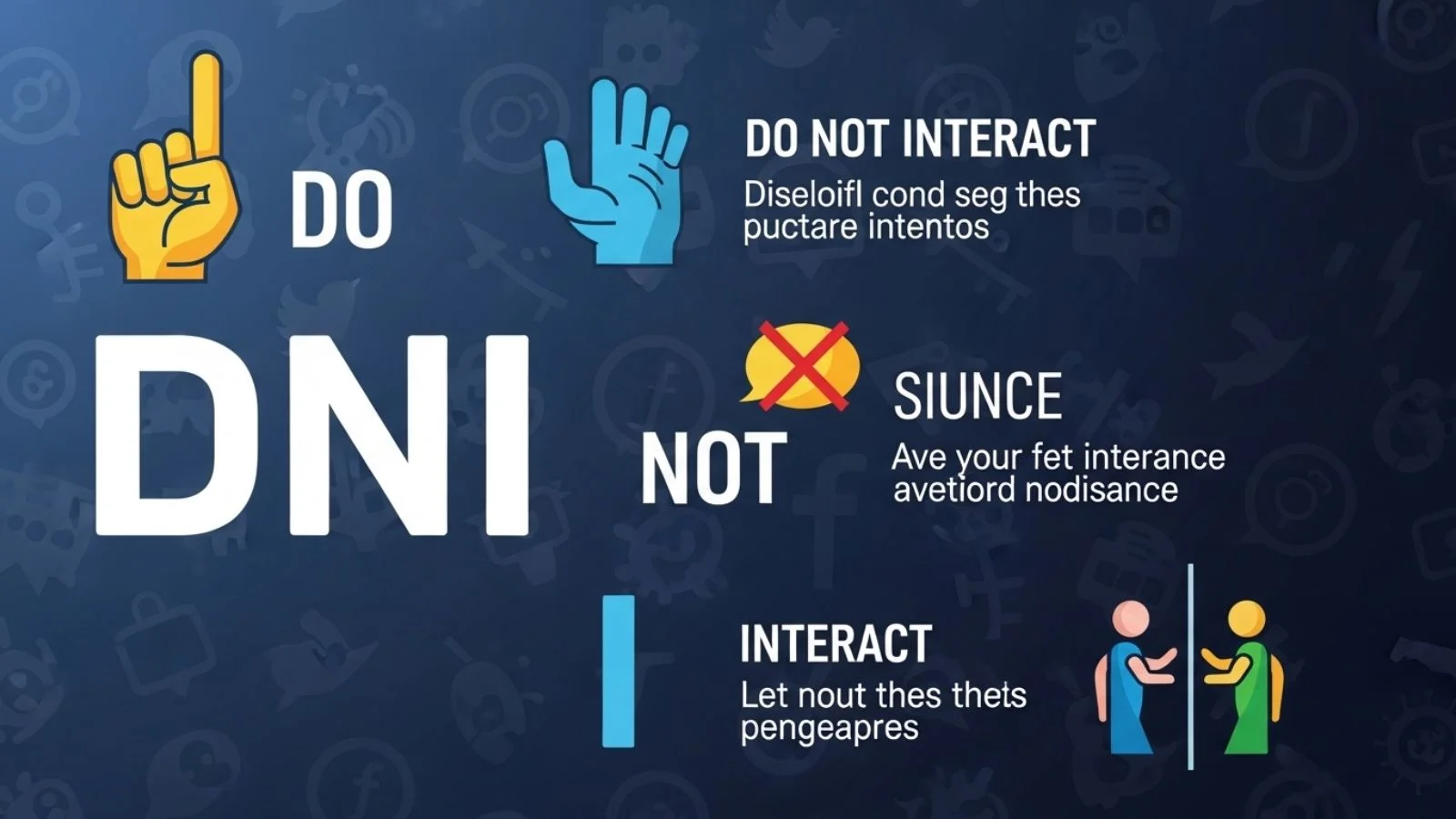
The term DNI in text stands for “Do Not Interact” or “Do Not Intervene.”
In most online spaces, especially on social media, DNI means:
A person is saying, “Do not contact me, follow me, message me, or interact with me.”
It is often used in bios, profiles, or posts to set clear boundaries.
Simple Definition of DNI
In very simple words:
- DNI = Do not talk to me
- DNI = Do not follow or message me
- DNI = Stay away from my content
People use it to protect their privacy, comfort, or personal space online.
Where Is DNI Used?
You will often see DNI in:
- Social media bios (Instagram, TikTok, Twitter/X)
- Online communities (forums, Discord)
- Comments or posts
- Roleplay or fandom spaces
Origin and History of DNI
The term DNI became popular in the early 2010s with the rise of:
- Social media platforms
- Online communities
- Fandom culture
As people started interacting with strangers online, they needed a way to set boundaries clearly and quickly.
So, instead of writing long sentences like:
“Please do not follow me or interact with my posts if you are under 18.”
People started writing:
DNI: under 18
This made communication short, clear, and fast.
Why Do People Use DNI?
People use DNI for many reasons:
1. Privacy Protection
They want to keep their life private.
2. Safety
They avoid unwanted or harmful interactions.
3. Comfort
They feel uncomfortable talking to certain people.
4. Personal Boundaries
They clearly say what is acceptable and what is not.
5. Online Identity Control
They control who can see or interact with their content.
Common DNI Examples in Text
Here are some common examples of how DNI is used:
Example 1:
“DNI: minors”
Explanation:
This means the person does not want anyone under 18 to interact with them.
Example 2:
“DNI if you are rude”
Explanation:
They do not want people who behave in a disrespectful way.
Example 3:
“DNI: toxic people”
Explanation:
They want to avoid negative or harmful personalities.
Example 4:
“DNI: no spam accounts”
Explanation:
They do not want fake or spam accounts interacting with them.
Short Real-Life Dialogues
Dialogue 1
Person A: Hey, I followed you.
Person B: Sorry, my profile says DNI.
Explanation:
Person B is politely saying they do not want interaction because they have set boundaries.
Dialogue 2
Person A: Can I message you?
Person B: I have DNI in my bio.
Explanation:
Person B is saying they do not accept messages from others.
Dialogue 3
Person A: Why didn’t you reply?
Person B: I wrote DNI for strangers.
Explanation:
Person B avoids replying because they only allow certain people to interact.
Personality Traits of People Who Use DNI
People who use DNI often have these traits:
- Value privacy
- Prefer limited interaction
- Want control over their space
- Are often introverted or careful
- Strong about boundaries
- May have had bad experiences online
Types of DNI Usage
Here are different ways people use DNI:
| Type | Example | Meaning |
|---|---|---|
| Age-based | DNI: minors | No one under a certain age |
| Behavior-based | DNI: toxic users | Avoid bad behavior |
| Identity-based | DNI: trolls | Avoid disruptive users |
| Content-based | DNI: NSFW accounts | Avoid adult content users |
| Personal | DNI: strangers | Only known people allowed |
Modern Usage of DNI in 2026
In 2026, DNI is more common than ever due to:
- Growth of social media platforms
- Increased online privacy concerns
- Rise of digital safety awareness
- More people expressing personal boundaries
Today, you might see:
- “DNI if you don’t respect pronouns”
- “DNI: no AI bots”
- “DNI if you spread hate”
- “DNI: no repost without credit”
These show that DNI has evolved with modern values and digital culture.
How to Respond to DNI
If you see DNI, here is how to respond:
Do:
- Respect the boundary
- Do not message or follow
- Move on politely
Don’t:
- Ignore the DNI
- Try to argue or convince
- Force interaction
Important: Respecting DNI shows good online behavior and respect for others.
Common Mistakes and Misconceptions
Mistake 1: Thinking DNI is rude
Some people think DNI is rude.
Truth:
It is not rude. It is just a clear boundary.
Mistake 2: Ignoring DNI rules
Some users still interact despite DNI.
Truth:
Ignoring DNI can lead to being blocked or reported.
Mistake 3: Misunderstanding the meaning
Some think DNI means:
- “Do Not Ignore” ❌
- “Do Not Invite” ❌
Correct meaning:
Do Not Interact or Do Not Intervene ✅
Mistake 4: Thinking DNI applies offline
DNI is mainly used online.
Comparison: DNI vs Other Internet Terms
| Term | Meaning | Purpose |
|---|---|---|
| DNI | Do Not Interact | Set boundaries |
| DM | Direct Message | Private chat |
| NSFW | Not Safe for Work | Adult content warning |
| FAQ | Frequently Asked Questions | Help section |
| IMO | In My Opinion | Express opinion |
Related Terms to DNI
Here are some related internet terms:
- DNI list – a list of people who should not interact
- BYF (Before You Follow) – rules before following
- DNI criteria – conditions for blocking interaction
- Boundaries – limits people set for interaction
When Should You Use DNI?
You can use DNI if:
- You want privacy
- You want less interaction
- You feel unsafe or uncomfortable
- You want to control your online space
Examples with Simple Explanations
Example 1:
“DNI: under 18”
Explanation:
Only adults should interact, not children.
Example 2:
“DNI: fake accounts”
Explanation:
They do not want bots or fake users.
Example 3:
“DNI if you argue online”
Explanation:
They want peaceful conversations only.
Example 4:
“DNI: strangers”
Explanation:
Only known people can interact.
Example 5:
“DNI: no spam”
Explanation:
They do not want repeated or unwanted messages.
Why DNI Is Important
DNI is important because it:
- Protects mental health
- Reduces online stress
- Helps avoid conflict
- Creates safe spaces
- Improves online communication
FAQs About DNI Meaning
1. What does DNI mean in text?
Answer:
DNI means Do Not Interact. It tells others not to message, follow, or engage with a person.
2. Is DNI rude?
Answer:
No, it is not rude. It is a boundary-setting tool to protect personal space.
3. Where do people use DNI?
Answer:
People use DNI in social media bios, posts, and online communities.
4. What happens if I ignore DNI?
Answer:
You may get blocked, reported, or ignored by the person.
5. Is DNI the same as blocking?
Answer:
No. DNI is a warning, while blocking is an action to stop interaction.
6. Can DNI be used in real life?
Answer:
It is mainly used online, but the idea of setting boundaries applies in real life too.
7. Why do people use DNI instead of explaining?
Answer:
DNI is short, fast, and easy to understand compared to long explanations.
Conclusion
DNI is a simple but powerful term used in online communication. It stands for Do Not Interact and helps people set clear boundaries. In today’s digital world, privacy and comfort are very important, and DNI plays a key role in protecting both. It allows users to control who can contact them and how others engage with their content.
Understanding DNI helps you become a better and more respectful internet user. Always respect others’ boundaries and follow their rules. If you see DNI in a profile or post, the best action is to respect it and move on.
If you want to improve your understanding of modern internet language and stay updated with digital communication trends, keep learning and exploring new terms like this.
Discover More Post
What Does Canon Event Mean in Text? (2026 Slang Guide with Examples & Replies)
What Does DW Meaning in Text? (2026 Slang Guide with Examples & Replies)
What Does Golden Fleece Mean in Text? (2026 Slang Guide with Examples & Replies)