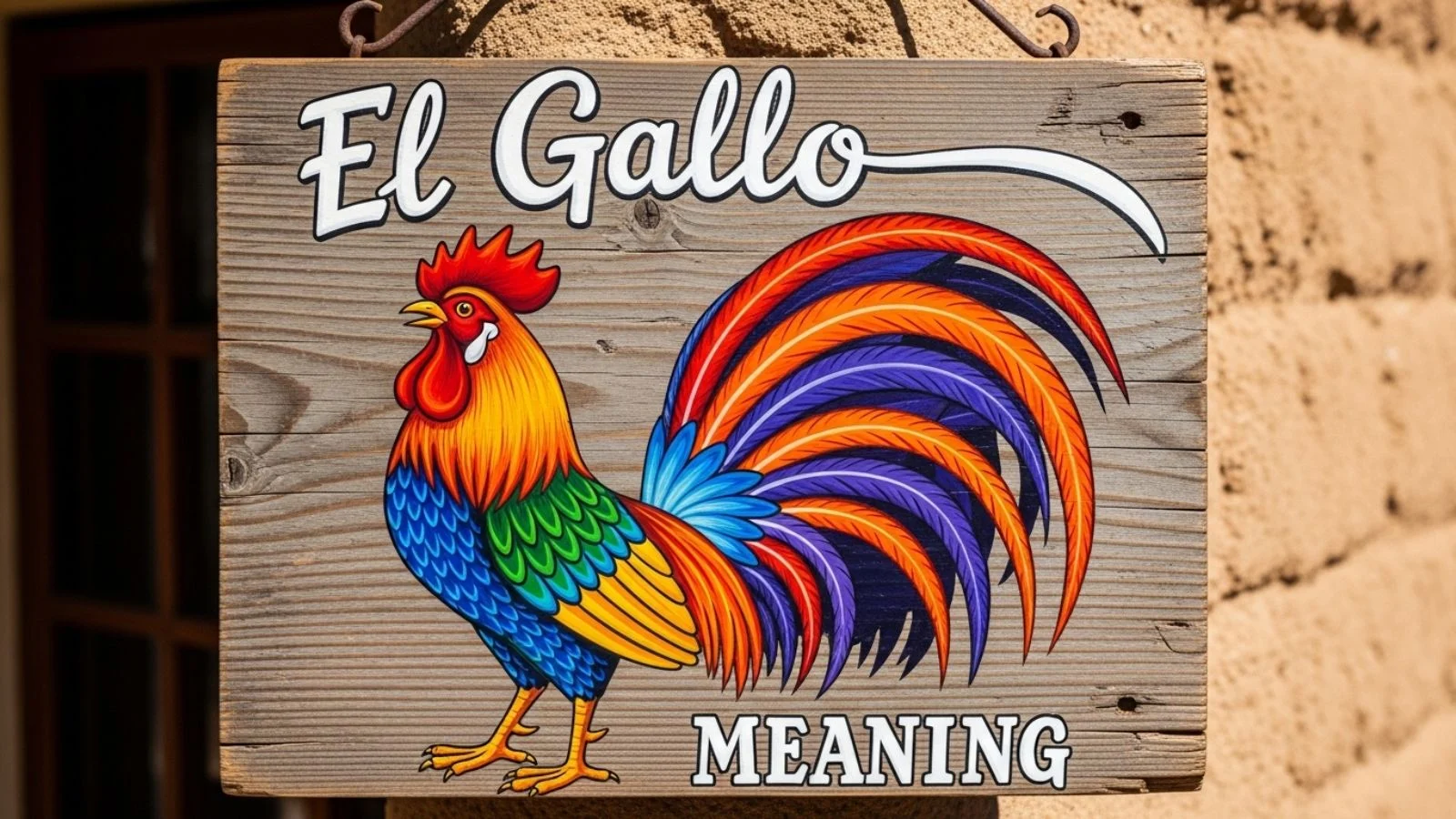
What Does El Gallo Mean?
El gallo is a Spanish phrase.
- El = “the”
- Gallo = “rooster”
So, the literal meaning is:
El gallo = The rooster
That is the basic meaning.
But in real life, the meaning changes depending on the situation.
Simple Definition in Everyday Language
Here is the meaning in simple words:
El gallo can mean:
- A real rooster (the farm bird).
- A brave or confident man.
- The leader or strongest person in a group.
- Someone who likes to show off.
The exact meaning depends on tone and context.
Literal Meaning: The Rooster
In basic Spanish, el gallo simply means a rooster.
A rooster is:
- A male chicken
- Loud in the morning
- Known for crowing
- Often proud and bold
Example:
“El gallo canta en la mañana.”
The rooster sings in the morning.
Explanation: This sentence talks about a real farm animal.
Origin and History of El Gallo
The Word “Gallo”
The word gallo comes from Latin:
- Latin word: gallus
- Meaning: rooster
Over time, Spanish kept the word and used it in daily speech.
Why Did It Become a Slang Word?
Roosters are:
- Loud
- Proud
- Protective
- Brave
- Competitive
Because of these traits, people began using gallo to describe men who act the same way.
This change happened many years ago in Spain and Latin America.
Cultural Influence in Spanish-Speaking Countries
In countries like:
- Mexico
- Spain
- Colombia
- Puerto Rico
The rooster became a symbol of:
- Masculinity
- Strength
- Pride
- Leadership
So calling someone “el gallo” can mean:
He is the top man.
El Gallo as Slang: Modern Meaning
Today, in 2026, el gallo is often used as slang.
It can mean:
- The boss
- The champion
- The most confident guy
- The alpha male
But sometimes, it can also mean:
- A man who brags too much
- A man who talks big but may not act
Tone is very important.
Personality Traits Linked to El Gallo
When someone is called el gallo, they often show these traits:
Positive Traits
- Confident
- Brave
- Strong
- Protective
- Leader
Example:
“Carlos es el gallo del equipo.”
Carlos is the top guy on the team.
Explanation: Carlos is the strongest or most important player.
Negative Traits
- Arrogant
- Loud
- Bossy
- Too proud
Example:
“Él actúa como el gallo.”
He acts like the rooster.
Explanation: He behaves like he is better than everyone.
Usage in Different Contexts
Let’s look at different situations.
1. In Sports
In sports, el gallo can mean:
- The best fighter
- The strongest player
- The team leader
Example:
“En el ring, él es el gallo.”
In the ring, he is the champion.
Explanation: He is the strongest fighter.
2. In Relationships
Sometimes it describes a man who:
- Protects his family
- Takes charge
- Acts dominant
Example:
“En su casa, él es el gallo.”
In his house, he is the boss.
Explanation: He makes the decisions.
3. In Music and Pop Culture
Many Latin songs use el gallo to show:
- Power
- Confidence
- Street respect
It often means:
The main guy who is not afraid.
Real-Life Short Dialogues (Easy to Understand)
Dialogue 1: Positive Meaning
Juan: “Who won the match?”
Maria: “Miguel did. He’s the gallo!”
Explanation: Miguel is the strongest or best.
Dialogue 2: Negative Meaning
Ana: “Why is he shouting?”
Luisa: “He thinks he’s el gallo.”
Explanation: He believes he is better than others.
Dialogue 3: Friendly Compliment
Friend 1: “Nice job at work!”
Friend 2: “Gracias! Soy el gallo.”
Explanation: He proudly says he is the best.
El Gallo in Names and Titles
Sometimes El Gallo is used in:
- Nicknames
- Business names
- Restaurants
- Music groups
It gives a feeling of:
- Strength
- Power
- Bold identity
Example:
If a boxer is called “El Gallo,” it suggests he is fierce and strong.
Differences Between Literal and Slang Meaning
| Type | Meaning | Example | Explanation |
|---|---|---|---|
| Literal | Rooster (bird) | The gallo is crowing. | Real animal |
| Slang (positive) | Leader or champion | He’s the gallo here. | Top person |
| Slang (negative) | Arrogant man | He acts like the gallo. | Too proud |
This table helps beginners see the difference clearly.
Common Mistakes and Misconceptions
Mistake 1: Thinking It Always Means “Rooster”
Not true.
In many conversations, it does NOT mean a bird.
Context matters.
Mistake 2: Thinking It Is Always Positive
It is not always a compliment.
Tone decides meaning.
Mistake 3: Using It in Formal English
In formal English writing, do not say:
“He is the gallo of the company.”
Instead say:
“He is the leader.”
Use el gallo mainly in Spanish or casual talk.
El Gallo vs Similar Spanish Words
Here are similar words:
- El jefe = The boss
- El líder = The leader
- El campeón = The champion
Difference:
El gallo is more informal and emotional.
It feels bold and dramatic.
Modern Usage in 2026
In 2026, social media uses el gallo in fun ways.
On TikTok
People comment:
“He thinks he’s el gallo.”
Meaning: He is acting confident or cocky.
In Gaming
Gamers say:
“I’m the gallo in this lobby.”
Meaning: I’m the best player here.
In Memes
Memes use a rooster picture to show:
- Overconfidence
- Funny pride
- Big ego
It is popular in Latin online communities.
Psychological Meaning Behind the Word
The rooster is a strong symbol.
It represents:
- Morning energy
- Control
- Territory
- Dominance
When someone is called el gallo, it means:
They control the space.
It is linked to social hierarchy.
Gender and Cultural Considerations
Traditionally, el gallo refers to a man.
But language evolves.
In 2026, some women jokingly say:
“Soy el gallo aquí.”
Meaning: I am the boss here.
It shows confidence, not gender limits.
When NOT to Use El Gallo
Avoid using it:
- In professional emails
- In academic writing
- With people who don’t know Spanish
- In serious legal documents
It is mostly casual or cultural.
Quick Summary List
El gallo can mean:
- A rooster
- A brave man
- A confident leader
- A show-off
It depends on:
- Tone
- Situation
- Culture
Practice Examples for Beginners
Read and understand.
- “He walks like el gallo.”
Explanation: He walks proudly and confidently. - “Stop acting like el gallo.”
Explanation: Stop behaving like you are better than others. - “In our group, she’s the gallo.”
Explanation: She is the leader of the group. - “The gallo wakes the farm.”
Explanation: This is the real rooster.
Why El Gallo Is Popular in Language
It is:
- Short
- Strong
- Easy to remember
- Visual
When you hear it, you picture a proud rooster.
That makes the word powerful.
Frequently Asked Questions
1. Does el gallo always mean rooster?
No. It literally means rooster, but in slang it can mean leader or confident man.
2. Is el gallo an insult?
Sometimes. If said in a mocking tone, it can mean someone is arrogant.
3. Can women be called el gallo?
Traditionally it describes men, but today anyone can use it playfully.
4. Is el gallo formal Spanish?
No. It is informal when used as slang.
5. Why is the rooster linked to confidence?
Roosters are loud, proud, and protective. These traits became symbolic.
6. Is el gallo used in English?
Mostly in Spanish-speaking communities, but sometimes bilingual speakers use it casually.
Final Thoughts on El Gallo Meaning
The phrase el gallo may look simple, but it carries deep cultural meaning. At its core, it means “the rooster.” Yet in real life, it often describes a confident, brave, or dominant person. Depending on tone, it can be praise or playful criticism. Understanding context is key. Language grows with culture, and in 2026, el gallo remains popular in music, sports, gaming, and social media. If you hear it, listen carefully to how it is said. Now that you know its meaning and usage, you can understand and use it correctly in everyday conversations.
Discover More Post
Ight Meaning: Simple Definition, Origin, Examples, and How to Use It in 2026
Nevertheless Meaning: Simple Definition, Examples, Origin, and Easy Guide (2026)
Devil’s Advocate Meaning: Simple Definition, Origin, Examples, and Modern Use (2026 Guide)