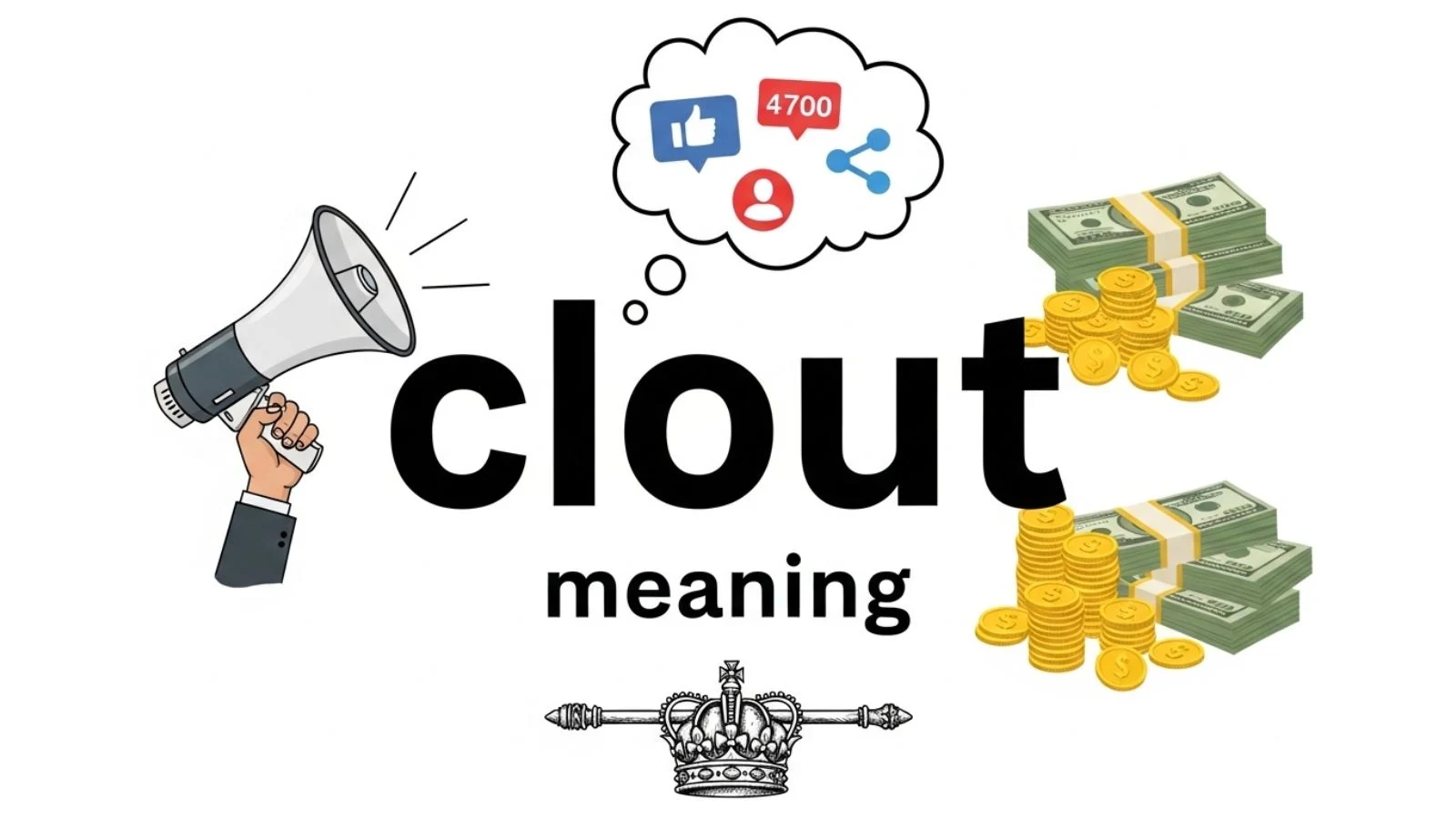
What Does Clout Mean?
Clout means power, influence, or popularity.
It is the ability to make people listen to you.
It is the ability to affect others.
In simple words:
Clout = influence over people
If someone has clout, people notice them.
People respect them.
People follow them.
Simple Definition in One Line
Clout is the power to influence others, especially because of fame or popularity.
Two Main Meanings of Clout
The word has two main meanings.
1. Traditional Meaning (Old Meaning)
In the past, clout meant power or influence in politics or business.
Example:
- “She has a lot of clout in the company.”
Explanation:
She has strong influence at work. People listen to her.
2. Modern Meaning (Social Media Meaning)
Today, clout mostly means online popularity or social influence.
Example:
- “He is chasing clout.”
Explanation:
He is trying to become famous online.
Origin and History of the Word Clout
Understanding the history helps you understand the word better.
Old English Roots
The word clout comes from Old English “clut,” which meant:
- A piece of cloth
- A patch
Later, it developed another meaning:
- A hard hit
- A strong blow
After that, it changed again.
19th Century Meaning
By the 1800s, clout started meaning political power or influence.
Example:
- “The senator has clout in Congress.”
This meant the senator had strong power and control.
21st Century Internet Shift
Around 2015–2020, the word changed again.
On platforms like:
- TikTok
- YouTube
- X (formerly Twitter)
Clout began to mean online fame and influence.
By 2026, it is mostly used in internet culture.
Clout in Simple Daily Language
Let’s break it down clearly.
If someone has clout, they:
- Have many followers
- Get lots of likes
- Influence trends
- Start viral moments
In short:
Clout is digital power.
Real-Life Examples of Clout
Here are easy examples.
Example 1: School
“Emma has clout at school.”
Explanation:
Many students listen to Emma. She is popular and respected.
Example 2: Workplace
“The manager has clout with the boss.”
Explanation:
The boss trusts the manager. Her opinion matters.
Example 3: Social Media
“He posted that video just for clout.”
Explanation:
He made the video only to get attention and fame.
Example 4: Celebrity Culture
“That singer has serious clout.”
Explanation:
The singer is very famous and influential.
Short Dialogues Using Clout
Dialogue 1: Social Media
Ayesha: “Why did he start drama online?”
Sara: “He wants clout.”
Explanation:
He wants attention and more followers.
Dialogue 2: Office
Ali: “Should we ask Maria for help?”
Hamza: “Yes, she has clout with management.”
Explanation:
Maria has influence with the leaders.
Dialogue 3: College
Ahmed: “Why is everyone agreeing with him?”
Bilal: “Because he has clout here.”
Explanation:
He is popular and powerful in that group.
Clout vs Fame vs Influence
People often confuse these words.
Let’s make it simple.
| Word | Meaning | Example | Difference |
|---|---|---|---|
| Clout | Power to influence | She has clout online | Focus on influence |
| Fame | Being well-known | He is famous | Focus on recognition |
| Influence | Ability to change opinions | She influences trends | More formal word |
Clout is usually informal.
It is popular in youth culture.
What Does “Clout Chasing” Mean?
This is very common in 2026.
Clout chasing means doing something only to get attention or fame.
Examples:
- Starting online fights
- Posting shocking content
- Hanging out with famous people for visibility
Example sentence:
“She is clout chasing again.”
Explanation:
She is trying to get attention using drama.
Signs Someone Is Clout Chasing
Here are common signs:
- They create fake drama
- They copy viral trends quickly
- They mention celebrities for attention
- They exaggerate stories
- They post controversial content
Not all attention-seeking is clout chasing.
But when fame is the only goal, it often is.
Personality Traits Linked to Clout
People with clout often have:
- Confidence
- Strong communication skills
- Leadership qualities
- Social awareness
- Charisma
However, clout chasing personalities may show:
- Attention-seeking behavior
- Insecurity
- Need for validation
- Drama creation
Clout itself is neutral.
It depends on how it is used.
Positive vs Negative Clout
Clout is not always bad.
Positive Clout
Used for:
- Spreading awareness
- Promoting good causes
- Helping communities
- Supporting small businesses
Example:
“She used her clout to raise money for charity.”
Explanation:
She used her influence to help others.
Negative Clout
Used for:
- Spreading rumors
- Online bullying
- Fake news
- Manipulation
Example:
“He used his clout to attack others.”
Explanation:
He misused his influence.
Clout in 2026: Modern Trends
Clout has changed in recent years.
1. Micro-Clout
Not everyone needs millions of followers.
Now even:
- 5,000 followers
- A strong niche audience
- A loyal community
can create clout.
2. AI-Driven Clout
In 2026:
- AI influencers exist
- Virtual creators gain followers
- Digital avatars have clout
Clout is not limited to real humans anymore.
3. Short-Form Video Clout
Platforms focus on:
- Short videos
- Live streams
- Real-time reactions
Quick viral moments create fast clout.
4. Local Clout
Clout is not only online.
Someone may have:
- Clout in school
- Clout in a city
- Clout in a company
Clout exists anywhere influence exists.
How to Use the Word Clout Correctly
Here are correct sentence examples:
- “She has clout in the industry.”
- “He is doing this for clout.”
- “That brand has social media clout.”
- “They used their clout wisely.”
Notice:
Clout is usually uncountable.
Correct:
“He has clout.”
Incorrect:
“He has many clouts.”
Common Mistakes and Misconceptions
Mistake 1: Clout Means Money
Not always.
Someone can have clout without being rich.
Mistake 2: Clout Is Always Bad
Wrong.
Clout can be positive when used responsibly.
Mistake 3: Clout Equals Fame
Not exactly.
A famous person may not have influence.
Clout is about influence, not just visibility.
Mistake 4: Only Influencers Have Clout
No.
Teachers, managers, and community leaders can have clout too.
Why People Care About Clout
In 2026, clout matters because:
- It brings opportunities
- It attracts brand deals
- It increases trust
- It creates authority
- It builds networks
Clout can open doors.
But it also creates pressure.
How Clout Affects Mental Health
Clout culture can:
- Increase comparison
- Create anxiety
- Cause burnout
- Lead to fake personalities
People may feel they must always perform.
Balance is important.
Healthy vs Unhealthy Clout Behavior
Healthy
- Being authentic
- Sharing helpful content
- Supporting others
- Building real community
Unhealthy
- Constant drama
- Fake stories
- Copying without credit
- Ignoring real life
The difference is intention.
Cultural Impact of Clout
Clout affects:
- Fashion trends
- Music trends
- Political discussions
- Social movements
Influencers shape public opinion quickly.
In 2026, online clout can change real-world outcomes.
Clout in Business
Businesses care about clout too.
A brand with clout:
- Has strong reputation
- Has loyal customers
- Influences market trends
Example:
“That startup has clout in the tech world.”
Explanation:
The company has strong influence in its industry.
Synonyms for Clout
Here are similar words:
- Influence
- Power
- Authority
- Pull
- Weight
- Credibility
But remember:
Clout is more informal and modern.
Antonyms of Clout
Opposite ideas include:
- Weakness
- Powerlessness
- Irrelevance
- Obscurity
If someone has no clout, people ignore them.
Quick Summary Table
| Aspect | Meaning |
|---|---|
| Core Meaning | Influence or power |
| Modern Meaning | Online popularity |
| Positive Use | Helping others |
| Negative Use | Attention seeking |
| Formal? | Mostly informal |
| Countable? | No |
Frequently Asked Questions
1. What does clout mean in slang?
In slang, clout means social media influence or popularity.
It often refers to online fame.
2. Is clout a bad word?
No.
Clout is neutral.
It becomes negative when used for manipulation or fake attention.
3. What is a clout chaser?
A clout chaser is someone who seeks fame or attention by using drama or famous people.
4. Can normal people have clout?
Yes.
Anyone with influence in a group can have clout.
5. Is clout only about social media?
No.
Clout also exists in politics, business, and communities.
6. How is clout different from popularity?
Popularity means many people know you.
Clout means people listen to you and follow your ideas.
7. Why is clout important in 2026?
Because influence spreads fast online.
Clout can shape trends, opinions, and business success.
Conclusion
Clout means influence, power, and the ability to shape opinions. In the past, it described political strength. Today, it often refers to social media influence. Clout can be positive when used for good causes and community growth. It becomes harmful when used for drama or fake attention. Understanding the true meaning of clout helps you use the word correctly and recognize its role in modern life. In 2026, influence matters more than ever. Use your voice wisely. Build real value. Focus on impact, not just attention. That is the smartest way to use clout.
Discover More Post
C/O Meaning: Simple Definition, Examples, History & Correct Usage (2026 Guide)
Innuendo Meaning: Simple Definition, Examples, Origin, and Modern Usage (2026 Guide)
Rain Check Meaning: Simple Definition, Origin, Examples, and Correct Usage (2026 Guide)