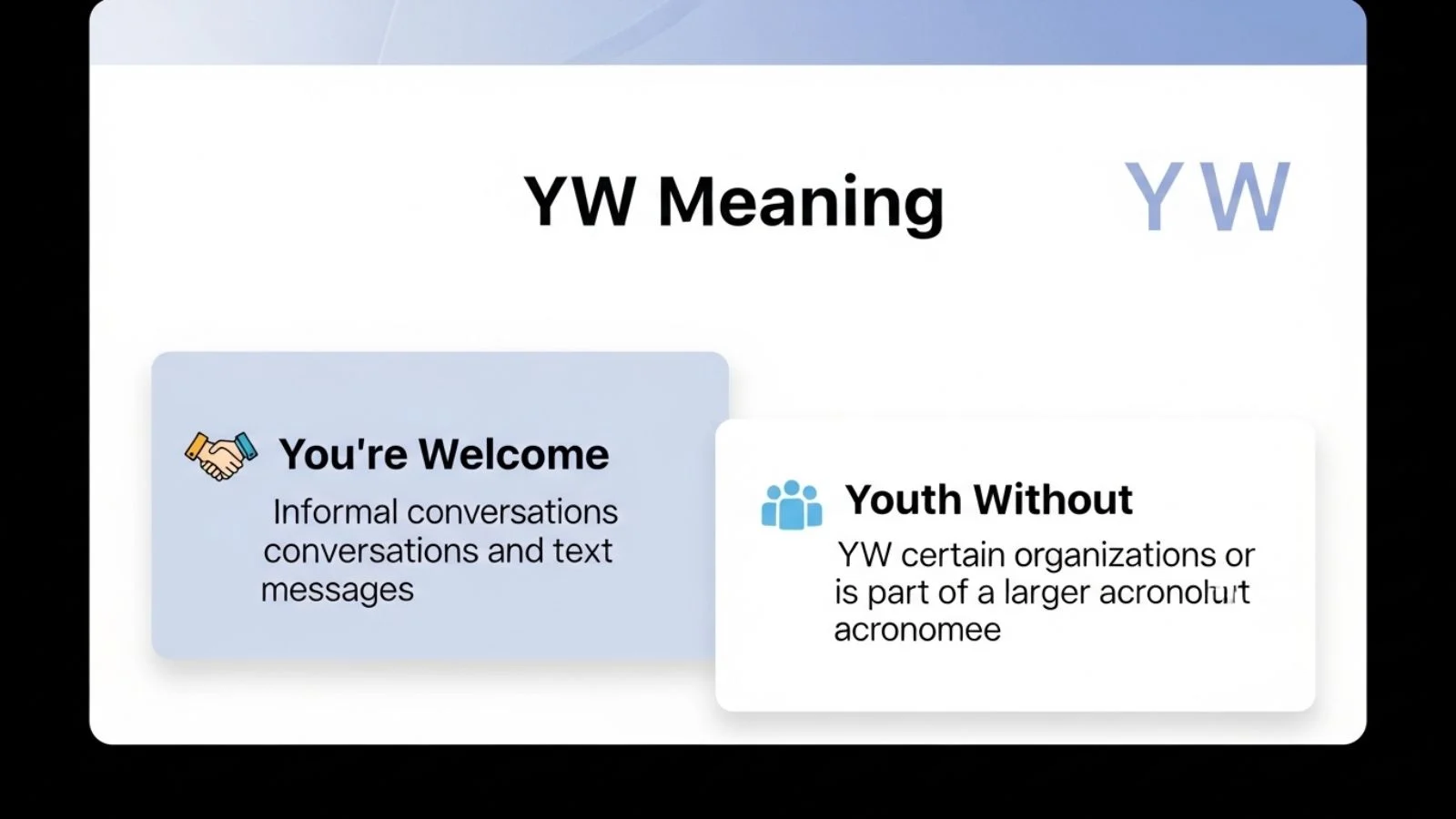
What Does YW Mean?
YW means “You’re Welcome.”
It is a short way to reply when someone says “Thank you.”
Simple Definition
YW = You’re Welcome
It is used in text messages, chats, and online conversations.
It shows that you are happy to help.
What Does “You’re Welcome” Mean?
“You’re welcome” is a polite reply.
You say it after someone thanks you.
It means:
- “It was no problem.”
- “I was happy to help.”
- “You do not need to thank me.”
So when someone writes:
“Thanks!”
You can reply:
“YW.”
That means the same as “You’re welcome.”
How YW Is Used in Real Life
Example 1: Simple Chat
Friend: Thanks for helping me with homework.
You: YW.
Explanation: You are politely replying after they thanked you.
Example 2: Online Gaming
Player 1: Thanks for the backup!
Player 2: YW.
Explanation: The player is showing friendly behavior after helping.
Example 3: Workplace Chat
Coworker: Thanks for sending the file.
You: YW.
Explanation: This is okay in casual work chats, but not in very formal emails.
Is YW Formal or Informal?
YW is informal.
That means it is best for:
- Friends
- Family
- Casual texting
- Social media
- Gaming chats
- Group chats
It is not ideal for:
- Formal emails
- Business proposals
- Academic writing
- Official letters
In formal writing, you should say:
- “You’re welcome.”
- “My pleasure.”
- “Glad to help.”
Origin and History of YW
Where Did YW Come From?
YW started as an internet abbreviation.
It became popular in:
- Early SMS texting (2000s)
- Chat rooms
- Online forums
- Instant messaging apps
Back then, people had limited characters in text messages. So they shortened words.
Examples from that time:
- LOL = Laugh Out Loud
- BRB = Be Right Back
- TY = Thank You
- YW = You’re Welcome
Short forms saved time and space.
Why People Use YW
People use YW because it is:
- Quick
- Easy to type
- Casual
- Friendly
- Efficient
In fast conversations, typing “You’re welcome” every time feels slow. So many people choose YW.
YW in Different Platforms (2026 Update)
Here is how YW is used in modern apps.
| Platform | Is YW Common? | Notes |
|---|---|---|
| Yes | Very common in casual chats | |
| Instagram DMs | Yes | Used in friendly replies |
| Snapchat | Yes | Short and fast replies |
| TikTok comments | Sometimes | Used in reply threads |
| Discord | Very common | Popular in gaming communities |
| Work Slack | Depends | Only in casual teams |
In 2026, short replies are still popular. But tone matters more now.
Some people prefer warmer replies like:
- “No problem!”
- “Anytime!”
- “Happy to help!”
Tone and Personality Behind YW
Using YW can show certain personality traits.
1. Efficient Person
You like short and clear messages.
2. Casual Communicator
You prefer relaxed conversations.
3. Comfortable Relationship
You use it with people you know well.
However, sometimes YW may feel:
- Cold
- Too short
- Slightly dismissive
That depends on tone and context.
When YW Might Feel Rude
Even though YW is polite, sometimes it can feel dry.
Example:
Boss: Thank you for staying late.
Employee: YW.
This might feel too short.
Better reply:
“You’re welcome. Happy to help.”
Explanation: In professional settings, longer replies feel more respectful.
Better Alternatives to YW
Here are some friendly alternatives.
Casual Alternatives
- No problem
- Anytime
- Sure thing
- Of course
- Happy to help
Friendly and Warm
- Glad I could help
- Always here for you
- Don’t mention it
Professional
- You’re welcome
- My pleasure
- It was my pleasure assisting you
- I’m happy to help
Real-Life Dialogue Examples (With Explanation)
Dialogue 1 – Friends
Sara: Thanks for picking me up.
Ali: YW.
Explanation: Short and friendly reply between friends.
Dialogue 2 – Teacher and Student
Student: Thank you for explaining again.
Teacher: You’re welcome.
Explanation: Full phrase sounds more respectful in education.
Dialogue 3 – Social Media
Follower: Thanks for the advice!
Influencer: YW!
Explanation: Casual and fast reply in public comments.
Dialogue 4 – Customer Support
Customer: Thank you for fixing the issue.
Agent: My pleasure.
Explanation: Professional reply works better than YW.
Common Mistakes About YW
Many people misunderstand YW.
Mistake 1: Thinking YW Has Other Meanings
Sometimes people think YW means:
- Yeah Whatever
- Your Way
These meanings are not common.
In texting, YW almost always means “You’re Welcome.”
Mistake 2: Using YW in Formal Emails
Wrong:
Dear Sir,
Thank you for your support.
YW.
Correct:
Dear Sir,
You’re welcome. I’m glad I could assist.
Mistake 3: Confusing YW with “NP”
NP = No Problem
They are similar but slightly different in tone.
- YW = Polite reply
- NP = Casual reassurance
How YW Compares to Other Text Abbreviations
Here is a quick comparison table.
| Abbreviation | Full Form | Meaning | Formal? |
|---|---|---|---|
| YW | You’re Welcome | Polite reply | No |
| TY | Thank You | Shows gratitude | No |
| NP | No Problem | Casual reassurance | No |
| BRB | Be Right Back | Leaving temporarily | No |
| LOL | Laugh Out Loud | Shows laughter | No |
All are informal.
Psychological Meaning of Short Replies
Short replies like YW can mean:
- Comfort
- Efficiency
- Habit texting
- Fast communication style
But in some cases, very short replies may feel:
- Emotionless
- Uninterested
- Cold
That is why context matters.
YW in Professional Settings (2026 Perspective)
In 2026, work culture is changing.
Many companies now use:
- Slack
- Microsoft Teams
- Remote chats
In relaxed companies, YW is accepted.
In strict corporate environments, full phrases are better.
Safe Professional Rule
If unsure, do not use YW.
Use:
“You’re welcome. Happy to assist.”
Generational Differences in Using YW
Different age groups use YW differently.
Gen Z
- Uses short replies
- Prefers fast typing
- Often mixes abbreviations
Millennials
- Comfortable with YW
- Uses both short and full replies
Older Professionals
- Prefer full sentences
- May see YW as too casual
Is YW Still Popular in 2026?
Yes, but trends are changing.
People now like:
- Voice notes
- Emojis
- Reaction buttons
Instead of typing YW, many people now react with:
- Thumbs up
- Heart
- Smile reaction
But YW is still widely understood.
Situations Where You Should Avoid YW
Avoid YW when:
- Writing to your boss
- Talking to a client
- Sending a formal email
- Writing academic content
- Replying to serious messages
Example:
“I appreciate your emotional support.”
Replying with just “YW” may feel insensitive.
Better reply:
“I’m glad I could be there for you.”
Cultural Understanding of YW
In English-speaking countries:
“You’re welcome” is normal politeness.
In some cultures, people reply differently.
For example:
- “It’s nothing.”
- “No need to thank me.”
YW keeps the same polite meaning in digital form.
How to Decide If You Should Use YW
Ask yourself:
- Is this a casual conversation?
- Is this person my friend?
- Is this platform informal?
- Is tone important here?
If yes to casual — YW is fine.
If professional — use full words.
Quick Summary List
YW means:
- You’re Welcome
- Polite reply
- Informal texting
Use it in:
- Casual chats
- Social media
- Gaming
- Friend groups
Avoid it in:
- Formal emails
- Job communication
- Academic writing
Frequently Asked Questions
1. What does YW stand for in text?
YW stands for “You’re Welcome.” It is a short reply after someone says thank you.
2. Is YW rude?
No, YW is not rude. It is polite but informal. It may feel too short in serious situations.
3. Can I use YW at work?
Only in casual workplace chats. Avoid it in formal emails or professional documents.
4. Is YW still used in 2026?
Yes. It is still common in texting and social media, though full replies are becoming more popular.
5. What is better than YW?
Better options include:
- “No problem”
- “My pleasure”
- “Happy to help”
These feel warmer.
6. Does YW mean anything else?
In texting, it almost always means “You’re Welcome.” Other meanings are rare.
Final Thoughts on YW Meaning
Understanding YW meaning helps you communicate better in modern digital life. It is a simple, polite, and informal way to say “You’re welcome.” It works best in friendly conversations, quick chats, and social media. However, tone and context always matter. In professional or emotional situations, longer and warmer replies are safer. Language continues to evolve, especially online. Knowing when to use short forms like YW shows strong communication skills. If you want to improve your English texting skills, start noticing how others reply and adjust your tone wisely. Clear and kind communication always wins.
Discover More Post
YH Meaning in Text: Simple Definition, Origin, Examples & Complete Usage Guide (2026)
CBA Meaning: What Does CBA Mean in Text?
GTS Meaning in Text: Simple Definition, Examples, and Real Usage (2026 Guide)