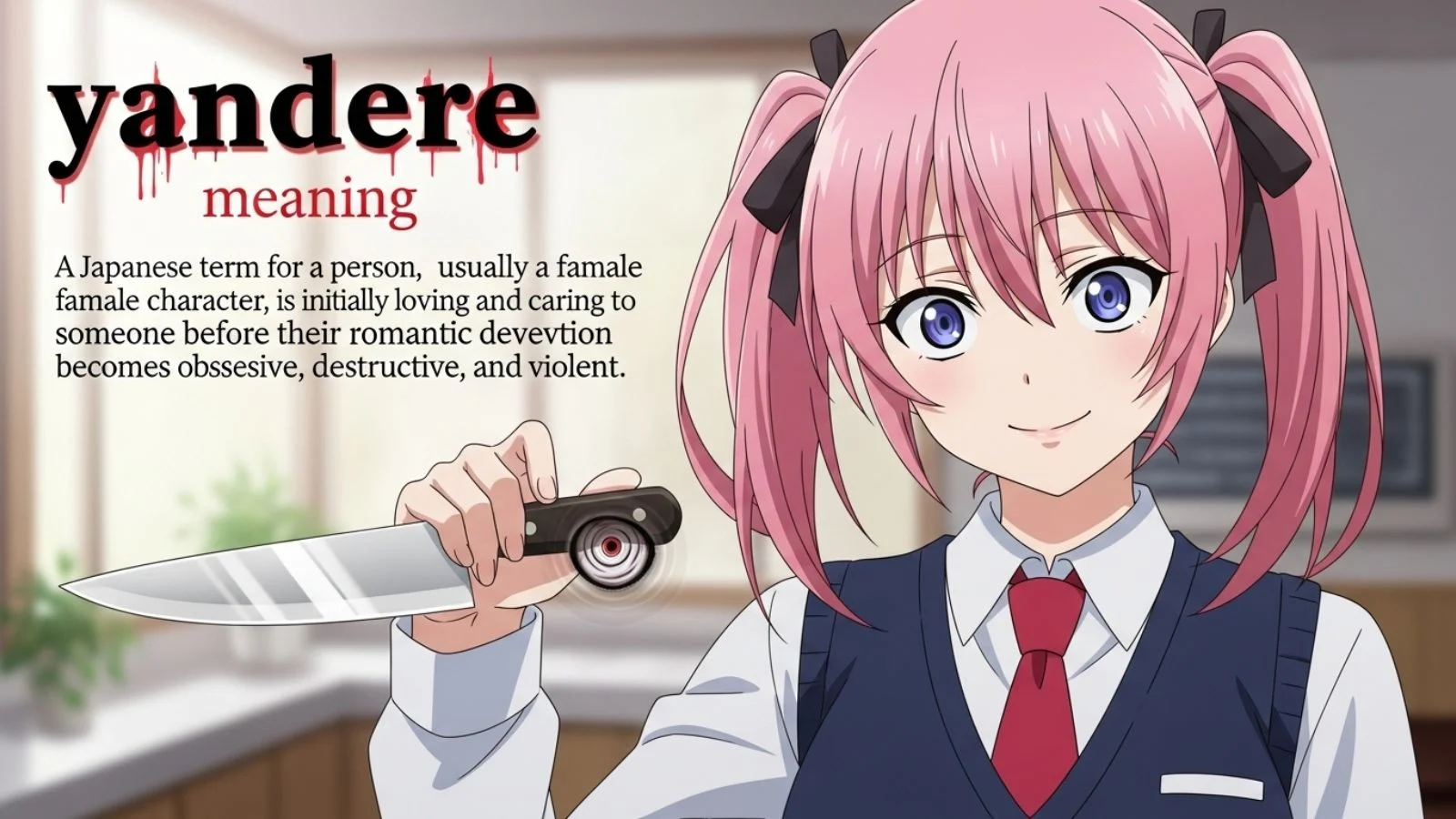
What Does Yandere Mean?
Yandere is a Japanese word used to describe a person who is:
- Very loving at first
- But becomes emotionally unstable or violent because of love
In simple words:
A yandere is someone who loves a person so much that their love turns unhealthy, obsessive, or dangerous.
The word is mostly used in anime, manga, and online fandom culture.
Simple Definition in Easy Words
Let’s break it down.
A yandere person:
- Looks sweet and caring
- Acts kind in public
- But becomes jealous, possessive, or extreme when it comes to love
They may say:
“I love you so much… I can’t live without you.”
But their love is not calm. It is intense and sometimes scary.
This is why the word is linked with obsession.
Origin and History of the Word Yandere
The word comes from Japan.
It is made of two parts:
| Japanese Word | Meaning |
|---|---|
| Yanderu (病んでる) | Mentally sick or emotionally ill |
| Deredere (デレデレ) | Lovey-dovey or sweet in love |
When you combine them, you get:
Yandere = Mentally unstable + Sweet in love
The term became popular in early 2000s anime culture.
Fans used it to describe characters who looked cute but acted dangerously in love.
By 2010, the word spread globally through:
- Anime communities
- YouTube
- Tumblr
- Fan fiction
- Gaming culture
By 2026, it is common slang online.
How Yandere Is Used in Anime
In anime stories, a yandere character:
- Loves one person deeply
- Becomes jealous easily
- May harm others for love
- Sometimes harms the person they love
But remember:
This is fiction. It is part of storytelling drama.
Famous Yandere Characters
Here are some well-known examples.
1. Yuno Gasai – My Future Diary
Yuno is one of the most famous yandere characters.
She loves the main character deeply.
But she becomes violent to protect him.
Explanation:
Her love is strong, but it turns dangerous when she feels threatened.
2. Kotonoha Katsura – School Days
Kotonoha starts shy and sweet.
Later, jealousy changes her behavior.
Explanation:
Her emotional pain turns into obsession.
3. Satou Matsuzaka – Happy Sugar Life
Satou wants “pure love.”
But she will do anything to protect it.
Explanation:
She believes her actions are justified because of love.
Main Personality Traits of a Yandere
Here are common yandere traits:
1. Extreme Love
They love deeply and fully.
But the love is not balanced.
2. Jealousy
They feel threatened easily.
Even small things can upset them.
3. Possessiveness
They want their partner only for themselves.
They may say:
“You belong to me.”
4. Emotional Instability
Their mood changes fast.
They can go from sweet to angry quickly.
5. Obsession
They think about one person all the time.
Their whole world becomes that person.
Yandere vs Other Anime Personality Types
People often confuse yandere with other types.
Here is a simple comparison:
| Type | Meaning | Behavior |
|---|---|---|
| Yandere | Obsessed lover | Sweet but dangerous |
| Tsundere | Cold then warm | Acts mean, later caring |
| Kuudere | Calm and quiet | Shows little emotion |
| Deredere | Purely sweet | Always loving and kind |
Key difference:
A yandere becomes unstable because of love.
A tsundere does not become violent or obsessive.
Real-Life Example of Yandere Behavior
In real life, the word is used more casually.
People do not mean actual violence.
They usually mean someone is “too obsessed.”
Example 1: Text Conversation
Sara: “Why didn’t you reply for 5 minutes?”
Ali: “I was in the shower.”
Sara: “You don’t love me anymore.”
Explanation:
Sara is acting overly jealous for a small delay. Friends may jokingly call this “yandere behavior.”
Example 2: Social Media Comment
“I don’t care who likes your photo. You are mine.”
Explanation:
This shows possessive language. It sounds romantic but can feel controlling.
Example 3: Gaming Chat
Player 1: “He talks to other girls in the game.”
Player 2: “Wow, you’re acting yandere.”
Explanation:
Here, it means someone is being too jealous in a playful way.
Is Yandere a Mental Illness?
No.
Yandere is not a medical term.
It is:
- A fictional character trope
- A pop culture label
In real life, extreme jealousy and obsession may relate to emotional or mental health issues.
But you should not use “yandere” as a medical diagnosis.
Common Misconceptions About Yandere
Many people misunderstand the word.
Misconception 1: All Yandere Are Evil
Not true.
Some characters are tragic, not evil.
They act badly because of emotional pain.
Misconception 2: Yandere Means Psychopath
Wrong.
A psychopath has different traits.
Yandere is about love turning unhealthy.
Misconception 3: It Is Romantic in Real Life
This is dangerous thinking.
Obsession is not healthy love.
Real love includes:
- Trust
- Respect
- Space
- Communication
Modern Usage of Yandere in 2026
In 2026, the word is used in:
- TikTok captions
- Instagram memes
- AI character bots
- Online roleplay
- Anime edits
Many creators label characters as:
- “Soft yandere”
- “Cute yandere”
- “Dark yandere”
Often it is exaggerated for humor.
Example caption:
“When he likes another girl’s post and I turn yandere.”
Explanation:
This is a joke about jealousy, not real violence.
Healthy Love vs Yandere Behavior
Let’s compare clearly.
| Healthy Love | Yandere Behavior |
|---|---|
| Gives space | Controls partner |
| Trusts partner | Constant suspicion |
| Communicates calmly | Emotional outbursts |
| Encourages freedom | Wants total control |
This table helps beginners understand the difference.
Why People Find Yandere Characters Interesting
There are reasons fans like them.
1. Drama
They create intense story moments.
2. Emotional Depth
Their feelings are extreme and powerful.
3. Mystery
You never know what they will do next.
4. Fantasy
It feels exciting in fiction.
But remember:
Fiction is not real life.
Psychological View of Yandere Traits
From a learning perspective:
Yandere traits often show:
- Fear of abandonment
- Low self-esteem
- Attachment anxiety
- Emotional dependency
In stories, these traits are exaggerated.
In real life, these issues should be handled with care and support.
Short Dialogue Examples With Explanation
Dialogue 1
Aisha: “Who were you texting?”
Omar: “My cousin.”
Aisha: “Don’t lie to me.”
Explanation:
Suspicion without proof shows insecurity.
Dialogue 2
Boyfriend: “I need some alone time.”
Girlfriend: “If you leave, I’ll hurt myself.”
Explanation:
Emotional manipulation is unhealthy and serious.
Dialogue 3
Friend: “You’re acting like a yandere.”
Girl: “Maybe I just love him too much.”
Explanation:
Friends use the word jokingly to describe obsession.
Is It Okay to Call Someone Yandere?
It depends on context.
Safe situations:
- Anime discussion
- Meme culture
- Roleplay
Not safe situations:
- Real emotional conflict
- Serious relationship problems
- Mental health discussions
Be respectful.
Yandere in Online Roleplay and AI Culture
In 2026, many AI chat characters are labeled “yandere.”
Users enjoy:
- Dramatic love stories
- Intense fictional romance
- Fantasy personality types
But users should remember:
It is entertainment.
Warning Signs of Unhealthy Obsession in Real Life
If someone:
- Controls who you talk to
- Gets angry over small things
- Threatens self-harm to control you
- Monitors your phone constantly
This is not cute.
This is unhealthy behavior.
Seek support if needed.
How to Use the Word Yandere Correctly
Correct usage:
“She’s a yandere character in that anime.”
Incorrect usage:
“He didn’t text me back, so he’s yandere.”
Yandere usually describes someone obsessed with love, not someone ignoring texts.
Cultural Importance of the Word
Yandere shows how language evolves.
It started in Japan.
Now it is global slang.
It shows:
- Internet culture spreads fast
- Anime influences global language
- Young people create new meanings
Frequently Asked Questions
1. What does yandere mean in simple words?
It means a person who loves someone so much that the love becomes obsessive or unhealthy.
2. Is yandere a bad word?
Not exactly.
It is a fictional label.
But in real life, obsession is unhealthy.
3. Can a real person be a yandere?
The term is fictional.
But people can show obsessive behavior similar to it.
4. What is the difference between yandere and tsundere?
Yandere becomes unstable because of love.
Tsundere acts cold but later shows kindness.
5. Why are yandere characters popular?
They create strong drama and emotional excitement in stories.
6. Is being jealous the same as being yandere?
No.
Normal jealousy is common.
Yandere behavior is extreme and obsessive.
7. Is yandere romantic?
In fiction, it may look dramatic.
In real life, obsession is not healthy romance.
Final Thoughts on Yandere Meaning
The yandere meaning is simple but powerful.
It describes a person whose sweet love turns into obsession.
The word began in Japanese anime culture.
Today, it is global internet slang in 2026.
It is important to remember:
- Yandere is fictional
- Healthy love includes trust
- Obsession is not romance
- Drama is fine in stories, not in real life
Understanding words like yandere helps you better understand online culture, anime trends, and modern slang.
If you enjoy learning about internet words and their meanings, keep exploring language carefully and thoughtfully. The more you learn, the more confident you become in using modern vocabulary correctly.
Discover More Post
Puto Meaning: Clear Definition, Origin, Usage & Modern Context (2026 Guide)
ATP Meaning in Text: What Does ATP Mean in Messages?
PAWG Meaning: Clear Definition, Origin, Examples, and Modern Usage (2026 Guide)