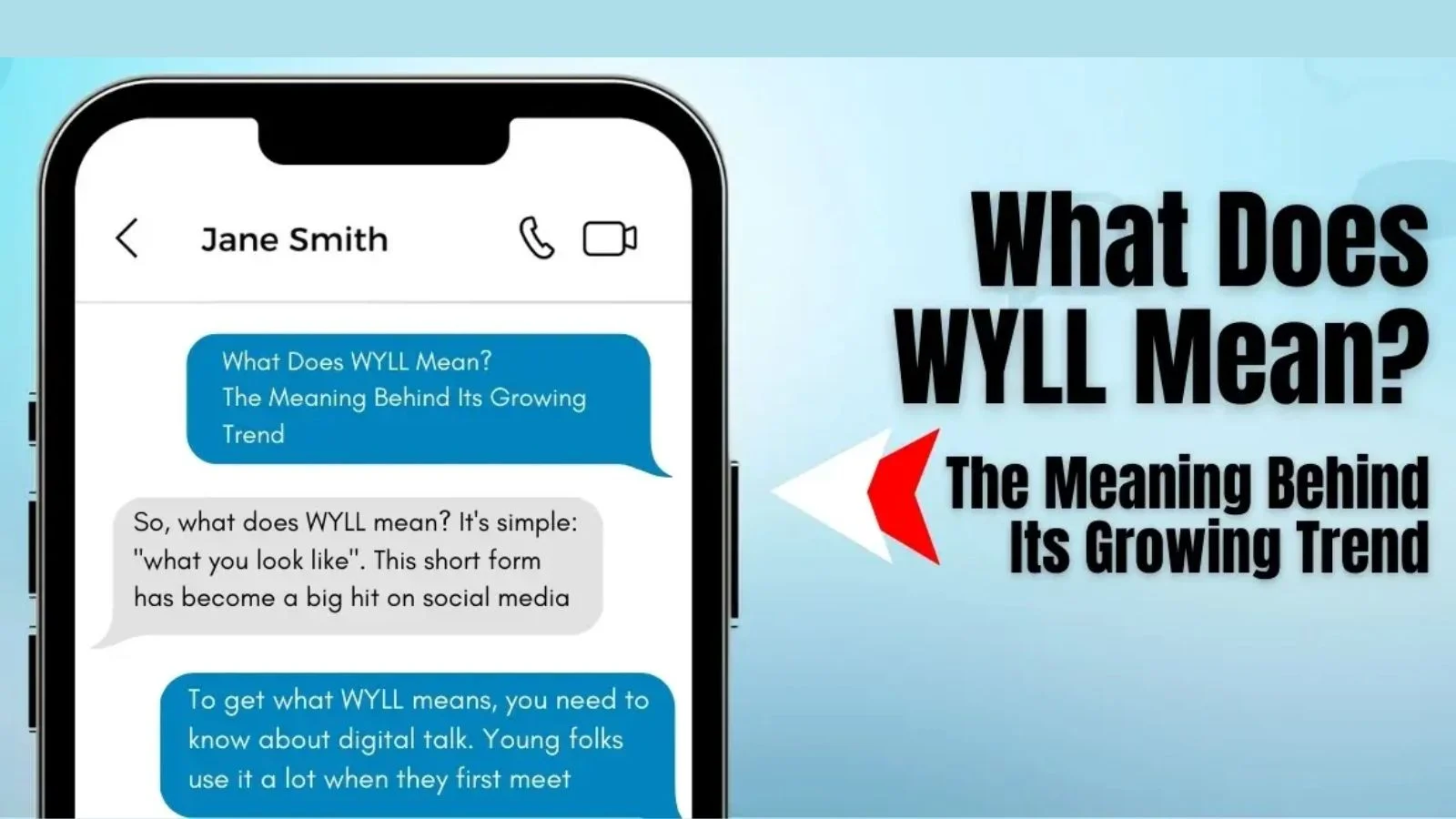
Language on the internet changes fast. New short words appear almost every year. One such word is “wyll.”
Many people see it in texts, TikTok comments, or chats and feel confused.
This guide explains the wyll meaning in very simple English.
By the end, you will know how, when, and why people use wyll today.
Wyll Meaning – Simple Definition
What Does “Wyll” Mean?
Wyll is a slang abbreviation that means:
“What you look like?”
It is often used in text messages, DMs, and online chats when someone wants to know another person’s appearance.
Wyll = What You Look Like
This word is informal and friendly. People mostly use it online, not in formal writing.
Wyll Meaning in Simple Words (Grade 3–4)
In very easy words:
- Wyll means asking how someone looks
- It can be about face, clothes, or overall appearance
- People use it to save time while typing
Think of wyll as a short question about looks.
Origin and History of the Word “Wyll”
The word “wyll” originates from internet and texting culture, where people often shorten phrases to type faster. It is a condensed form of “What you look like?”, with each letter representing a word. The slang became popular in online chats, social media, and DMs during the late 2010s. Over time, it spread among Gen Z and young internet users as a casual, friendly way to ask about someone’s appearance.
Where Did “Wyll” Come From?
The word wyll comes from:
- Internet chat culture
- Texting shortcuts
- Social media slang
People removed extra letters to type faster:
- What → W
- You → Y
- Look → L
- Like → L
Over time, these letters formed wyll.
When Did “Wyll” Become Popular?
| Time Period | Usage |
| Before 2015 | Rare or unknown |
| 2018–2020 | Used in private chats |
| 2021–2024 | Popular on TikTok & Instagram |
| 2025–2026 | Common in Gen Z texting |
Where Is “Wyll” Commonly Used?
Wyll is commonly used in casual online spaces where people chat informally.
You will often see it in text messages, Instagram DMs, Snapchat, and TikTok comments.
It is mostly used by Gen Z and young social media users during friendly or dating conversations.
Wyll is not used in formal writing, emails, or professional communication.
People use wyll mostly in casual online spaces.
Common Platforms
- Text messages
- Instagram DMs
- Snapchat
- TikTok comments
- Online chatting apps
Not used in emails, school essays, or professional talks.
Real-Life Examples of “Wyll” (With Explanations)
Example 1: Casual Text
A: We’ve been chatting for weeks.
B: Yeah
A: Wyll?
Explanation:
Person A is politely asking what Person B looks like.
Example 2: Social Media DM
User 1: You seem cool.
User 2: Thanks!
User 1: Wyll btw?
Explanation:
User 1 wants to know the other person’s appearance before continuing the chat.
Example 3: Short Dialogue
Friend: I met someone online.
You: Nice! Wyll?
Explanation:
You are asking how the new person looks.
Modern Usage of “Wyll” (Updated for 2026)
In 2026, wyll is:
- Friendly
- Curious
- Casual
- Often paired with emojis
Modern Variations
| Variation | Meaning |
| wyll? | What do you look like? |
| wyll rn? | What do you look like right now? |
| wyll pic? | Asking for a photo |
| wyll | Curious tone |
Always use politely. Context matters.
Personality Traits Linked to Using “Wyll”
People who use “wyll” are often curious and like learning more about others in a friendly way.
They usually prefer short, fast messages instead of long sentences.
Using wyll also shows a casual and relaxed personality, common in online chats.
Overall, it reflects someone who is social, open, and comfortable with modern slang.
People who use wyll often show these traits:
- Curious – Interested in others
- Social – Enjoy chatting
- Casual – Relaxed communication style
- Direct – Likes short questions
This does not mean everyone who uses it has the same personality, but it gives a general idea.
Usage Context – When Should You Use “Wyll”?
Good Times to Use “Wyll”
- Friendly chats
- Online friendships
- Dating conversations
- Social media DMs
Avoid Using “Wyll” When:
- Talking to strangers without trust
- Professional conversations
- Talking to elders
- Formal writing
“Wyll” vs Full Sentence
| Term | Formality | Example |
| Wyll | Informal | Wyll? |
| What do you look like? | Neutral | What do you look like? |
| May I see your photo? | Polite/Formal | May I see your photo? |
Common Mistakes & Misconceptions
Mistake 1: Thinking “Wyll” Is a Name
Truth: It is not a name. It is a question.
Mistake 2: Using It in Formal Writing
Truth: It is only for casual chats.
Mistake 3: Using It Rudely
Truth: Without emojis or politeness, it may sound pushy.
Mistake 4: Confusing It with “Will”
Truth: “Will” is a verb. Wyll is slang.
How to Respond to “Wyll” Politely
Here are safe and polite replies:
- “I can send a photo”
- “I have black hair and glasses.”
- “Let me know if you want a pic.”
You don’t have to reply if you feel uncomfortable.
Is “Wyll” Safe to Use Online?
Yes, if used carefully.
Safety Tips
- Don’t share personal photos too fast
- Trust the person first
- Use privacy settings
- Say no if uncomfortable
Frequently Asked Questions
What does wyll mean in texting?
Wyll means “What you look like?” in short form.
Is wyll a bad word?
No. It is not rude or bad, but it should be used politely.
Can I use wyll with friends?
Yes. It is common among friends and casual chats.
Is wyll used in dating apps?
Yes. Many people use it when chatting online.
Should I reply to wyll?
Only if you feel comfortable. You are not forced to reply.
Is wyll used worldwide?
Mostly in English-speaking online communities, especially Gen Z.
Conclusion
The wyll meaning is simple and modern. It stands for “What you look like?” and is mostly used in casual online conversations. As internet language grows, short forms like wyll help people chat faster and easier. However, context and politeness are very important. Use it only with people you trust and in informal settings. Understanding slang like wyll helps you stay confident in modern English conversations.
Discover More Post
OFC Meaning: What Does “OFC” Mean? Definition, Origin, Examples & Modern Usage (2026 Guide)
Habibi Meaning: Definition, Origin, and Modern Usage Explained (2026 Guide)