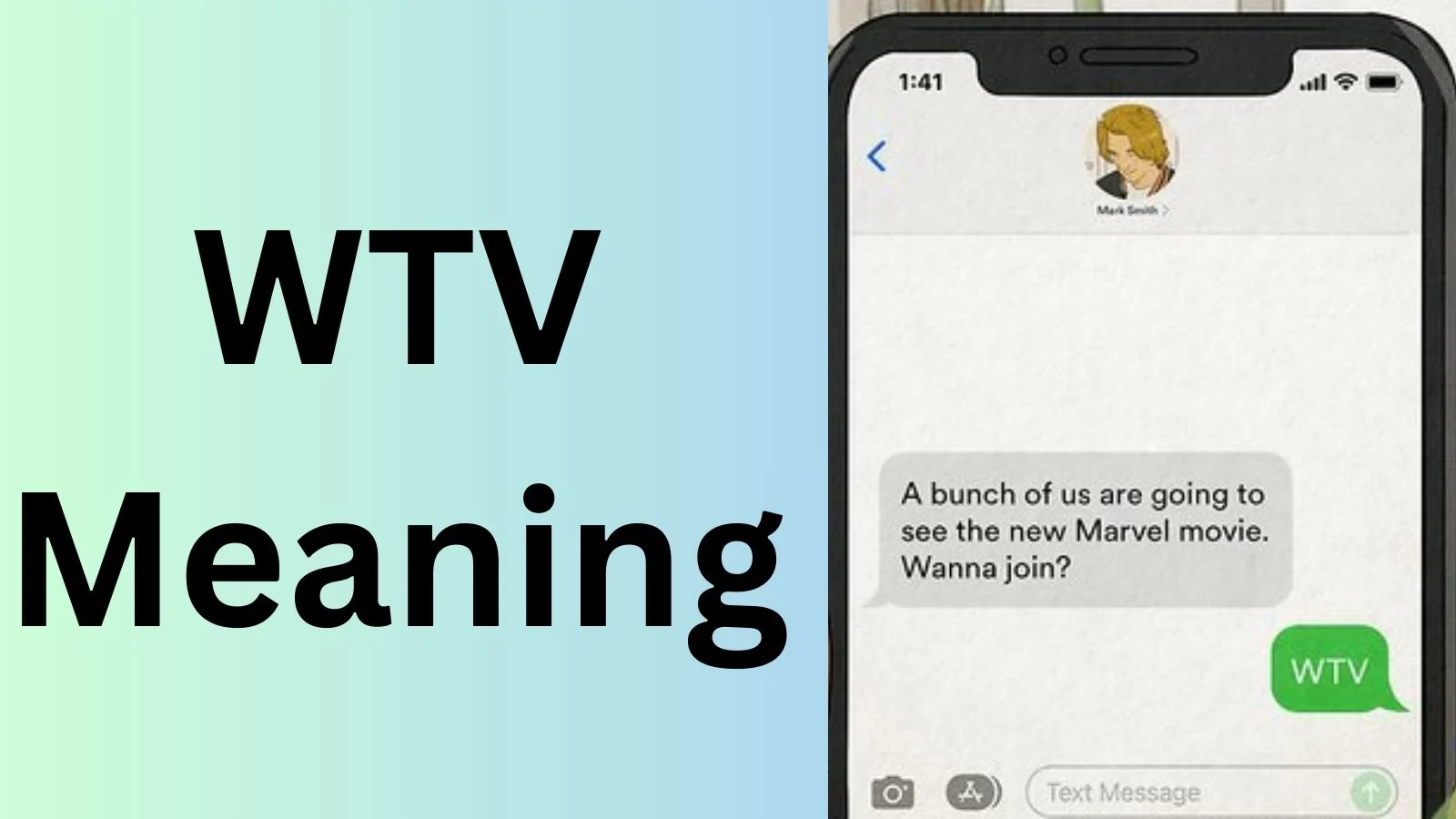
If you have seen “WTV” in a text message or social media comment, you may wonder what it means. It looks short and simple. But its meaning can change based on tone and situation.
In this complete guide, you will learn the exact meaning of WTV, where it came from, how people use it in real life, and what it says about personality. Everything is explained in clear and simple English so anyone can understand.
What Does WTV Mean?
WTV is a short form of the word “whatever.”
People use it in texting, social media, gaming chats, and online comments. It saves time and feels casual.
Simple Definition
WTV means “whatever.”
It can show:
- Not caring
- Agreement
- Annoyance
- Ending a conversation
- Giving up
The real meaning depends on tone and situation.
WTV Meaning in Simple Words
Let’s break it down:
| Term | Meaning |
| WTV | Short for “whatever” |
| Tone | Casual, sometimes rude |
| Usage | Texting, DMs, comments, chats |
| Emotion | Neutral, annoyed, or dismissive |
In short:
WTV = I don’t care / It’s fine / Do what you want
But remember — tone changes everything.
Origin and History of WTV
Where Did WTV Come From?
WTV comes from the word “whatever.” The word “whatever” has been used in English for hundreds of years. But its casual meaning became popular in the 1990s.
In the 1990s and early 2000s:
- Teenagers started using “whatever” in a sarcastic tone.
- It became a symbol of attitude.
- Movies and TV shows made it popular.
Later, when texting became common:
- People shortened words.
- “Whatever” became “w/e.”
- Then it evolved into WTV.
Why Did WTV Become Popular?
Because:
- It is fast to type.
- It feels modern.
- It fits social media style.
- It matches Gen Z and Gen Alpha communication.
By 2026, WTV is common on:
- TikTok
- Snapchat
- Gaming platforms
- YouTube comments
Different Meanings of WTV Based on Tone
WTV can mean different things. Let’s explore them.
1. WTV as “I Don’t Care”
This is the most common meaning.
Example:
A: What do you want to eat?
B: WTV.
Explanation:
Person B does not care what they eat.
2. WTV as “Do What You Want”
Sometimes it means agreement.
Example:
A: I’ll pick the movie tonight.
B: WTV, that’s fine.
Explanation:
Person B agrees and has no problem.
3. WTV as Annoyance
It can show frustration.
Example:
A: You’re wrong.
B: WTV.
Explanation:
Person B is annoyed and ends the argument.
4. WTV as Giving Up
It may show emotional tiredness.
Example:
A: You never listen to me.
B: WTV.
Explanation:
Person B feels tired and stops trying.
Real-Life Examples of WTV (With Clear Explanations)
Example 1: Friends Chat
Sara: Should we go to the mall?
Ayesha: WTV, I’m bored anyway.
Explanation:
Ayesha does not mind. She agrees casually.
Example 2: Siblings Talking
Brother: I’m taking your charger.
Sister: WTV.
Explanation:
She is annoyed but does not want to argue.
Example 3: Social Media Comment
Comment: That outfit looks bad.
Reply: WTV.
Explanation:
The person does not care about the opinion.
Example 4: School Conversation
Friend 1: We failed the test.
Friend 2: WTV, it’s just one test.
Explanation:
Friend 2 tries to act calm and not worried.
Example 5: Relationship Argument
Partner 1: You forgot again.
Partner 2: WTV.
Explanation:
This sounds rude and dismissive.
Personality Traits Linked to WTV Usage
The way someone uses WTV can show their personality.
1. Chill Personality
- Easy-going
- Relaxed
- Not controlling
They use WTV in a calm way.
2. Avoidant Personality
- Avoids conflict
- Does not want drama
- Ends conversations quickly
They use WTV to escape arguments.
3. Attitude or Rebellious Personality
- Independent
- Strong opinions
- Sometimes sarcastic
They use WTV with confidence or sass.
4. Emotionally Tired Personality
- Feels drained
- Doesn’t want to explain
- Gives up easily in the moment
They use WTV when tired of talking.
When Is It Okay to Use WTV?
WTV is informal. So it is safe in casual situations.
Safe Places to Use WTV
- Texting close friends
- Chatting with siblings
- Social media comments
- Gaming chats
Places You Should NOT Use WTV
- Job emails
- Work messages
- Teachers
- Formal settings
- Professional communication
Using WTV in serious settings can look rude.
Modern & Relatable Examples (2026 Update)
Language changes fast. In 2026, WTV is used in new ways.
1. TikTok Comments
Video: “If he doesn’t text back in 5 minutes, block him.”
Comment: WTV, I’m not that dramatic.
Explanation:
The person disagrees casually.
2. Gaming Chat
Player 1: We lost because of you.
Player 2: WTV, it’s just a game.
Explanation:
Player 2 does not take it seriously.
3. Group Chat Drama
Friend: She said you copied her style.
Reply: WTV.
Explanation:
The person pretends not to care.
4. Instagram Story Reply
Story: “Bad day.”
Reply: WTV, tomorrow is new.
Explanation:
Used to show comfort in a casual way.
WTV vs Other Similar Slang
Let’s compare.
| Slang | Meaning | Tone |
| WTV | Whatever | Casual / Dismissive |
| IDC | I don’t care | Direct |
| IDK | I don’t know | Neutral |
| Meh | Not impressed | Mild |
| K | Okay | Cold / short |
WTV can feel stronger than “meh” but softer than “IDC.”
Common Mistakes About WTV
Mistake 1: Thinking It Always Means Rude
Not true.
Sometimes it just means relaxed agreement.
Mistake 2: Using It in Formal Writing
WTV should not be in:
- Essays
- Office emails
- Academic writing
Always write the full word “whatever” in formal settings.
Mistake 3: Misunderstanding Tone
WTV can hurt feelings if used in serious talks.
For example:
“I’m upset.”
“WTV.”
This can sound uncaring.
Emotional Impact of WTV
Words carry emotions. Even short words.
WTV can make someone feel:
- Ignored
- Dismissed
- Unimportant
Or it can make them feel:
- Relaxed
- Free
- Not pressured
Always think before sending it.
How to Respond When Someone Says WTV
If someone sends “WTV,” you can respond based on context.
If They Are Calm
You can say:
“Okay, I’ll decide then.”
If They Are Annoyed
You can say:
“Are you upset?”
If They End the Argument
You can say:
“Let’s talk later.”
Understanding tone is key.
Why WTV Is Popular Among Gen Z and Gen Alpha
Younger generations prefer:
- Short words
- Fast replies
- Low effort texting
- Casual tone
WTV fits perfectly into modern digital communication.
It matches the culture of:
- Short videos
- Quick scrolling
- Instant reactions
By 2026, short forms like WTV are normal in everyday online talk.
Psychological Meaning Behind “Whatever”
The word “whatever” can show:
- Emotional protection
- Avoiding vulnerability
- Hiding feelings
Sometimes people say WTV when they actually care a lot.
It can be a defense mechanism.
For example:
“I don’t need your help.”
“WTV.”
The person might actually feel hurt.
Mini Dialogue Practice Section
Dialogue 1
A: Pick any color.
B: WTV.
Meaning: B does not care.
Dialogue 2
A: You’re overreacting.
B: WTV.
Meaning: B is annoyed.
Dialogue 3
A: Let’s cancel the plan.
B: WTV, I’m tired.
Meaning: B agrees casually.
Frequently Asked Questions
What does WTV mean in texting?
WTV means “whatever.” It shows agreement, not caring, or annoyance depending on tone.
Is WTV rude?
It can be rude if used in serious conversations. In casual chats, it is usually harmless.
What is the difference between WTV and IDC?
WTV means “whatever.”
IDC means “I don’t care.”
IDC is more direct and stronger.
Can I use WTV at work?
No. It is informal slang and not suitable for professional communication.
Why do people say WTV in arguments?
They use it to end the argument quickly or show frustration.
Is WTV popular in 2026?
Yes. It is widely used on social media, texting apps, and gaming platforms.
Does WTV always mean someone does not care?
Not always. Sometimes it means relaxed agreement, not total indifference.
Conclusion
Understanding WTV meaning helps you communicate better in today’s digital world. Though it simply stands for “whatever,” its tone can change everything. It can show calm agreement, emotional distance, sarcasm, or frustration. That is why context matters. Before sending WTV, think about how the other person may feel. Short words carry big meaning in modern communication. As language continues to evolve in 2026, knowing digital slang like WTV keeps you socially aware and confident. If you want to master more modern slang terms explained in simple English, keep exploring and improving your everyday communication skills.
Discover More Post
Witherspoon Meaning: Definition, Origin, History, and Modern Usage (2026 Guide)
NTR Meaning: Definition, Origin, Usage, Examples & Modern Context (2026 Update)
NFS Meaning: Definition, Usage, Examples, and Modern Context (2026 Update)