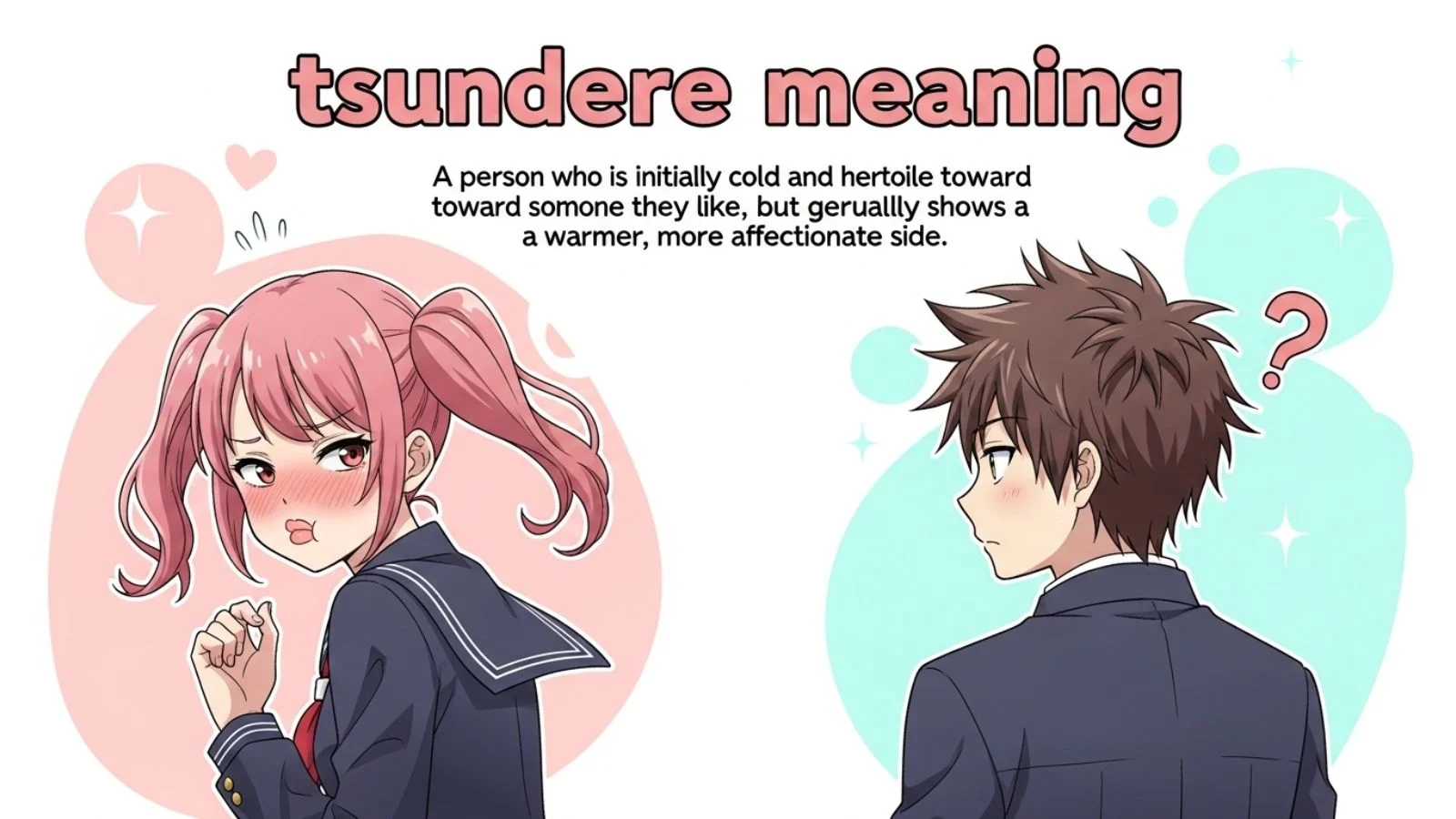
In text and online chat, “tsundere” refers to a person who alternates between being cold, harsh, or blunt and being warm, kind, or affectionate, often in a romantic context. It’s a Japanese slang term widely used in memes, anime culture, and online conversations.
Meaning Explanation
Tsundere Meaning in Text
The term tsundere meaning in text describes someone who may act annoyed, rude, or indifferent but secretly has a caring or loving side. When used in chat, it often signals playful teasing or hidden affection.
- Tsundere slang meaning: Someone who shows two contrasting personalities.
- What does tsundere mean in chat: A person pretending to be cold or annoyed but actually liking someone.
- Tsundere meaning on Snapchat/TikTok/Instagram/WhatsApp: Generally the same, but tone can vary depending on platform culture.
Type of slang:
- Not an acronym
- Not a short form
- Not a phonetic spelling
- It’s meme-based slang influenced by anime culture
- Sometimes used as a typing variation with added emphasis (e.g., “tsun tsun, dere dere”)
Meaning Across Platforms
Snapchat
On Snapchat, tsundere is often used in direct messaging to tease friends or express mild romantic tension. It’s casual and humorous.
TikTok
On TikTok, the term has exploded as a trend in videos showing exaggerated tsundere behavior, often with audio clips and memes. It’s more performative here than in chat.
Instagram users may post memes, reels, or captions referencing tsundere behavior, usually in a joking or relatable way. Tone is playful.
On WhatsApp, tsundere meaning on WhatsApp is closer to private chat use. People often call friends or partners tsundere when teasing their mixed behavior.
SMS
In SMS, the tone is informal. People may text “You’re so tsundere lol” after a short argument or sarcastic comment.
Tone & Context Variations
Funny Tone
- Example:
A: You didn’t even notice me today!
B: I did… but whatever, geez.
A: You’re tsundere!
Sarcastic Tone
- Example:
A: I literally made your favorite cookies.
B: Yeah, I’m not impressed… but thanks.
A: Classic tsundere move.
Romantic Tone
- Example:
A: I was worried about you.
B: I wasn’t… okay maybe I was.
A: Tsundere detected.
Angry Tone
- Example:
A: Stop ignoring me!
B: I’m not ignoring you, don’t overreact.
A: That’s peak tsundere behavior.
Playful Tone
- Example:
A: You like me, don’t lie.
B: N-No! I don’t!
A: Haha, tsundere confirmed.
Additional Mini Chat Examples
A: You didn’t say hi.
B: I was busy, geez.
A: Tsundere.
A: Thanks for helping.
B: It’s nothing, idiot.
A: Tsundere detected.
A: Wanna hang out later?
B: I guess… maybe.
A: Tsundere vibes.
A: I bought you coffee.
B: Huh… it’s fine.
A: Tsundere confirmed.
A: You’re smiling a lot today.
B: I’m not! Stop saying that!
A: That’s classic tsundere.
A: I like your jacket.
B: Whatever, it’s old.
A: Tsundere!
A: Can you help me with homework?
B: Fine, but don’t get used to it.
A: Tsundere mode activated.
A: You’re late again!
B: It’s not my fault!
A: Classic tsundere excuse.
A: I made a playlist for you.
B: Hmm, I’ll see.
A: Tsundere detected.
A: You were thinking about me?
B: N-No! I wasn’t!
A: Ah, tsundere energy.
Grammar & Language Role
- Part of speech: Noun (used to describe a person)
- Sentence role: Can replace a full sentence or act as an adjective (e.g., “You’re so tsundere”)
- Sentence position: Usually after a comment or observation, often at the end
- Formal vs informal usage: Informal, internet/chat slang only
- Tone impact: Signals playfulness, teasing, or mild romantic tension
Example in sentence:
- “Stop acting like a tsundere.”
- “You’re being tsundere again, aren’t you?”
How to Reply When Someone Says “Tsundere”
Funny Replies
- “Guilty as charged!”
- “Only on Mondays 😏”
- “Takes one to know one!”
Serious Replies
- “I’ll try to be more honest.”
- “Noted, I’ll work on it.”
Flirty Replies
- “Maybe I’m tsundere for you 😘”
- “You like it when I act like this, don’t lie.”
Neutral Replies
- “Haha, okay.”
- “Sure, whatever you say.”
Is It Rude or Bad?
- Is tsundere rude? Not inherently.
- Is it disrespectful? Usually no; context matters.
- Is it a bad word? No, it’s harmless slang.
- Can you use it in school? Yes, in informal chats.
- Can you use it at work? Generally avoid in professional settings.
Key point: It’s safe for internet and casual conversations but may not suit formal contexts.
Who Uses This Term?
- Age group: Mostly teens and young adults
- Gen Z vs Millennials: Popular among Gen Z; some Millennials familiar via anime culture
- Regions: US, UK, Japan, global internet
- Most common platforms: TikTok, Instagram, Discord, WhatsApp, Snapchat
Origin & Internet Culture
- Origin: Japanese anime/manga culture
- Meme influence: Heavily meme-based, popularized in online anime communities
- TikTok trend connection: Short videos often exaggerate tsundere behavior for humor
- Fast typing culture: Abbreviations like “tsun tsun, dere dere” mimic quick text style
- Unknown elements: Exact origin unclear in English-speaking online culture, but tied to anime fandom
Comparison Table
| Term | Meaning | Formal/Informal | Tone | Popularity | Confusion Risk |
|---|---|---|---|---|---|
| tsundere | Cold then affectionate persona | Informal | Playful/romantic | High | Medium |
| idk | I don’t know | Informal | Neutral | High | Low |
| ion | I don’t | Informal | Neutral | Medium | High |
| dunno | Don’t know | Informal | Neutral | High | Low |
| idc | I don’t care | Informal | Blunt | High | Medium |
Experience-Based Insight
From real-world chats, people use tsundere to lightly tease friends or express affection indirectly. It’s rarely used aggressively and almost always signals playful tension or flirtation. Gen Z users especially enjoy tagging friends or partners “tsundere” to highlight amusing contradictions in behavior.
Frequently Asked Questions About Tsundere
What Does Tsundere Mean in Text Messages and Online Chat?
It describes someone who appears cold or harsh but secretly caring. Often used jokingly or flirtatiously.
What Does Tsundere Mean on Snapchat and TikTok?
- Snapchat: Casual, teasing messages
- TikTok: Trendy videos exaggerating cold-to-caring behavior
Is Tsundere Rude, Disrespectful, or Harmless Slang?
Harmless slang, not offensive, but context matters. Avoid using it in professional or formal settings.
How Should You Reply When Someone Says “Tsundere”?
- Funny: “Guilty as charged!”
- Serious: “I’ll try to be more honest.”
- Flirty: “Maybe I’m tsundere for you 😘”
- Neutral: “Haha, okay.”
Is Tsundere the Same as IDK or Different?
Completely different. Tsundere describes a personality or behavior; IDK expresses uncertainty.
Can You Use Tsundere in School or Work?
- School: Yes, among friends
- Work: Generally avoid; only informal chats if appropriate
Summary, Tips & Common Mistakes
Summary:
- Tsundere is playful internet slang from Japanese anime culture.
- Indicates alternating cold and warm behavior.
- Informal, meme-based, not offensive.
Usage Tips:
- Use with friends, partners, or online communities.
- Pair with teasing or joking tone.
- Recognize it’s mostly cultural/romantic humor.
Common Mistakes:
- Using it in formal communication
- Misinterpreting it as purely rude
- Overusing it in chats, making it less fun
When to Use: Playful chats, memes, flirtation, online trends.
When to Avoid: Professional emails, serious discussions, school assignments.
Discover More Post
What Does FW Mean in Text? (2026 Slang Guide with Examples & Replies)
What Does Clemency Mean in Text? (2026 Slang Guide with Examples & Replies)
What Does KMS Mean in Text? (2026 Slang Guide with Examples & Replies)