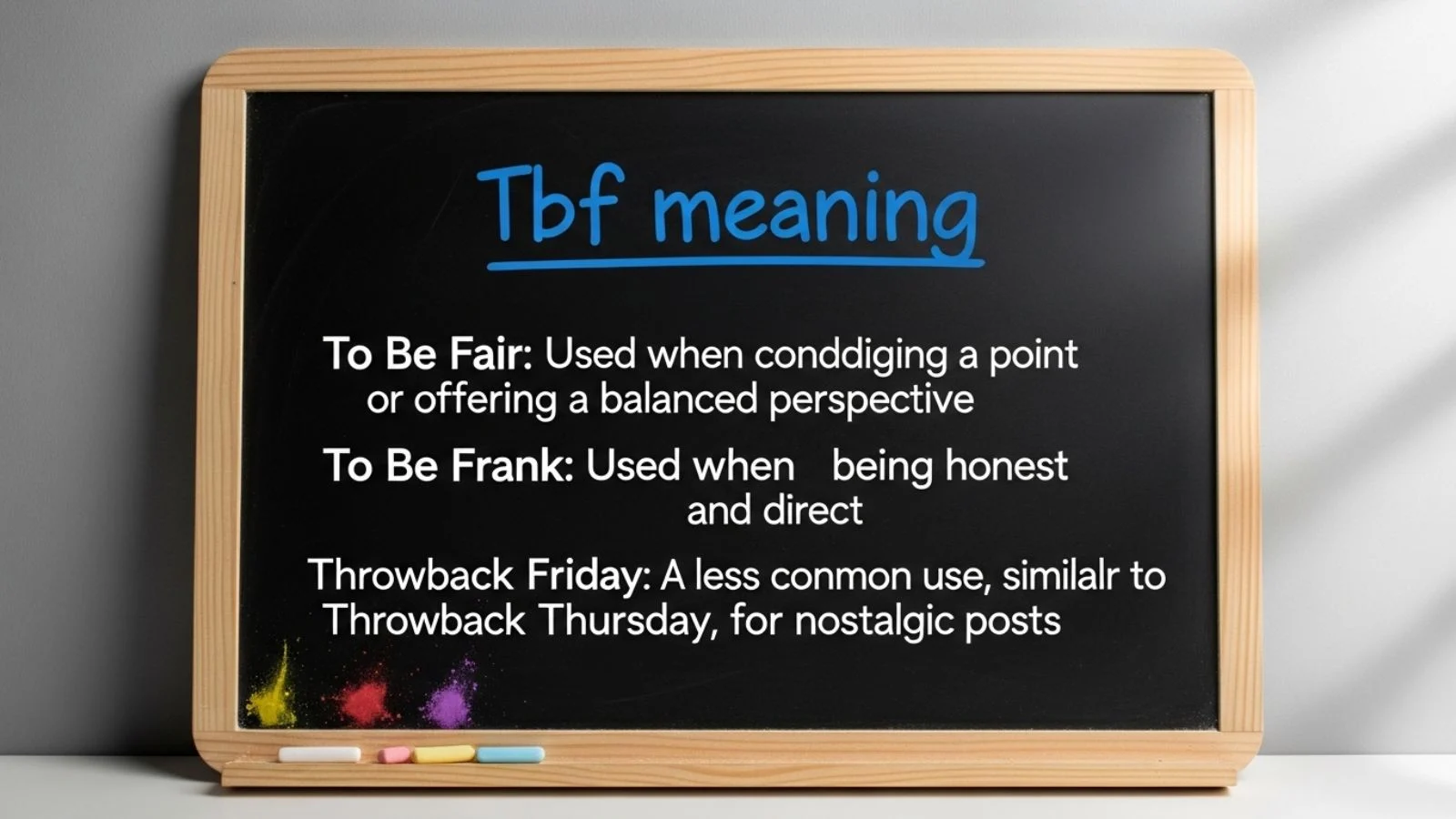
What Does TBF Mean?
TBF stands for “To Be Fair.”
It is used when someone wants to:
- Be honest
- See both sides
- Add balance to a conversation
- Defend someone politely
- Correct something gently
Simple Meaning in Easy Words
TBF means “I want to be fair before I say this.”
It shows that the speaker is trying to be balanced.
TBF Meaning in Text Messages
In texting and social media, TBF is used to:
- Add another opinion
- Soften criticism
- Defend someone
- Clarify a point
Example:
“Yeah, he was late. TBF, traffic was really bad.”
Meaning: He was late, but there was a reason.
The speaker is trying to be fair.
Origin and History of TBF
The full phrase “to be fair” has been used in English for hundreds of years.
It appears in:
- Books
- Debates
- Formal speech
- Friendly talks
But the short form TBF became popular with:
- SMS texting (early 2000s)
- Online forums
- Chat rooms
- Social media platforms like Instagram, TikTok, and X (formerly Twitter)
When people started typing fast, they shortened many phrases:
- TBH = To Be Honest
- IMO = In My Opinion
- TBF = To Be Fair
By 2015, it became very common online.
By 2026, it is used in:
- Casual chats
- Group messages
- Comment sections
- Online debates
It is now part of digital language culture.
Why Do People Use TBF?
People use TBF because they want to:
- Sound fair
- Avoid sounding rude
- Show understanding
- Balance a discussion
- Add another viewpoint
It helps reduce conflict.
Real-Life Examples of TBF (With Explanation)
Example 1
“She didn’t study much. TBF, she was sick all week.”
Explanation: The speaker admits she didn’t study but gives a fair reason.
Example 2
“That movie was slow. TBF, the acting was amazing.”
Explanation: The movie had a flaw, but it also had something good.
Example 3
“He failed the test. TBF, it was very difficult.”
Explanation: The speaker is saying it wasn’t completely his fault.
Example 4
“You’re right. TBF, I should have told you earlier.”
Explanation: The speaker accepts some responsibility fairly.
Short Dialogues Using TBF
Dialogue 1 – Friends Talking
A: “Ali always forgets things.”
B: “TBF, he works two jobs.”
Explanation: Friend B defends Ali with a fair reason.
Dialogue 2 – School Discussion
Student 1: “The teacher gives too much homework.”
Student 2: “TBF, exams are coming soon.”
Explanation: Student 2 is balancing the complaint.
Dialogue 3 – Social Media Comment
User 1: “This phone battery is terrible.”
User 2: “TBF, it’s five years old.”
Explanation: The phone is old, so battery issues are expected.
Personality Traits Linked to TBF Usage
People who use TBF often show these traits:
- Fair-minded
- Calm
- Balanced
- Logical
- Empathetic
They try not to judge quickly.
They think before speaking.
They care about both sides.
When Should You Use TBF?
Use TBF when:
- You want to soften criticism
- You want to defend someone
- You want to show balance
- You want to avoid arguments
Good Situations
- Friendly debates
- School discussions
- Online conversations
- Team meetings
- Family talks
When NOT to Use TBF
Do not use TBF:
- In very formal writing (job applications, legal documents)
- In academic essays
- In official emails to senior professionals
In formal writing, use the full phrase:
Instead of “TBF,” write “To be fair,”
TBF vs TBH – What’s the Difference?
| Term | Full Form | Meaning | Tone |
|---|---|---|---|
| TBF | To Be Fair | Adding balance | Calm |
| TBH | To Be Honest | Speaking truth directly | Sometimes blunt |
Example
TBH: “TBH, that dress doesn’t suit you.”
This sounds direct.
TBF: “TBF, the color doesn’t match your shoes.”
This sounds softer.
TBF in 2026: Modern Usage
In 2026, people use TBF in:
- Instagram comments
- TikTok replies
- YouTube debates
- Gaming chats
- Group chats
Modern Example
“This AI tool made mistakes. TBF, it’s still in beta.”
Explanation: The tool is new, so mistakes are normal.
Modern Workplace Example
“Our team missed the deadline. TBF, the client changed the requirements.”
Explanation: The delay had a reason.
Modern Relationship Example
“You forgot my message. TBF, I sent it at 2 AM.”
Explanation: It was sent very late, so it’s understandable.
Emotional Tone of TBF
TBF softens the mood.
It reduces tension.
It helps people feel understood.
It prevents fights.
It shows emotional maturity.
Common Mistakes with TBF
Mistake 1: Using it to excuse bad behavior
Wrong:
“He cheated. TBF, he was stressed.”
Explanation: Stress is not an excuse for cheating.
Mistake 2: Using it sarcastically
“TBF, you always mess things up.”
Explanation: This sounds passive-aggressive.
Mistake 3: Using it in serious matters
In serious legal or medical topics, avoid slang.
Use full, clear sentences.
Is TBF Rude?
No.
TBF is not rude.
It is usually polite.
But tone matters.
If said sarcastically, it can sound negative.
Is TBF Formal or Informal?
TBF is informal.
Use it in:
- Texts
- Chats
- Comments
Use the full phrase “To be fair” in formal writing.
How to Pronounce TBF
People usually:
- Say the letters: “T-B-F”
- Or say the full phrase: “To be fair”
In speaking, many people prefer saying the full phrase.
TBF in Social Media Culture
On social media, TBF often appears in:
- Debates about celebrities
- Sports discussions
- Tech reviews
- Viral videos
Example:
“He missed the goal. TBF, the defender pushed him.”
Explanation: The player had a challenge.
TBF in Arguments
TBF helps reduce heat in arguments.
Example:
“I’m upset. TBF, I didn’t explain myself clearly.”
Explanation: The speaker takes some responsibility.
This builds trust.
Table: Quick Understanding of TBF
| Question | Simple Answer |
|---|---|
| What does TBF mean? | To Be Fair |
| Is it rude? | No |
| Is it formal? | No |
| When to use it? | To add balance |
| Can it reduce conflict? | Yes |
Synonyms of TBF
You can also say:
- To be honest (different tone)
- In fairness
- Honestly speaking
- Looking at both sides
- If we’re being fair
But remember:
TBF sounds shorter and more casual.
Cultural Impact of TBF
Digital language changes how we speak.
Short forms like TBF show:
- Fast communication
- Casual style
- Emotional awareness
- Social intelligence
In 2026, digital fluency is important.
Knowing terms like TBF helps you understand online culture.
Why Beginners Should Learn TBF
If you are:
- Learning English
- Using social media
- Chatting online
- Watching videos with comments
You will see TBF often.
Understanding it helps you:
- Avoid confusion
- Respond correctly
- Sound natural
Practice Sentences
Try using TBF:
- “TBF, I didn’t read the instructions.”
- “TBF, the weather was terrible.”
- “TBF, she warned us earlier.”
- “TBF, this phone is affordable.”
- “TBF, I should have checked.”
Each sentence adds fairness.
Frequently Asked Questions About TBF
1. What does TBF mean in texting?
TBF means To Be Fair.
It shows you are trying to be balanced or honest.
2. Is TBF the same as TBH?
No.
TBF means to add fairness.
TBH means to speak honestly, sometimes bluntly.
3. Is TBF polite?
Yes.
It usually makes your message softer and more respectful.
4. Can I use TBF in school essays?
No.
Write “To be fair” instead of TBF in formal writing.
5. Why do people use TBF online?
Because it is short, fast, and helps avoid conflict.
6. Does TBF always defend someone?
Not always.
Sometimes it simply adds another side to the story.
Final Thoughts on TBF Meaning
The TBF meaning is simple but powerful. It stands for To Be Fair, and it helps people speak in a balanced and calm way. In today’s digital world, short forms like TBF are part of everyday language. They make conversations faster and smoother. When used correctly, TBF shows maturity, fairness, and understanding. It helps reduce arguments and build better communication. Just remember to use it in casual settings, not formal writing. Now that you understand TBF clearly, try using it in your next conversation and see how it improves your tone and clarity.
Discover More Post
Bismillah Meaning: Simple Definition, Origin, History & Daily Use Guide (2026)
Emasculate Meaning: Complete 2026 Guide with Examples, Usage & FAQs