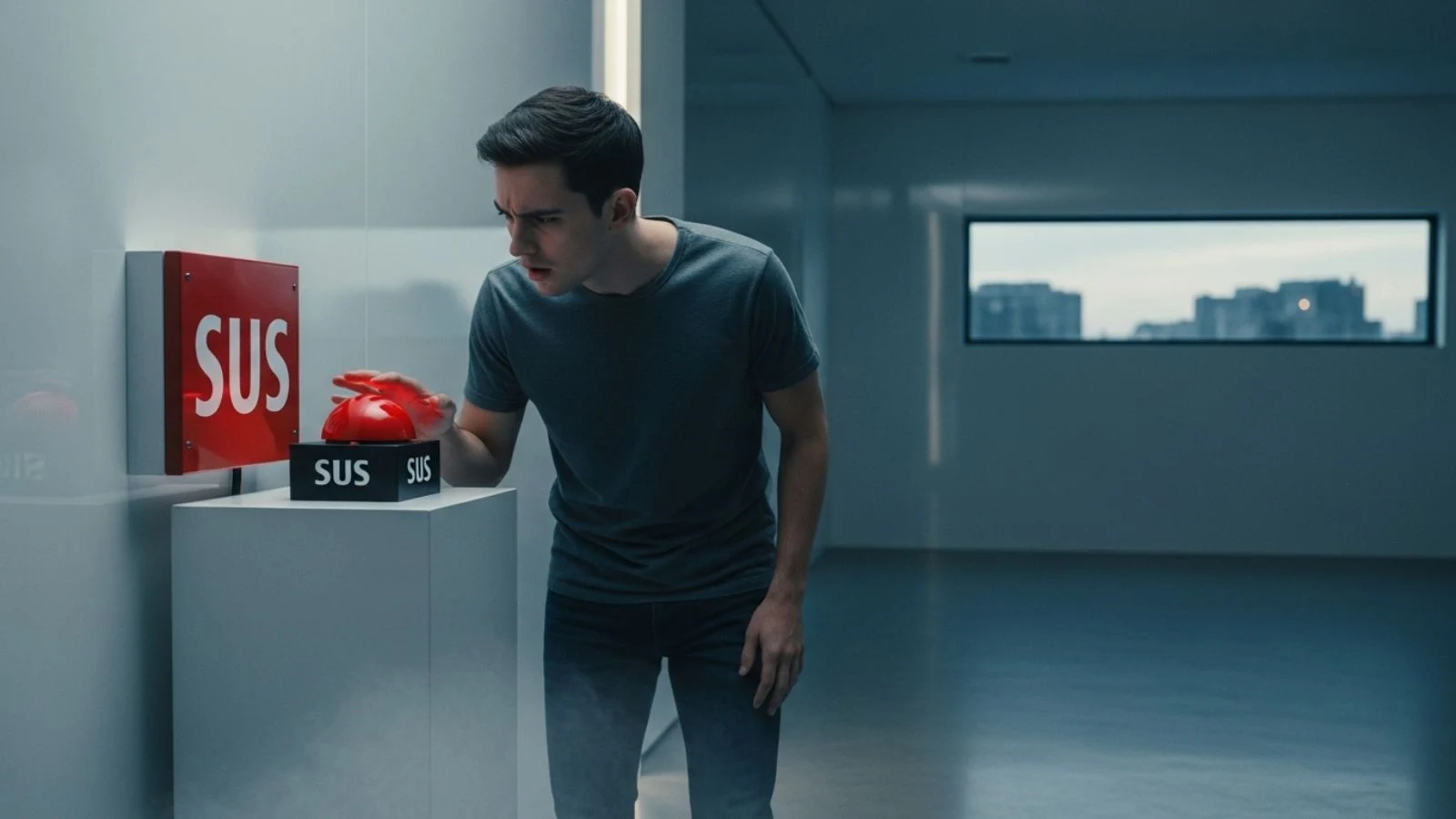
If you’ve seen “sus” in a chat, TikTok, or Instagram comment, it simply means someone or something seems suspicious or untrustworthy. It’s casual slang, mainly used in online conversations and texts.
Meaning Explanation
Sus Meaning in Text
In online texting, sus meaning refers to a shorthand way to call out someone who seems shady, dishonest, or questionable.
Example:
- “He said he finished the homework, but that seems sus.”
Sus Slang Meaning
Sus slang meaning comes from the word “suspicious.” It’s widely used in memes, TikTok trends, and casual online chats.
It’s often applied to behaviors, statements, or even people that don’t seem credible.
What Does Sus Mean in Chat?
When someone types “sus” in chat, they’re usually commenting on something suspicious or strange.
- Example:
A: “I saw him sneaking out last night.”
B: “Wow, that’s sus.”
Sus Meaning on Snapchat
On Snapchat, “sus meaning on Snapchat” is mostly playful or joking. People might label friends “sus” if they do something weird in snaps or stories.
- Example:
“You’re acting kinda sus with all these streaks.”
Sus Meaning on TikTok
TikTok users often pair “sus” with memes, video trends, or the game Among Us, where “sus” became viral. It can describe someone acting suspiciously in videos.
- Example:
“That move was so sus, I knew he was lying.”
Sus Meaning on Instagram
On Instagram, “sus meaning on Instagram” is similar: used in comments on posts or reels when someone’s action, caption, or story seems off.
- Example:
“Her story is sus, she’s hiding something.”
Sus Meaning on WhatsApp
On WhatsApp chats, people use “sus” casually to call out suspicious messages or behavior from friends or family.
- Example:
A: “I didn’t eat your cookie.”
B: “Sus… I saw crumbs on your shirt.”
Is It an Acronym or Short Form?
- Not an acronym – it’s a shortened form of “suspicious.”
- Typing variation – yes, it’s a casual, fast-typing version used in online slang.
- Meme-based slang – yes, especially from gaming culture (Among Us).
Meaning Across Platforms
Snapchat
- Playful, lighthearted
- Often used in streaks, snaps, or stories
- Example: “Why are you sending so many selfies? That’s sus.”
TikTok
- Trendy, meme-heavy
- Often sarcastic or humorous
- Example: “When he says he’s not cheating, but keeps checking his phone… sus.”
- Comment-based, observational
- Slightly more sarcastic
- Example: “This caption is sus… she’s lying about the vacation.”
- Direct and conversational
- Used in private chats to point out suspicious behavior
- Example: “You said you’re home alone, but your camera shows otherwise… sus.”
SMS/Texting
- Informal, short, fast typing
- Can be playful or serious
- Example: “He said he’s coming, but the ETA seems sus.”
Tone & Context Variations
Funny Tone
- Used to joke about someone’s weird behavior.
- Example:
A: “I ate the last slice of pizza.”
B: “Sus, you usually don’t like pizza.”
Sarcastic Tone
- Mocking someone’s claim or action.
- Example:
A: “I never watch TikTok.”
B: “Sure, sus.”
Romantic Tone
- Playful suspicion in a flirty way.
- Example:
A: “I was busy all day.”
B: “Sus… I think someone’s lying to me.”
Angry Tone
- Calling out dishonesty or untrustworthy behavior.
- Example:
A: “I didn’t take your charger.”
B: “That’s sus. Don’t lie to me.”
Playful Tone
- Friendly teasing.
- Example:
A: “I got a secret for you.”
B: “Ooo sus, spill it!”
Mini Conversation Examples (15)
1.
A: “He said he’s at home.”
B: “Sus, I saw his car outside.”
A: “You’re right, I’m at a friend’s.”
A: “I didn’t eat your fries.”
B: “Sus… smell your hands.”
A: “I’m not on TikTok.”
B: “Sure, sus.”
A: “I finished the project.”
B: “Sus, your report is empty.”
A: “I don’t like chocolate.”
B: “Sus, you’re eating chocolate right now.”
A: “I’m tired today.”
B: “Sus, you were at a party last night.”
A: “I didn’t text her back.”
B: “Sus… your phone was online.”
A: “I’m broke this week.”
B: “Sus, I saw you at the mall.”
A: “I never watch movies.”
B: “Sus, your popcorn smells different.”
A: “I didn’t cheat on the game.”
B: “Sus… your score is too high.”
A: “I’m innocent.”
B: “Sus, the evidence says otherwise.”
A: “I’m sleeping.”
B: “Sus, your story is live.”
A: “I’m off social media.”
B: “Sus, I saw you post a reel.”
A: “I didn’t eat dessert.”
B: “Sus… chocolate on your lips.”
A: “I don’t stalk people online.”
B: “Sus, your search history proves otherwise.”
Grammar & Language Role
- Part of speech: Adjective (describes a person, action, or statement)
- Sentence role: Acts as a comment or evaluation
- Replacement for full sentence: Sometimes, e.g., “That’s sus” = “That seems suspicious”
- Sentence position: Usually after subject, e.g., “He is sus”
- Formal vs informal usage: Informal only
- Tone impact: Casual, playful, humorous, or suspicious
How to Reply When Someone Says “Sus”
Funny Replies
- “I plead the fifth!”
- “Guilty as charged.”
Serious Replies
- “I promise, nothing shady here.”
- “Okay, I’ll explain everything.”
Flirty Replies
- “Sus? Or just mysterious?”
- “You think I’m sus, but you like it.”
Neutral Replies
- “Not sus, just misunderstood.”
- “Alright, I’ll clarify.”
Is It Rude or Bad?
- Is sus rude? No, it’s casual slang.
- Is it disrespectful? Usually not, but tone matters.
- Is it a bad word? No.
- Can you use it in school? Safe in informal contexts, not formal essays.
- Can you use it at work? Only in casual team chats; avoid in professional emails.
Who Uses This Term?
- Age group: Primarily teens and young adults (Gen Z)
- Gen Z vs Millennials: Gen Z dominates usage
- Regions: US, UK, global internet
- Most common platforms: TikTok, Snapchat, Instagram, WhatsApp
Origin & Internet Culture
- Derived from “suspicious.”
- Popularized in memes and the game Among Us.
- Spread rapidly on TikTok, Discord, and meme culture.
- Origin unclear beyond gaming communities, but usage skyrocketed after 2020.
Comparison Table
| Slang | Meaning | Formal/Informal | Tone | Popularity | Confusion Risk |
|---|---|---|---|---|---|
| sus | Suspicious | Informal | Casual, playful | Very high | Medium |
| idk | I don’t know | Informal | Neutral | Very high | Low |
| ion | I don’t | Informal | Casual | Medium | Medium |
| dunno | Don’t know | Informal | Neutral, casual | Medium | Low |
| idc | I don’t care | Informal | Neutral, blunt | High | Low |
Experience-Based Insight
In real chats, “sus” is rarely serious. Most teens use it playfully to point out someone’s funny behavior. Adults might use it sarcastically. The word is flexible and adaptable across platforms.
Frequently Asked Questions
What Does Sus Mean in Text Messages and Online Chat?
It means “suspicious” or “questionable,” usually referring to someone or something that seems off.
What Does Sus Mean on Snapchat and TikTok?
On Snapchat, it’s playful or teasing. On TikTok, it’s meme-driven or humorous, often referencing gaming or viral trends.
Is Sus Rude, Disrespectful, or Harmless Slang?
Harmless slang. Tone can make it teasing or critical, but it’s generally safe to use.
How Should You Reply When Someone Says “Sus”?
You can reply with humor, explanation, flirty tease, or neutral clarification depending on context.
Is Sus the Same as IDK or Different?
Different. IDK means “I don’t know,” while sus points out suspicious behavior.
Can You Use Sus in School or Work?
Safe in informal chats; avoid in formal reports or professional emails.
Conclusion
- Sus = short for suspicious
- Mostly Gen Z slang used online
- Tone matters: playful, sarcastic, flirty, or serious
- Safe for chats but not formal writing
- Real-world usage is casual and flexible
Usage Tips: Use for playful teasing or highlighting suspicious actions. Avoid using it in professional contexts.
Common Mistakes:
- Using in formal emails
- Misinterpreting the tone (joking vs serious)
- Overusing in conversations
When to Use & Avoid: Use in social media, chats, and informal texting. Avoid in school essays, work emails, or professional messages.
Discover More Post
What Does WYM Mean in Text? (2026 Slang Guide with Examples & Replies)
What Does OTP Meaning Text Mean? (2026 Slang Guide with Examples & Replies)
What Does Siobhan Mean in Text? (2026 Slang Guide with Examples & Replies)