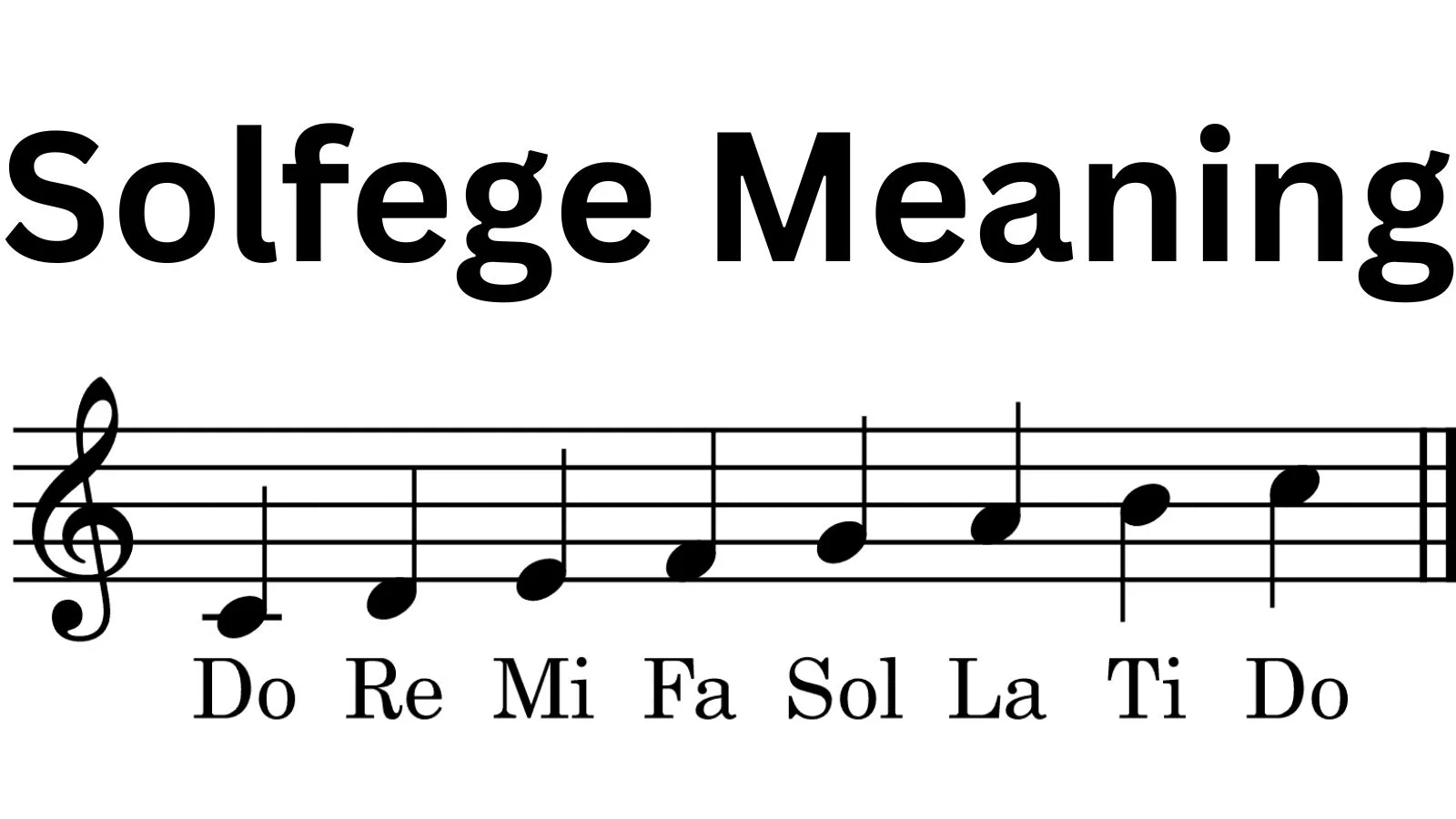
Solfege is a simple system used to teach music using the syllables Do, Re, Mi, Fa, Sol, La, Ti, Do. It helps people sing in tune, read music, and understand melodies easily. Created over 1,000 years ago by Guido of Arezzo, solfege has a rich history in music education. Today, it is widely used in schools, apps, and music programs to help learners of all ages.
What Is the Meaning of Solfege?
Solfege is a music learning system that helps people read, sing, and understand music using special syllables.
These syllables are:
Do – Re – Mi – Fa – Sol – La – Ti – Do
Instead of singing letters like C, D, or E, people sing Do, Re, Mi to learn pitch and tune.
Simple meaning:
Solfege is a way to teach music by singing notes using easy words.
Solfege Meaning in Very Simple Words
In very simple words:
- Solfege helps you sing correctly
- Solfege trains your ears
- Solfege makes music easy to learn
Think of solfege as ABC for music.
Just like children learn letters before reading books, musicians learn solfege before complex music.
What Are Solfege Syllables?
Here are the basic solfege syllables:
| Solfege | Sound Name |
| Do | First note |
| Re | Second note |
| Mi | Third note |
| Fa | Fourth note |
| Sol | Fifth note |
| La | Sixth note |
| Ti | Seventh note |
| Do | Eighth note |
Explanation:
Each word stands for one step in a musical scale.
Why Is Solfege Important in Music?
Solfege is important because it helps people:
- Sing in tune
- Hear music better
- Understand melodies
- Read music faster
Many music teachers use solfege to teach:
- Kids
- Beginners
- Choir singers
- Professional musicians
Origin and History of Solfege
Where Did Solfege Come From?
Solfege started over 1,000 years ago.
It was created by a music teacher named Guido of Arezzo in Italy.
Why Was Solfege Invented?
Before solfege:
- Music was hard to learn
- Students memorized songs slowly
- There were no clear teaching tools
Guido created solfege to make music easy, fast, and clear.
Original Solfege Syllables
The original syllables came from a Latin song:
Ut queant laxis
Later:
- Ut became Do
- Si became Ti
Explanation:
Changes were made to help singers pronounce the words more easily.
Types of Solfege Systems
There are two main solfege systems used today.
1. Fixed Do Solfege
- Do always means C
- Used in many European countries
Example:
If the note is C, it is always Do.
2. Movable Do Solfege
- Do changes based on the key
- Common in the USA, UK, and schools
Example:
If a song starts in G, then G becomes Do.
Which Solfege System Is Better?
Both are useful.
- Fixed Do helps with note reading
- Movable Do helps with understanding melody
Most beginners start with Movable Do.
Solfege Meaning in Real Life
Real-Life Example 1: Music Class
Teacher: “Let’s sing the scale.”
Students: “Do, Re, Mi, Fa, Sol, La, Ti, Do.”
Explanation:
Students use solfege to learn pitch step by step.
Real-Life Example 2: Choir Practice
Choir leader: “Sing the harmony using solfege.”
Singer: “Mi – Sol – Do.”
Explanation:
Solfege helps singers stay in tune together.
Real-Life Example 3: Home Practice
Child: “Mom, I can sing Do Re Mi!”
Mom: “Great! You’re learning solfege.”
Explanation:
Solfege helps children enjoy learning music.
Short Dialogue Using Solfege
Dialogue:
A: “How do you learn songs so fast?”
B: “I practice with solfege.”
Explanation:
Solfege makes learning music quicker and easier.
How Solfege Is Used Today (2026 Update)
In 2026, solfege is still very popular.
It is used in:
- Music schools
- Music learning apps
- Singing competitions
- Kids’ music programs
- Online courses
Modern apps use games, videos, and songs to teach solfege.
Solfege in Popular Culture
Many people know solfege from the song:
“Do-Re-Mi” from The Sound of Music
This song helped solfege become famous worldwide.
Explanation:
The song teaches solfege in a fun and memorable way.
Personality Traits Linked to Solfege Learners
People who learn solfege often show these traits:
- Good listening skills
- Strong memory
- Musical confidence
- Discipline
- Creativity
Note:
Solfege builds both music skill and focus.
When and Where Is Solfege Used?
Solfege is used when:
- Learning to sing
- Reading sheet music
- Training the ear
- Teaching children music
- Practicing instruments
It is used in:
- Schools
- Churches
- Choirs
- Music academies
- Homes
Common Mistakes or Misconceptions About Solfege
Mistake 1: Solfege Is Only for Singers
Wrong
Solfege helps instrument players too
Mistake 2: Solfege Is Old and Useless
Wrong
Solfege is still used in modern music education
Mistake 3: Solfege Is Too Hard
Wrong
Solfege is simple and beginner-friendly
Mistake 4: Solfege Replaces Music Notes
Wrong
Solfege supports note learning, not replaces it
Benefits of Learning Solfege
Here are the key benefits:
- Better pitch control
- Faster music reading
- Stronger musical ear
- More confidence
- Easier singing
Solfege vs Music Notes
| Solfege | Music Notes |
| Do, Re, Mi | C, D, E |
| Easy to sing | Harder for beginners |
| Trains ears | Trains reading |
| Great for kids | Used by professionals |
Explanation:
Both work best together.
How to Practice Solfege at Home
Simple steps:
- Sing the scale daily
- Use hand signs
- Practice with songs
- Use mobile apps
- Start slow
Tip:
Practice for just 10 minutes a day.
Modern Solfege Examples (2026)
- Music apps with solfege games
- YouTube singing lessons
- AI-powered pitch trainers
- Online choir rehearsals
Explanation:
Technology makes solfege fun and easy today.
Frequently Asked Questions
What does solfege mean in music?
Solfege means a system that uses syllables like Do, Re, Mi to teach music.
Is solfege only for children?
No. Solfege is for all ages, beginners to professionals.
Who invented solfege?
Solfege was developed by Guido of Arezzo.
Is solfege still used today?
Yes. It is widely used in schools, apps, and music training.
What is the difference between Do and C?
Do is a solfege name, while C is a music letter.
Can solfege help me sing better?
Yes. Solfege improves pitch, tone, and confidence.
How long does it take to learn solfege?
Basic solfege can be learned in a few weeks with practice.
Conclusion
Solfege is a powerful and friendly way to learn music. It uses easy syllables to teach singing, listening, and understanding melodies. From ancient history to modern apps, solfege remains an important music tool. Whether you are a child, student, or adult learner, solfege can help you grow faster and enjoy music more. Start with small steps, practice daily, and let solfege guide your musical journey.
Discover More Post
555 Meaning: Complete Guide to Its Spiritual, Life, and Everyday Meaning
222 Meaning: Simple, Spiritual, and Modern Explanation (2026 Guide)