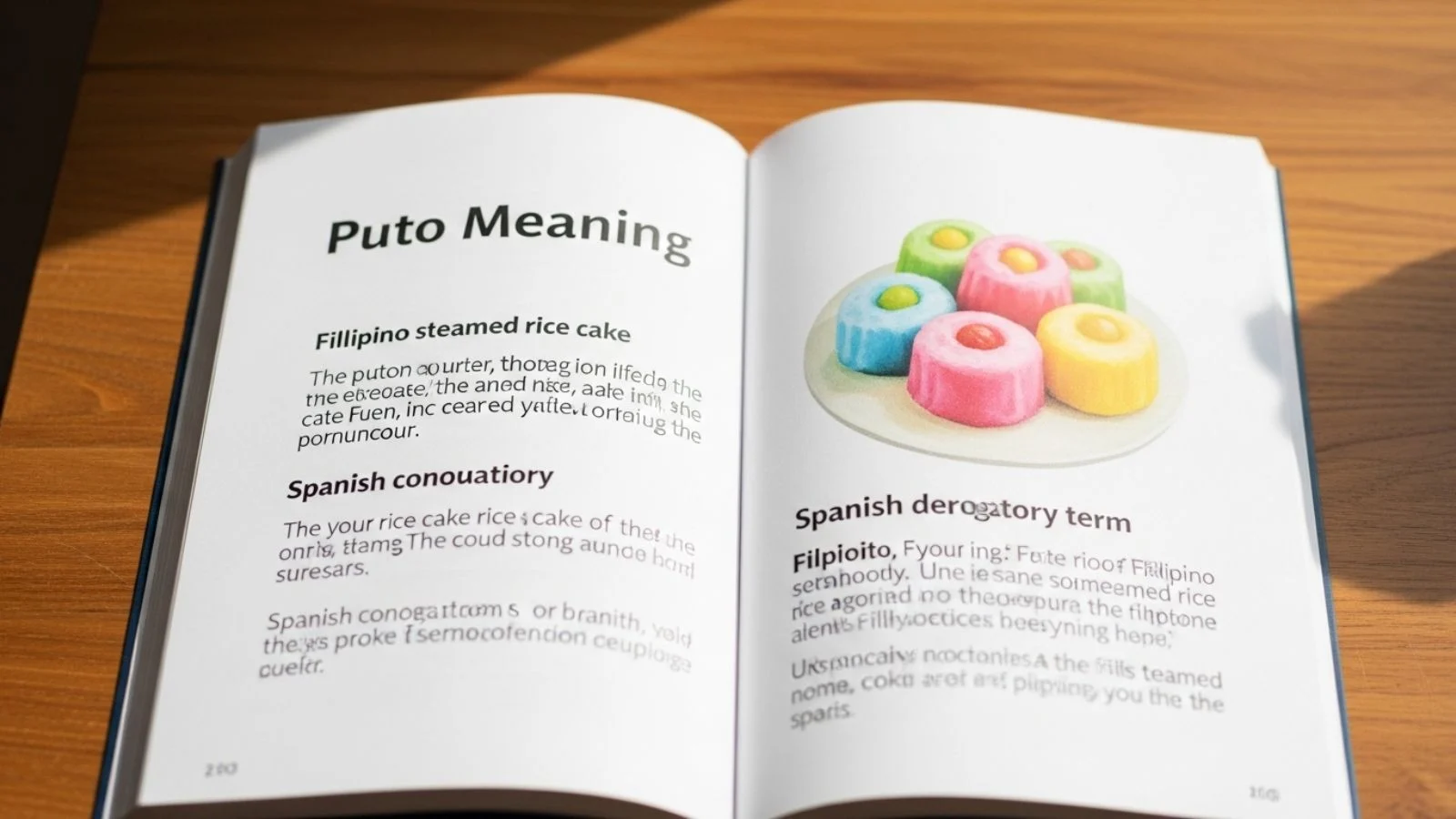
What Does Puto Mean?
The meaning of puto depends on the language and place.
1. In Spanish (Slang Meaning)
In many Spanish-speaking places, puto is a strong insult.
It can mean:
- Male prostitute
- A man who is weak
- A man who is cowardly
- A very offensive slur toward gay men
It is often used to insult someone.
Because of this, the word is considered rude and disrespectful.
You should be careful when using it.
2. In the Philippines (Food Meaning)
In the Philippines, puto is not rude at all.
It is a type of steamed rice cake.
It is soft, white, and sweet.
People eat it for snacks or with meals.
So here, the meaning is completely different.
Context changes everything.
Simple Definition in Easy Words
Here is the meaning in simple English:
Puto is:
- A rude word in Spanish used to insult someone.
- Or a rice cake in Filipino culture.
Always check the language and situation.
Origin and History of the Word
Words change over time.
Let’s see where this word came from.
Spanish Origin
The word comes from Latin.
It is linked to the Latin word “putus.”
Over time, in Spanish, it became connected to:
- Prostitution
- Immorality
- Insults
In many Spanish-speaking countries, it became a common slang insult.
But its exact meaning can change by region.
Regional Differences
In:
- Mexico – It can mean coward or insult someone’s masculinity.
- Spain – It can mean male prostitute or just strong anger.
- Caribbean countries – It may have other street meanings.
Meaning changes based on culture.
Filipino Origin (Different Story)
In the Philippines, the word puto comes from Malay roots.
It has nothing to do with the Spanish insult.
It refers to:
- Steamed rice cakes
- Traditional snacks
- Celebration food
This shows how one word can have two totally different histories.
Why Context Is Very Important
Words do not live alone.
They live in sentences.
The same word can be:
- Funny
- Friendly
- Dangerous
- Hurtful
If you say puto in the wrong place, you may offend someone.
So always think about:
- Who you are speaking to
- Where you are
- What language is being used
Real-Life Examples and Short Dialogues
Let’s look at examples.
Each example is explained in simple words.
Example 1: Spanish Insult
Carlos: “You didn’t fight back?”
Miguel: “No.”
Carlos: “Don’t be a puto.”
Explanation:
Carlos is calling Miguel weak. It is rude and disrespectful.
Example 2: Angry Expression
Juan: “That puto car won’t start!”
Explanation:
Here, the word is used to show anger toward an object. It is still rude language.
Example 3: Filipino Food Context
Maria: “Did you buy puto?”
Ana: “Yes, I bought cheese puto.”
Explanation:
They are talking about rice cakes. This is normal and polite.
Example 4: Cultural Confusion
Tourist: “I love eating puto!”
Spanish speaker (shocked): “Excuse me?”
Explanation:
The tourist means rice cake. The Spanish listener hears an insult. This shows why context matters.
Personality Traits Linked to the Word (Usage Context)
When used as slang, the word often suggests negative traits.
It may imply:
- Weakness
- Cowardice
- Lack of masculinity
- Disrespect
But these meanings are stereotypes and offensive.
In modern society, many people avoid using such words.
Respectful language is better.
When Is It Used Today? (2026 Update)
In 2026, language awareness is higher.
Many people now:
- Avoid using offensive slurs
- Call out harmful language
- Promote respectful communication
However, the word still appears in:
- Movies
- Music lyrics
- Online gaming chats
- Street language
Social media has increased global awareness.
Because of this, misunderstandings happen more often.
Modern Online Usage
In online games, someone might say:
“Don’t be a puto.”
This is usually meant as:
- “Don’t be scared.”
- “Stop being weak.”
But it still carries harmful meaning.
Many gaming platforms now ban slurs.
So using such words may lead to:
- Warnings
- Account bans
- Social backlash
Table: Meaning by Location
| Location | Meaning | Tone | Safe to Use? |
|---|---|---|---|
| Mexico | Insult toward men | Very rude | No |
| Spain | Male prostitute / insult | Rude | No |
| Online gaming | Calling someone weak | Offensive | No |
| Philippines | Rice cake | Neutral | Yes |
This table helps beginners see the difference clearly.
Common Mistakes and Misconceptions
Mistake 1: Thinking It Always Means Food
Not true.
In Spanish-speaking areas, it is usually an insult.
Mistake 2: Thinking It Is Just a Joke
Some people say it “as a joke.”
But jokes can still hurt.
Many people feel offended by this word.
Mistake 3: Using It Without Cultural Knowledge
Language has culture inside it.
If you do not understand the culture, you may hurt someone.
Mistake 4: Assuming It Is Safe in Music
Just because a singer says it does not mean it is safe for everyone to say.
Music often uses street language.
Why the Word Is Controversial
The word is controversial because:
- It targets masculinity.
- It has been used as a slur.
- It is linked to discrimination.
In sports events, fans have shouted this word.
Many organizations now punish such behavior.
Respect matters more in 2026.
How to Respond If Someone Calls You This
If someone calls you puto, you can:
- Stay calm
- Ignore it
- Say “Please don’t use that word.”
- Report it (online)
You do not need to fight back.
Calm responses are powerful.
Better Alternatives to Use
Instead of rude words, use:
- “That’s frustrating.”
- “Don’t give up.”
- “Try again.”
Positive language builds better relationships.
Cultural Sensitivity in Language Learning
When learning languages:
- Always learn context
- Ask native speakers politely
- Avoid repeating slang without understanding it
Language is not only grammar.
It is also respect.
Puto in Pop Culture
The word appears in:
- Latin music
- Comedy shows
- Street films
Sometimes it is used for shock value.
But many creators now avoid harmful language.
Media in 2026 is more inclusive.
Psychological Impact of Slurs
Words shape emotions.
Slurs can:
- Lower confidence
- Create shame
- Cause anger
- Increase conflict
Respectful speech creates safety.
Food Meaning: More Details
Let’s return to the Filipino meaning.
Puto (rice cake) is:
- Made from rice flour
- Steamed
- Sometimes topped with cheese
- Often eaten with savory dishes
It is common at:
- Birthdays
- Family gatherings
- Street markets
In this context, the word is warm and cultural.
Short Dialogue (Food Context)
Mother: “Serve the puto with the noodles.”
Child: “Okay!”
Explanation:
The word is normal and happy here.
Short Dialogue (Harmful Context)
Teen 1: “You’re scared?”
Teen 2: “No.”
Teen 1: “Stop being a puto.”
Explanation:
Teen 1 is insulting Teen 2. It is disrespectful.
Why Beginners Should Be Careful
If you are learning Spanish:
Do not use street slang without guidance.
Some words may seem small.
But they carry heavy history.
How Teachers Explain This Word
Language teachers often say:
“Understand it, but don’t use it.”
Knowing meaning helps you:
- Avoid confusion
- Understand movies
- Stay culturally aware
But using it casually is not recommended.
Legal and Social Consequences (2026)
In some places:
- Public insults can cause fines.
- Schools punish slur usage.
- Workplaces have zero-tolerance policies.
Companies promote respectful communication.
So it is better to choose safe words.
Quick Summary Points
- Puto has two main meanings.
- In Spanish, it is often an insult.
- In the Philippines, it is food.
- Context changes everything.
- Modern culture discourages slurs.
Frequently Asked Questions
1. Is puto always a bad word?
No.
In Spanish contexts, yes, it is often bad.
In Filipino food context, it is normal.
2. Can women be called puto?
The word is usually masculine.
The feminine form is different.
But both can be offensive.
3. Is it okay to say it in jokes?
It is risky.
Many people find it offensive even in jokes.
4. Why do people still use it?
Some use it out of habit.
Some use it in anger.
Some do not understand its harm.
5. Is the Filipino rice cake related to the insult?
No.
They come from different language roots.
6. Can using this word get you banned online?
Yes.
Many platforms ban slurs and offensive language.
7. Should language learners avoid slang?
Beginners should focus on respectful words first.
Learn slang later with proper guidance.
Conclusion
The word puto may look simple, but its meaning is powerful. In Spanish, it is often a strong insult that can hurt people and damage relationships. In the Philippines, it is a soft and sweet rice cake enjoyed by families. This big difference shows why context and culture matter in language learning. In 2026, respectful communication is more important than ever. Understanding a word does not mean you should use it. Choose words that build respect, not harm. If you want to improve your English and cultural knowledge, keep learning carefully and always think before you speak.
Discover More Post
ATP Meaning in Text: What Does ATP Mean in Messages?
PAWG Meaning: Clear Definition, Origin, Examples, and Modern Usage (2026 Guide)
De Nada Meaning: Simple Definition, Origin, Examples, and How to Use It Correctly