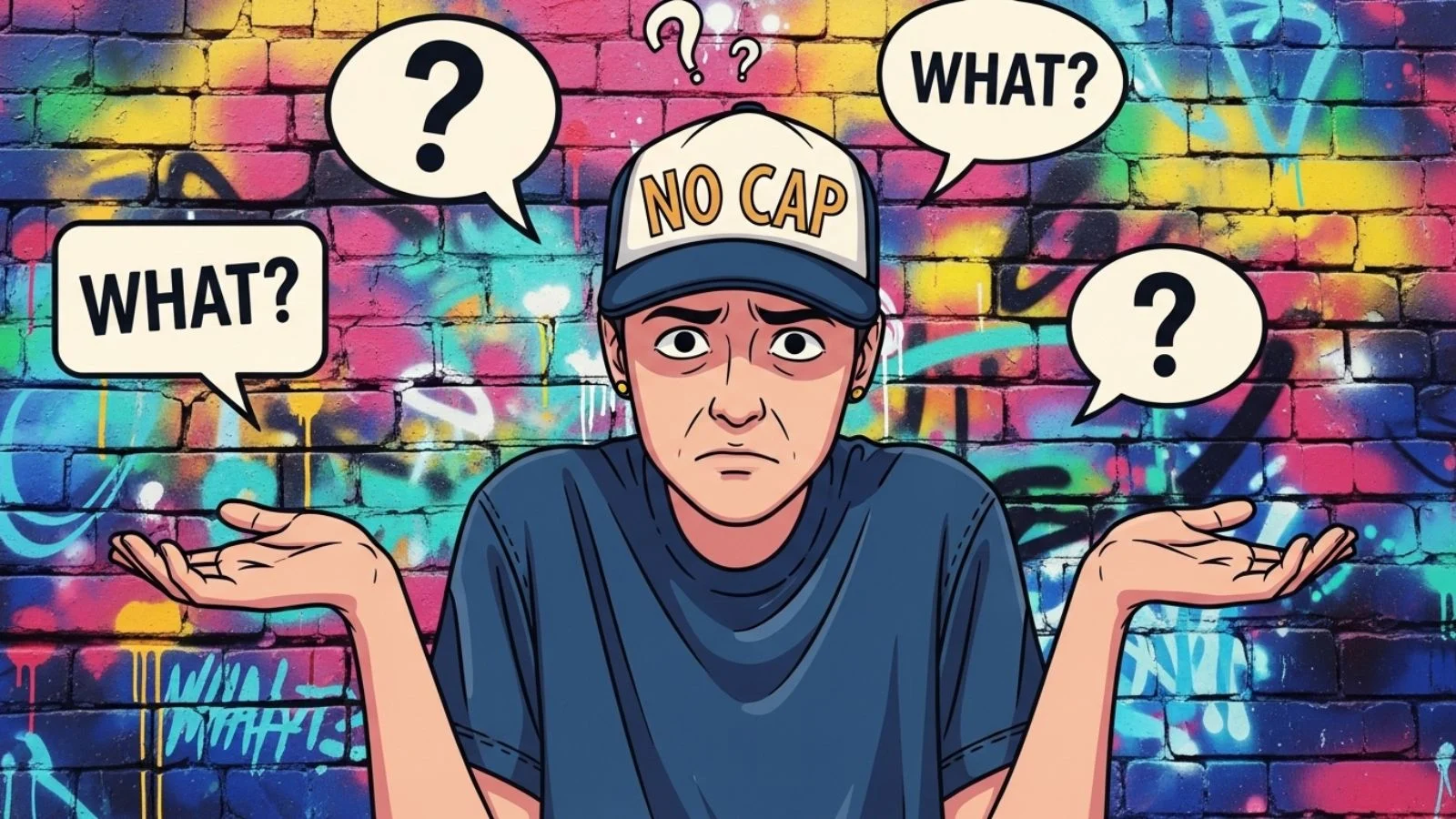
In today’s fast-paced digital world, slang moves faster than ever. One phrase you may have seen in TikTok comments, Instagram DMs, or WhatsApp chats is “no cap.” But what does it really mean? Is it just a trend, or is there more to it? Understanding this phrase can save you from confusion and help you communicate naturally with younger audiences or online communities.
People often search for “no cap meaning” because they’ve seen it in posts, texts, or videos and aren’t sure how to respond. Misusing slang can make conversations feel awkward, so knowing the real meaning is useful—not just online but in real-life conversations too.
Short, clear, and practical, this guide will explain the meaning, origin, emotional context, and proper usage of “no cap.”
No Cap – Quick Meaning
At its simplest:
- Definition: “No cap” means “no lie,” “I’m being serious,” or “I’m telling the truth.”
- Tone: Honest, emphatic, sometimes playful.
- Use: Often in casual conversations online, among friends, or on social media.
Examples:
- “That movie was the best I’ve seen all year, no cap.”
- “I can run a mile in under 5 minutes, no cap.”
- “No cap, she’s the smartest person in our class.”
In short, when someone says “no cap,” they want to emphasize honesty or make sure you know they are serious.
Origin & Background
The term “no cap” comes from African American Vernacular English (AAVE) and entered mainstream usage through hip-hop culture and social media.
- Hip-Hop Influence: Rappers like Future, Young Thug, and Lil Baby helped popularize the phrase in songs during the late 2010s.
- Meaning Evolution: Originally, “cap” meant “lie” or “exaggeration,” so “no cap” became the natural opposite: “I’m not lying.”
- Social Media Spread: TikTok, Twitter, and Instagram accelerated its use globally. Today, it’s widely understood among teens and young adults.
The phrase is informal, casual, and often used for emphasis rather than serious statements in professional contexts.
Real-Life Conversations
Here are some realistic scenarios showing how “no cap” appears in everyday chats:
Conversation 1 – WhatsApp
Person A: I just finished a 10k run in under an hour.
Person B: No way!
Person A: No cap, I even tracked it on my watch.
Conversation 2 – Instagram DMs
Person A: That outfit looks amazing on you!
Person B: Thanks, no cap, it was a last-minute choice.
Conversation 3 – TikTok Comments
User1: This dance trend is harder than it looks.
User2: No cap, I tried it for 5 minutes and gave up.
These examples show how natural and versatile “no cap” feels in casual conversations.
Emotional & Psychological Meaning
Using “no cap” is more than a slang choice—it reflects attitude, honesty, and relatability:
- Authenticity: People use it to show they’re genuine and serious.
- Emphasis: It adds weight to statements in informal communication.
- Trust-Building: Saying “no cap” can strengthen connections by signaling honesty.
- Modern Mindset: Reflects the desire to be upfront in a digital era full of exaggeration or “fake flexing.”
It resonates especially with younger generations who value transparency online.
Usage in Different Contexts
| Context | How “No Cap” is Used | Tone |
|---|---|---|
| Social media | TikTok captions, Instagram comments | Casual, playful |
| Friends & relationships | Texts, DMs | Honest, emphatic |
| Work / professional | Rarely appropriate | Can feel informal or unprofessional |
| Casual vs serious tone | Casual: playful exaggeration; Serious: truth statement | Adjust depending on audience |
Key takeaway: “No cap” is informal. While perfect for friends or online content, it rarely fits formal or work-related settings.
Common Misunderstandings
- Not always literal: Sometimes used humorously or sarcastically.
- Don’t use in formal settings: Saying “no cap” in a meeting might confuse colleagues.
- Confused with “cap” alone: “Cap” = lie or exaggeration. Using “cap” incorrectly can reverse your intended meaning.
Example:
- Wrong: “I got promoted today, cap.” (This implies you are lying.)
- Right: “I got promoted today, no cap.” (This confirms honesty.)
Comparison Table
| Term | Meaning | Opposite | Usage Example |
|---|---|---|---|
| No cap | I’m being honest | Cap | “I can eat 10 tacos, no cap.” |
| Cap | Lying or exaggerating | No cap | “He said he ran 10 miles, cap.” |
| Facts | Truth | N/A | “Facts, that movie was amazing.” |
| Deadass | Seriously / genuinely | N/A | “I’m deadass, this is true.” |
Key Insight: “No cap” is part of a spectrum of truth-oriented slang like “facts” or “deadass,” but its casual, emphatic style makes it unique.
Variations / Types of “No Cap”
- Straight No Cap – Emphasizes pure honesty.
- Low-Key No Cap – Subtle truth without overemphasis.
- Big No Cap – Strong or shocking honesty.
- No Cap, Fr – “For real,” intensifies sincerity.
- No Cap, Deadass – Doubly emphasizes truth.
- No Cap, Facts – Confirms a statement as undeniable.
- No Cap, Bet – Used to agree truthfully.
- No Cap, On God – Shows deep sincerity or commitment.
- No Cap, Frfr – “For real, for real,” strongest informal affirmation.
Each variation slightly adjusts intensity or tone, making it versatile across digital conversations.
How to Respond When Someone Uses It
- Casual: “Haha, got you.”
- Funny: “No cap? Then I’m calling Guinness.”
- Mature / confident: “I hear you, I trust that.”
- Private / respectful: “Thanks for being honest.”
Tailor your response to your relationship and the conversation’s mood.
Regional & Cultural Usage
- Western culture: Common among teens, social media users, and pop culture fans.
- Asian culture: Increasingly used online, especially in TikTok and gaming communities.
- Middle Eastern culture: Younger urban audiences online understand it; traditional usage is rare.
- Global internet usage: Thanks to memes, videos, and music, “no cap” has near-universal recognition among digital natives.
It’s largely digital slang, so context matters more than geography.
Frequently Asked Questions
1. Is “no cap” appropriate for work emails?
No. It’s informal and may confuse professional readers.
2. Can “no cap” mean exaggeration?
No. It always emphasizes honesty; the opposite is “cap.”
3. Is “cap” the same as “no cap”?
No. “Cap” = lie; “no cap” = truth.
4. Can adults use “no cap” naturally?
Yes, but best among peers familiar with online slang.
5. How do I know if someone is joking with “no cap”?
Tone, context, and prior messages usually reveal if it’s playful or serious.
6. Is “no cap” a recent slang?
Yes, popularized in late 2010s and mainstream by early 2020s.
7. Can it be used in serious arguments?
Yes, but it’s informal; choose your audience carefully.
Conclusion
“No cap” is more than a trendy phrase. It’s a cultural marker, a tool to emphasize honesty, and a way to connect authentically in modern conversations. Whether you’re texting friends, commenting on TikTok, or reading Instagram DMs, understanding “no cap” helps you communicate naturally and confidently.
Next time someone says “no cap,” you’ll know it’s their way of saying: I’m telling the truth, seriously. Use it wisely, and it can make conversations more transparent, playful, and relatable.Learn the full meaning of “no cap,” its origin, usage, real-life examples, and slang variations for social media in 2026.
Discover More Post
Dragonfly Meaning: Discover the Symbolism, Conversations, and Real-Life Use
Fanum Tax Meaning: What It Really Means and Why People Are Talking About It
Semicolon Tattoo Meaning: What It Really Represents in Life and Culture