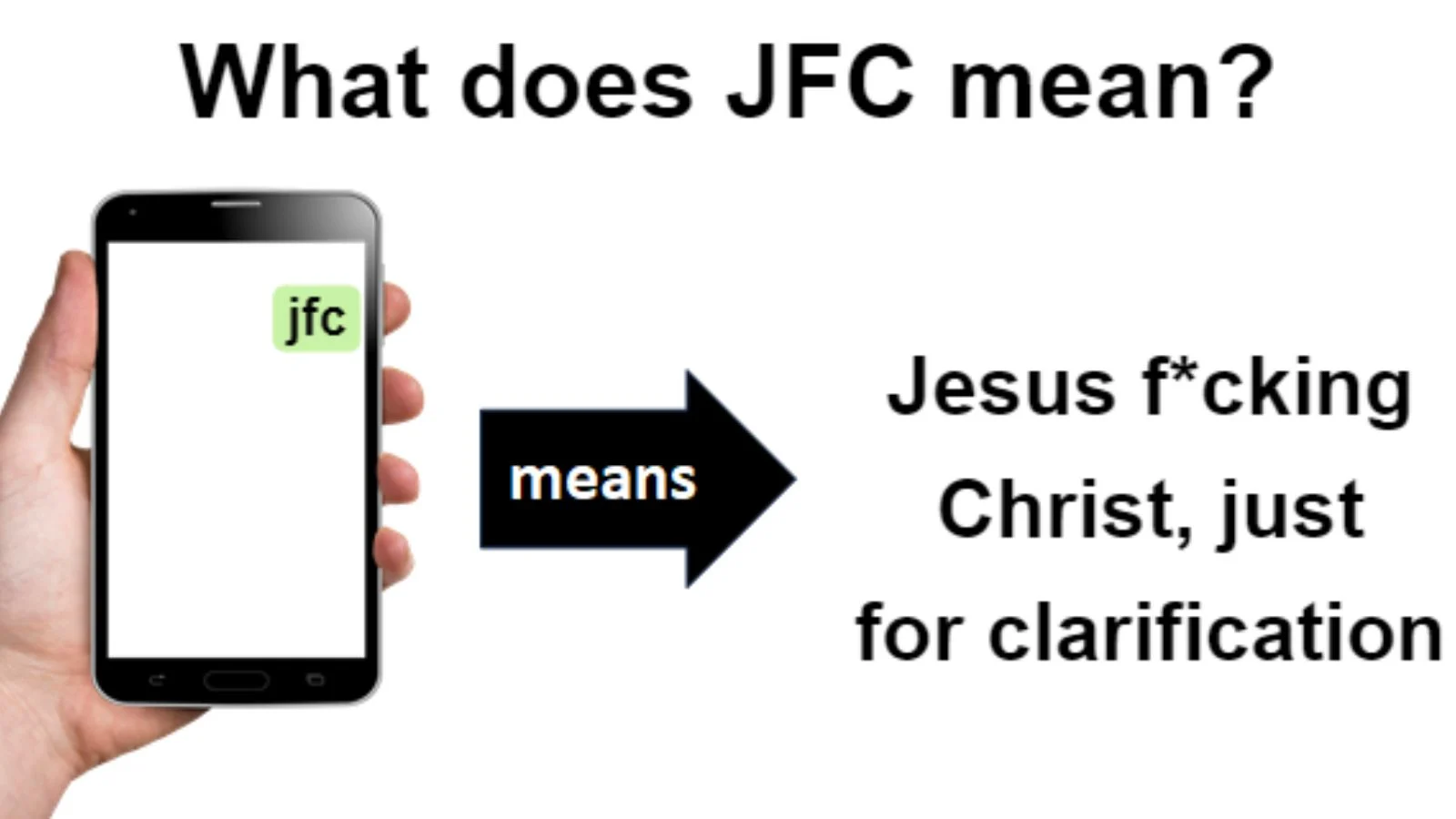
JFC is a popular acronym that stands for “Jesus [F-word] Christ” and is used to express shock, frustration, or disbelief. It is widely used in text messages, social media, and online chats to convey strong emotions quickly. While informal, JFC has become a common part of digital language, especially among younger generations. This guide explains its meaning, origin, real-life examples, and modern usage in 2026.
What Does JFC Mean?
JFC is an acronym that stands for “Jesus [F-word] Christ.” It is commonly used in text messages, social media, and online chats to express strong shock, frustration, anger, or disbelief.
In simple words:
- If someone sees something very surprising or annoying, they might type “JFC!” to show their reaction.
- It is considered informal language and strong slang, so it is not suitable for professional or formal writing.
Example:
- Text: “JFC, I can’t believe I lost my keys again!”
- Explanation: The person is frustrated because they lost their keys.
Origin & History of JFC
The phrase “Jesus Christ” has been used for centuries as an exclamation of surprise or anger. Over time, people started abbreviating it online, especially in the early 2000s with the rise of instant messaging and forums.
- Internet Chat Rooms (1990s–2000s): People used shorthand for fast typing.
- Social Media & Texting: Acronyms like JFC, WTF, OMG became widely popular.
- Modern Usage: Today, JFC is used mainly online and in casual text conversations.
Key Point: The original meaning is religious, but its online usage is mostly secular and expressive, not meant to reference religion directly.
How to Use JFC: Personality Traits & Context
JFC is often used by people who:
- Are frustrated or annoyed.
- Are shocked or surprised.
- Want to express strong emotions quickly.
Usage Contexts:
- Online gaming chats: Players frustrated with a situation.
- Social media posts: Sharing a shocking event.
- Text messages: Expressing daily annoyances.
Personality Traits Associated with JFC Users:
- Expressive: They do not hide emotions.
- Impatient: They often react strongly to small frustrations.
- Casual: They use slang and acronyms freely.
Example Dialogue:
Friend 1: “The concert tickets sold out in 5 minutes!”
Friend 2: “JFC, I was going to buy them!”
Explanation: Friend 2 is shocked and frustrated that they missed out.
Real-Life Examples of JFC
Here are everyday examples to help you understand JFC in context:
- Texting a friend:
- “JFC, I spilled coffee on my laptop.”
- Explanation: Expresses frustration about an accident.
- Online Gaming:
- “JFC, why did we lose that match?”
- Explanation: Shows anger or disbelief during a game.
- Social Media Reaction:
- “JFC, did you see that viral video?”
- Explanation: Reacting to something surprising online.
- Daily Life Conversation:
- “JFC, traffic is terrible today.”
- Explanation: Expresses annoyance at a common problem.
Table of Context & Emotion:
| Context | Meaning/Emotion | Example Text |
| Texting | Frustration | “JFC, I forgot my wallet!” |
| Gaming | Anger/Disbelief | “JFC, they scored again!” |
| Social Media | Shock/Surprise | “JFC, this video is insane” |
| Daily Conversation | Annoyance | “JFC, it’s raining again” |
Common Mistakes & Misconceptions
1. Thinking JFC is appropriate everywhere:
- Mistake: Using JFC in professional emails or formal chats.
- Correction: Only use it in casual or personal communication.
2. Misunderstanding the intensity:
- Mistake: Treating JFC as mild.
- Correction: JFC is a strong exclamation and can seem rude.
3. Spelling variations:
- Mistake: Writing JFC as “Jcs” or “JC” to avoid offense.
- Correction: These variations do not carry the same clear meaning online.
4. Confusing JFC with other acronyms:
- Mistake: Mixing JFC with “LOL” or “OMG.”
- Correction: JFC expresses strong emotion, not laughter or mild surprise.
Modern & Relatable Examples (2026 Update)
In 2026, JFC continues to thrive in digital communication, especially among Gen Z and Millennials, but with slightly evolved usage:
- Short-form video comments:
- Comment: “JFC, this TikTok made me cry!”
- Explanation: Shows extreme surprise or emotion after watching a video.
- AI & productivity apps:
- Message: “JFC, the AI just deleted my draft!”
- Explanation: Expresses frustration with technology errors.
- Relatable pandemic-era usage:
- Text: “JFC, another Zoom meeting at 7 AM?”
- Explanation: Shows annoyance at repeated virtual work routines.
Tip: Modern users often combine JFC with other emojis or abbreviations for emphasis, but the core meaning remains the same.
Lists & Quick Reference for Beginners
Top 5 Situations to Use JFC:
- When something shocks you.
- When you are extremely frustrated.
- When something annoys you intensely.
- Reacting to unexpected bad news.
- Expressing strong disbelief at online content.
Words Similar to JFC:
- WTF (What the f***?)
- OMFG (Oh my f***ing God)
- SMH (Shaking my head) — milder
Frequently Asked Questions
Is JFC rude?
Yes, JFC includes a strong swear word. It is informal and may be considered offensive in some contexts.
Can I use JFC at work?
No, it is not suitable for professional or formal communication. Stick to mild expressions like “Wow” or “Unbelievable.”
Is JFC religious?
Originally, it references Jesus Christ, but in modern slang, it is used secularly to show emotion.
Can JFC be used in texts with family?
Depends on the family. Some may find it offensive, so it’s best used with friends or peers.
What’s the difference between JFC and OMG?
- JFC = stronger emotion, often frustration or anger.
- OMG = milder, expresses surprise or excitement.
Can I shorten JFC further?
No, JFC is already an acronym. Shortening it may confuse readers.
How do I respond to someone saying JFC?
- You can empathize: “I know, right? That’s frustrating!”
- Or joke back: “Calm down, it’s just a video!”
Conclusion
In 2026, JFC remains a popular acronym in casual, digital communication. It is a quick and expressive way to show shock, frustration, or disbelief, but it should be used carefully because of its strong language. Whether in texts, social media, or gaming chats, JFC helps people convey emotion efficiently. Next time you see something unbelievable or frustrating online, you now know how to use JFC correctly—but remember, always consider your audience. Mastering modern acronyms like JFC is a small step toward understanding digital language trends in 2026 and staying relatable in online conversations.
Discover More Post
Anjin Meaning: Simple Definition and Full Guide
Fein Meaning: Definition, Origin, Examples, and Usage (2026 Update)
POS Meaning: Definition, Uses, Examples, and Modern Context (2026 Guide)