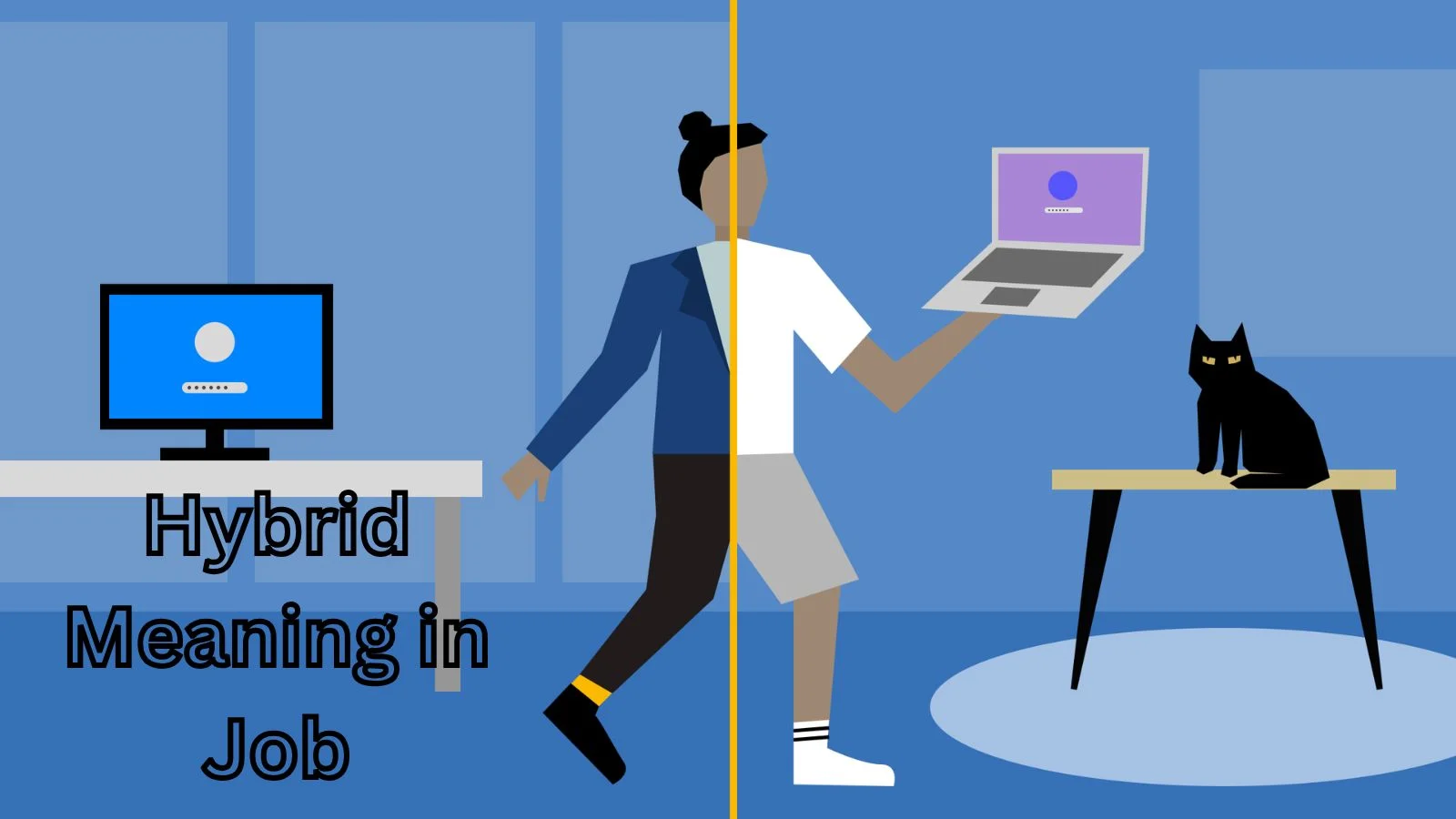
In 2026, the term hybrid in jobs is everywhere. It means working partly from home and partly in the office. Hybrid jobs give employees flexibility, balance, and productivity. This article explains the meaning, real-life examples, and how hybrid work is used today.
What Does Hybrid Mean in Job?
In today’s workplace, the word “hybrid” is used a lot. But what does it really mean in a job context? A hybrid job is one where you split your time between working in the office and working remotely. This style gives employees the flexibility of working from home while still connecting with colleagues in person.
Hybrid jobs have become popular after the COVID-19 pandemic and continue to grow in 2026. They offer a balance of productivity, flexibility, and collaboration, making them attractive to both employees and employers.
Clear Meaning / Simple Definition
Hybrid job definition (simple):
A hybrid job is a work arrangement where an employee works partly from the office and partly from home.
- In-person work: Going to the office to attend meetings, collaborate, or complete tasks that need direct supervision.
- Remote work: Completing tasks from home or any other location using digital tools like Zoom, Slack, or Google Workspace.
Example:
- Dialogue:
- Sarah: “Are you going to the office tomorrow?”
- John: “Yes, it’s my hybrid day. I work from home on Mondays and the office on Tuesdays.”
- Explanation: John works partly from home and partly in the office, which is exactly what a hybrid job means.
Origin & History of Hybrid Jobs
The term “hybrid” originally comes from biology, meaning a mix of two different things. In the work context, hybrid jobs appeared in the early 2000s with the rise of digital technology, but they became widespread during the COVID-19 pandemic (2020–2021).
Before hybrid jobs, people mostly worked either fully in-office or fully remote. Hybrid work combines the best of both worlds, offering flexibility without losing team collaboration.
Personality Traits / Usage Context
People who succeed in hybrid jobs often have certain personality traits. They are usually organized, adaptable, and self-disciplined. These traits help them manage work both at home and in the office. In this section, we explore the typical traits and usage context of hybrid workers.
People who thrive in hybrid jobs often have certain traits:
- Self-discipline: They manage their time effectively at home.
- Adaptable: Comfortable switching between remote and office work.
- Communicative: Stay connected with team members virtually and in person.
- Organized: Keep tasks and schedules structured in different environments.
Usage Context:
Hybrid jobs are common in IT, marketing, consulting, teaching, and administrative roles. Companies use them to reduce office costs while keeping productivity high.
Real-Life Examples + Short Dialogues
- Example 1 – Marketing Manager
- Dialogue:
- Manager: “Will you join the client meeting in person?”
- Employee: “No, I’ll join online from home. I’m in a hybrid role.”
- Explanation: The employee works from home but participates in office meetings virtually.
- Dialogue:
- Example 2 – Software Developer
- Dialogue:
- Team Lead: “Are you coming to the office today?”
- Developer: “Yes, it’s my office day in the hybrid schedule.”
- Explanation: The developer splits workdays between home and office.
- Dialogue:
- Example 3 – Teacher
- Dialogue:
- Principal: “Will the class be in-person or online?”
- Teacher: “It’s hybrid. Some students are in the classroom, others join online.”
- Explanation: Hybrid work isn’t limited to offices; it applies to teaching too.
- Dialogue:
Modern & Relatable Examples (Updated for 2026)
- Tech Industry: Employees code from home but attend team sprints in the office.
- Design Jobs: Designers brainstorm in the office but create visuals remotely.
- Customer Service: Agents handle calls from home and meet supervisors at the office weekly.
- Startups: Small teams rotate between co-working spaces and remote work to save costs.
Hybrid Job Schedule Example
| Day | Work Location | Tasks |
| Monday | Home | Emails, reporting, remote meetings |
| Tuesday | Office | Team collaboration, client meetings |
| Wednesday | Home | Research, project updates |
| Thursday | Office | Workshops, presentations |
| Friday | Home | Task review, planning next week |
Common Mistakes or Misconceptions
- Hybrid means full remote – Wrong. Hybrid always involves some office work.
- Hybrid is less productive – Studies show hybrid workers can be more productive due to flexible schedules.
- Hybrid suits everyone – Not true. Some people prefer fully remote or fully in-office work.
- Communication is not needed – Actually, hybrid workers must communicate more intentionally.
Advantages & Disadvantages of Hybrid Jobs
Advantages:
- Flexible schedule
- Better work-life balance
- Reduced commuting stress
- Opportunities for focused remote work
Disadvantages:
- Hard to separate home and work life
- Risk of feeling isolated
- Requires self-discipline
- Possible miscommunication
Frequently Asked Questions
What is the difference between hybrid and remote jobs?
Hybrid jobs require some office work, while remote jobs are entirely done from home.
How many days do hybrid employees usually work in-office?
Typically 2–3 days per week, but it depends on the company.
Can hybrid jobs help with career growth?
Yes, hybrid jobs allow networking in-person while enjoying remote productivity.
Do hybrid jobs pay less than in-office jobs?
Not necessarily. Salaries depend on role, experience, and company policies.
Are hybrid jobs only for tech companies?
No. Hybrid roles exist in education, marketing, healthcare, finance, and more.
How do companies track hybrid employees’ work?
Through digital tools like project management apps, time trackers, and online meetings.
Is hybrid work permanent?
Many companies are making hybrid models permanent due to employee satisfaction and productivity.
Common Tools Used in Hybrid Jobs
- Communication: Slack, Microsoft Teams, Zoom
- Project Management: Trello, Asana, Jira
- Cloud Storage: Google Drive, Dropbox, OneDrive
- Time Tracking: Clockify, Hubstaff
Conclusion
In 2026, hybrid jobs are becoming a standard in the modern workplace. They offer flexibility, collaboration, and productivity, making them ideal for many professionals. Understanding the definition, personality traits, and examples of hybrid work helps employees succeed and stay motivated.
Whether you are an employer or an employee, embracing hybrid work can boost efficiency and job satisfaction. Start exploring hybrid opportunities today and experience the best of both worlds.
Discover More Post
Queued Meaning in Gmail (Simple Guide for Beginners – 2026)
Habibi Meaning in English – Simple Definition, Origin, Examples & Usage (2026)
333 Angel Number Meaning in Money – Simple Explanation (2026)