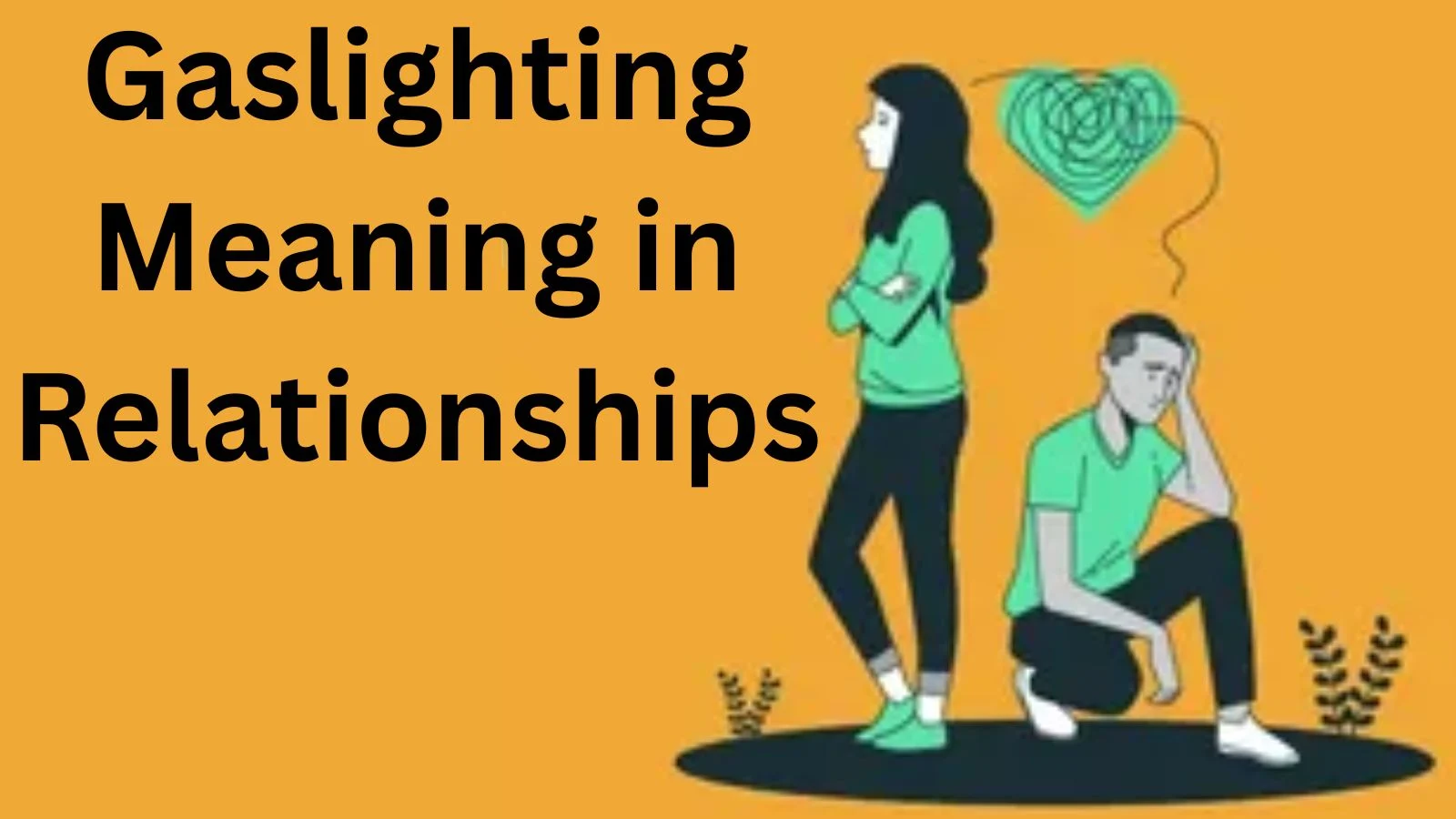
Gaslighting in relationships is a form of emotional manipulation where one person makes the other person doubt their own thoughts, feelings, memory, or reality.
In simple words, gaslighting makes you feel confused about what is true, even when you were sure before.
This behavior often happens slowly. At first, it may look like small lies or jokes. Over time, it can damage self-confidence, mental peace, and trust in the relationship.
Simple Definition of Gaslighting
Gaslighting means:
Making someone believe they are wrong, confused, or “too sensitive,” even when they are right.
In relationships, gaslighting is used to gain control, avoid responsibility, or hide bad behavior.
Very Simple Explanation
- You feel something is wrong
- You talk about it
- Your partner says, “That never happened”
- You start doubting yourself
This is gaslighting.
Origin and History of the Word “Gaslighting”
The word gaslighting comes from a 1938 play called Gas Light.
Short History
- In the play, a husband secretly dims gas lights in the house
- When his wife notices, he says she is imagining it
- Over time, she doubts her own mind
Later, the story became movies (1940 & 1944).
Psychologists then used gaslighting to describe mental and emotional manipulation.
Today, the term is widely used in relationships, families, workplaces, and social media.
Why Gaslighting Happens in Relationships
People gaslight for different reasons. Most of the time, it is about power and control.
Common Reasons
- Fear of being caught
- Desire to control the partner
- Avoiding blame
- Insecurity
- Narcissistic traits
Important: Gaslighting is a choice, not an accident.
Common Gaslighting Phrases in Relationships
Gaslighters often use similar sentences again and again.
Common Examples
- “You’re overreacting.”
- “That never happened.”
- “You’re too sensitive.”
- “You always misunderstand things.”
- “You’re imagining problems.”
- “Everyone thinks you’re dramatic.”
These phrases make the victim feel small, confused, and guilty.
Real-Life Examples of Gaslighting in Relationships
Example 1: Memory Denial
Partner A: “You promised to call me last night.”
Partner B: “I never said that. You always make things up.”
Explanation:
Partner B denies a clear promise, making Partner A doubt their memory.
Example 2: Emotional Invalidating
Person: “Your comment hurt my feelings.”
Gaslighter: “You’re too emotional. It was just a joke.”
Explanation:
The gaslighter dismisses feelings instead of respecting them.
Example 3: Blame Shifting
Person: “Why did you lie to me?”
Gaslighter: “If you weren’t so suspicious, I wouldn’t need to.”
Explanation:
The gaslighter shifts blame to avoid responsibility.
Gaslighting vs Healthy Disagreement
| Gaslighting | Healthy Communication |
| Denies reality | Listens to feelings |
| Blames the other | Shares responsibility |
| Creates confusion | Creates clarity |
| Controls emotions | Respects emotions |
Disagreement is normal. Gaslighting is harmful.
Personality Traits of a Gaslighter
Gaslighters often show certain traits, but not all gaslighters look the same.
Common Traits
- Controlling behavior
- Lack of empathy
- Constant need to be right
- Defensive nature
- Manipulative communication
- Refuses accountability
Some gaslighters are charming at first, which makes it harder to notice.
Signs You Are Being Gaslighted in a Relationship
Emotional Signs
- You feel confused often
- You apologize too much
- You doubt your feelings
- You feel “crazy” or unstable
Behavioral Signs
- You second-guess decisions
- You avoid sharing thoughts
- You feel anxious before conversations
If this feels familiar, trust your feelings.
Gaslighting in Modern Relationships (2026 Examples)
In 2026, gaslighting also appears in digital communication.
Modern Examples
- Deleting messages and denying them
- Saying “I never liked that post” when proof exists
- Blaming algorithms instead of actions
- Using therapy words to manipulate (“You’re projecting”)
Explanation:
Technology can make gaslighting harder to detect but easier to deny.
Gaslighting in Different Relationship Types
Romantic Relationships
- Denying cheating
- Minimizing emotional pain
- Controlling decisions
Family Relationships
- Parents dismissing feelings
- Siblings rewriting events
Friendships
- Mocking emotions
- Spreading false narratives
Gaslighting can happen anywhere, not just romance.
Common Mistakes and Misconceptions About Gaslighting
Misconception 1: “Gaslighting is just lying”
Wrong.
Gaslighting is repeated manipulation, not one lie.
Misconception 2: “Only bad people gaslight”
Wrong.
Some people learn this behavior without realizing the harm.
Misconception 3: “If I explain better, it will stop”
Wrong.
Gaslighting is about control, not misunderstanding.
Effects of Gaslighting on Mental Health
Long-term gaslighting can cause:
- Low self-esteem
- Anxiety
- Depression
- Trust issues
- Emotional dependence
The damage can last even after the relationship ends.
How to Respond to Gaslighting in Relationships
Healthy Responses
- Trust your memory
- Write things down
- Set clear boundaries
- Avoid long arguments
- Seek outside support
What NOT to Do
- Over-explain
- Beg for validation
- Blame yourself
Your feelings are valid.
Can Gaslighting Be Unintentional?
Yes, sometimes.
But impact matters more than intention.
If someone:
- Listens
- Apologizes
- Changes behavior
There is hope.
If someone:
- Denies
- Repeats behavior
- Blames you
Protect yourself.
Healing After Gaslighting
Healing takes time, but it is possible.
Steps to Heal
- Rebuild self-trust
- Talk to safe people
- Learn emotional boundaries
- Consider therapy
- Practice self-compassion
Healing means believing yourself again.
Gaslighting vs Narcissistic Abuse
Gaslighting is often part of narcissistic abuse, but not always.
| Gaslighting | Narcissistic Abuse |
| One tactic | Pattern of abuse |
| Focus on confusion | Focus on control |
| Can be isolated | Long-term cycle |
Is Gaslighting Emotional Abuse?
Yes.
Gaslighting is recognized by mental health professionals as a form of emotional and psychological abuse.
No physical harm is needed for abuse to exist.
Frequently Asked Questions
What is gaslighting in simple words?
Gaslighting means making someone doubt their own reality, thoughts, or feelings.
How do I know if I’m being gaslighted?
If you feel confused, doubt yourself often, and are told you’re “too sensitive,” it may be gaslighting.
Is gaslighting always intentional?
Not always, but repeated behavior without change is still harmful.
Can gaslighting happen in healthy relationships?
No. Healthy relationships respect feelings and reality.
Can therapy help gaslighting victims?
Yes. Therapy helps rebuild confidence and emotional clarity.
Should I leave a gaslighting relationship?
If the behavior continues and harms your mental health, leaving may be the healthiest option.
Can a gaslighter change?
Change is possible only if they accept responsibility and actively work on it.
Thoughts on Gaslighting in Relationships
Gaslighting in relationships is serious, harmful, and deeply emotional. It slowly breaks trust and self-belief, often without the victim realizing it at first.
Understanding the signs is the first step toward clarity and healing. You deserve a relationship where your feelings are respected, your memories are trusted, and your voice matters.
Conclusion
Gaslighting can make even the strongest person doubt themselves, but awareness brings power. When you understand the true meaning of gaslighting in relationships, you can protect your mental health and emotional well-being. Healthy love does not confuse, silence, or control—it supports and listens. If this article helped you, consider learning more about emotional boundaries, self-trust, and healthy communication. Knowledge is the first step toward freedom, confidence, and relationships built on honesty and respect.
Discover More Post
Debauchery Meaning in the Bible (Simple & Clear Guide)
Poly Meaning in Relationship (Simple, Clear & Modern Guide for 2026)
Regards Meaning in Email: Simple Explanation, Examples & Correct Use (2026)