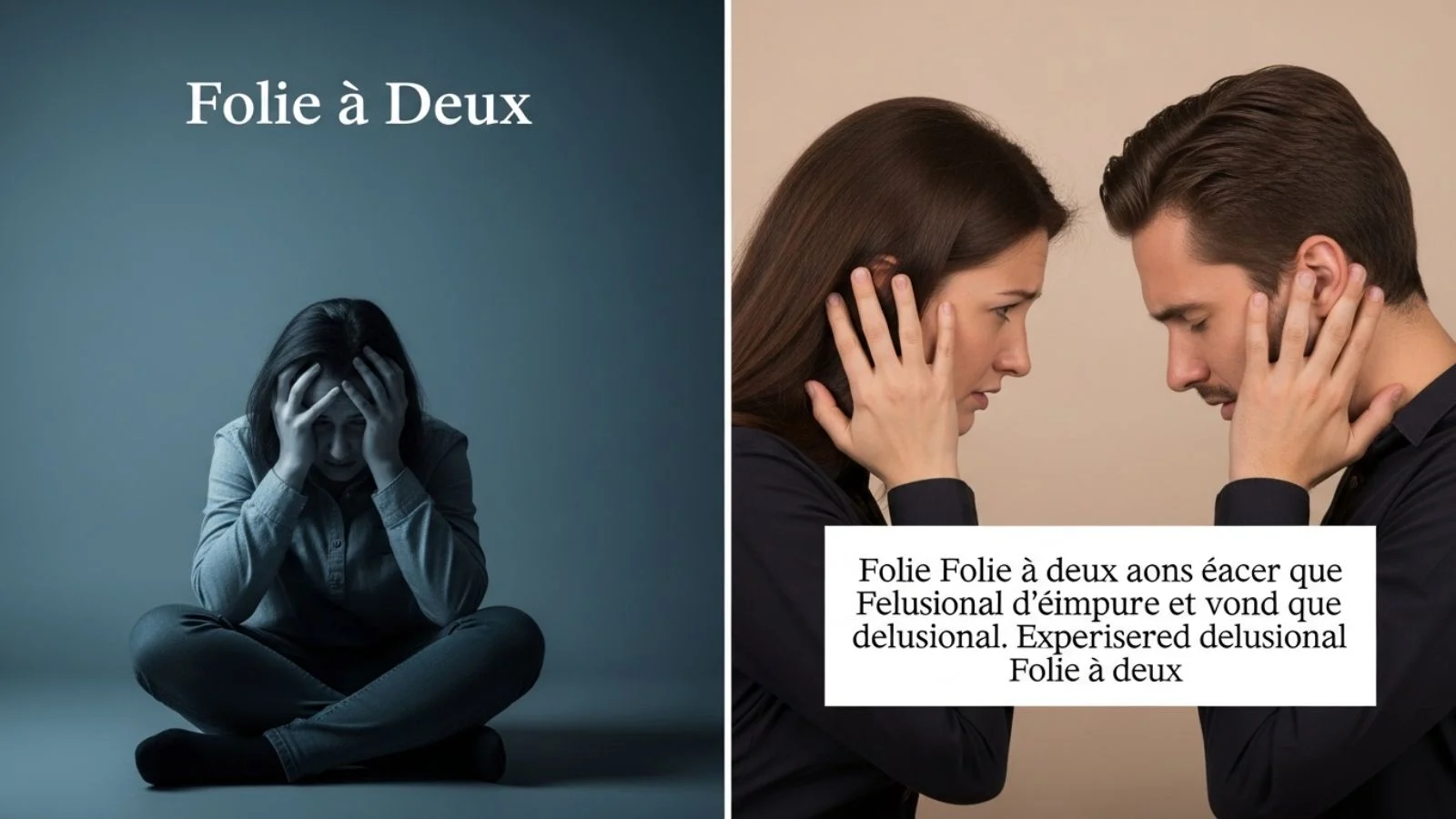
When you first hear the term folie à deux, it might sound like something out of a psychological thriller or a French novel. Yet, people often encounter it online, in articles, or even casual conversations, without truly grasping its meaning. Why does it matter? Because understanding folie à deux can clarify behaviors in relationships, friendships, and even workplace dynamics—situations where two people influence each other in ways that can be both fascinating and concerning.
In this article, we’ll break it down in simple, real-life terms, explain its origins, show examples, and explore how the concept appears in everyday conversations. By the end, you’ll not only know the meaning but also understand how it manifests in real life.
Folie à Deux – Quick Meaning
At its core, folie à deux is a psychological phenomenon. Here’s the simplified meaning:
- Definition: A rare psychiatric syndrome where two people share the same delusion or irrational belief.
- Literal Translation: French for “madness of two.”
- Common Contexts: Romantic partners, close friends, or family members who reinforce each other’s misconceptions or unhealthy behaviors.
Example Quotes:
- “I think it’s folie à deux—both of them are convinced the world is out to get them.”
- “Their obsession with online conspiracies feels like a classic folie à deux.”
- “You know it’s folie à deux when two people feed each other’s paranoia.”
Origin & Background
Folie à deux is a term rooted in 19th-century French psychiatry. It was first described by Charles Lasègue and Jules Falret, two French psychiatrists, in the 1870s. They noticed that certain delusions didn’t just appear in one person—they were shared and reinforced between two people living in close contact.
Over time, the concept has evolved:
- Initially: Strictly a clinical diagnosis for psychiatric treatment.
- Modern usage: Broader, often used metaphorically online and in pop culture to describe mutual obsession, unhealthy co-dependence, or shared irrationality.
- Cultural impact: Frequently appears in movies, psychology blogs, and social media discussions about toxic relationships or influencer behavior.
Real-Life Conversations
Here are realistic ways folie à deux might show up in everyday chats:
WhatsApp Chat:
Person A: “Did you see Mark and Jenna? They’re convinced their neighbors are spying on them.”
Person B: “Sounds like a full-blown folie à deux.”
Instagram DMs:
Person A: “These two TikTok creators are always copying each other’s conspiracy posts.”
Person B: “Exactly, it’s like a digital folie à deux!”
TikTok Comments:
User1: “Watching them argue over the same nonsense… it’s kind of entertaining.”
User2: “Lol, total folie à deux energy.”
Emotional & Psychological Meaning
People connect with folie à deux for several reasons:
- Reflection of closeness: It shows how deeply two minds can influence each other.
- Shared obsession: The emotional intensity creates a sense of unity—even if it’s unhealthy.
- Modern relevance: In today’s social media age, mutual reinforcement of beliefs or habits is increasingly visible.
Psychologically, it highlights traits like dependence, reinforcement of bias, and emotional mirroring—essentially, the human tendency to amplify what we see in those we’re closest to.
Usage in Different Contexts
Social Media: Often used humorously to describe online duos who obsess over trends or conspiracies.
Friends & Relationships: Applies to couples or friends who enable each other’s irrational fears or obsessions.
Work or Professional Settings: Rarely clinical, but might describe coworkers who adopt each other’s extreme strategies or misconceptions.
Casual vs Serious Tone:
- Casual: “They’re basically in folie à deux about that new diet trend.”
- Serious: Refers to psychological dependence or shared delusions requiring attention.
Common Misunderstandings
People often misuse folie à deux. Watch out for these mistakes:
- Not just disagreement: Two people disagreeing isn’t folie à deux.
- Not normal influence: Sharing hobbies or tastes isn’t the same.
- Not a joke in serious cases: If it involves paranoia or delusions, it’s a real mental health concern.
Comparison Table
| Term/Slang | Meaning | Key Insight |
|---|---|---|
| Folie à deux | Shared delusion between two people | Highlights mutual reinforcement of beliefs |
| Co-dependence | Emotional reliance, not necessarily delusional | More about support/need than shared madness |
| Echo chamber | Reinforced beliefs in groups | Usually online, larger than two people |
| Individual delusion | One person’s irrational belief | Key difference: only affects one person |
| Folie à plusieurs | Shared delusion among more than two people | Expansion of folie à deux concept |
Key Insight: Folie à deux specifically involves two people, blending emotional attachment with shared irrationality.
Variations / Types
- Folie imposée – One person imposes a delusion on another.
- Folie simultanée – Two people develop delusions independently but simultaneously.
- Folie communiquée – Delusions spread gradually from one to another.
- Folie induite – A dominant partner creates a belief, and the other accepts it.
- Folie partagée – Mutual reinforcement of a single belief.
- Folie active – Both actively contribute to the shared delusion.
- Folie passive – One is more receptive than active, influenced quietly.
- Digital folie à deux – Shared delusions manifest online.
- Romantic folie à deux – Shared obsessions in couples.
- Friendship folie à deux – Close friends reinforcing irrational behavior.
How to Respond When Someone Uses It
Casual replies:
- “Haha, sounds like a classic folie à deux.”
- “You’re not wrong—total twin-mind vibes.”
Funny replies:
- “Should we call a shrink for these two?”
- “Plot twist: they’re plotting world domination together.”
Mature/confident replies:
- “It’s interesting how much people can influence each other’s perception.”
- “That really shows the power of emotional reinforcement.”
Private or respectful replies:
- “I hope they get support if this is affecting their mental health.”
- “Sometimes shared beliefs can be harmful; it’s worth noticing.”
Regional & Cultural Usage
Western culture: Often discussed in psychological terms or pop culture, highlighting both humor and concern.
Asian culture: Less common clinically, more as a metaphor for co-dependent or obsessive relationships.
Middle Eastern culture: Used cautiously, sometimes in media or educational contexts.
Global internet usage: Common on forums, Twitter/X, and TikTok to describe influencer duos or online obsessions.
Frequently Asked Questions
1. Is folie à deux a real mental illness?
Yes, it’s a recognized psychiatric syndrome involving shared delusions.
2. Can it happen between friends?
Absolutely, it can occur in any close relationship, including friendships.
3. Is it always harmful?
Not always; casual or metaphorical usage is harmless, but true delusions can be damaging.
4. Can more than two people experience it?
Yes, that’s called folie à plusieurs.
5. How do psychologists treat it?
Treatment often involves separating the individuals and therapy, sometimes medication.
6. Can social media create a digital folie à deux?
Yes, mutual reinforcement of beliefs online mirrors the phenomenon.
7. Is it the same as co-dependence?
No, co-dependence involves emotional reliance, not shared delusions.
Conclusion
Folie à deux is more than a fancy French term—it’s a window into the human mind, showing how two people can share and amplify beliefs, for better or worse. Understanding it helps us navigate relationships, recognize patterns of influence, and even laugh at the quirks of human behavior. Whether in psychology, pop culture, or casual conversation, knowing the meaning makes our interactions richer, more empathetic, and more informed.
Next time you see two people reinforcing each other’s ideas, you’ll recognize the subtle dance of folie à deux—a shared glimpse into the fascinating complexity of human connection.
Discover More Post
TS Meaning – Everything You Need to Know About This Popular Term
Clingy Meaning: Understanding the Term, Its Use, and Real-Life Contexts
Joi Meaning: Understanding This Popular Term in Modern Conversations