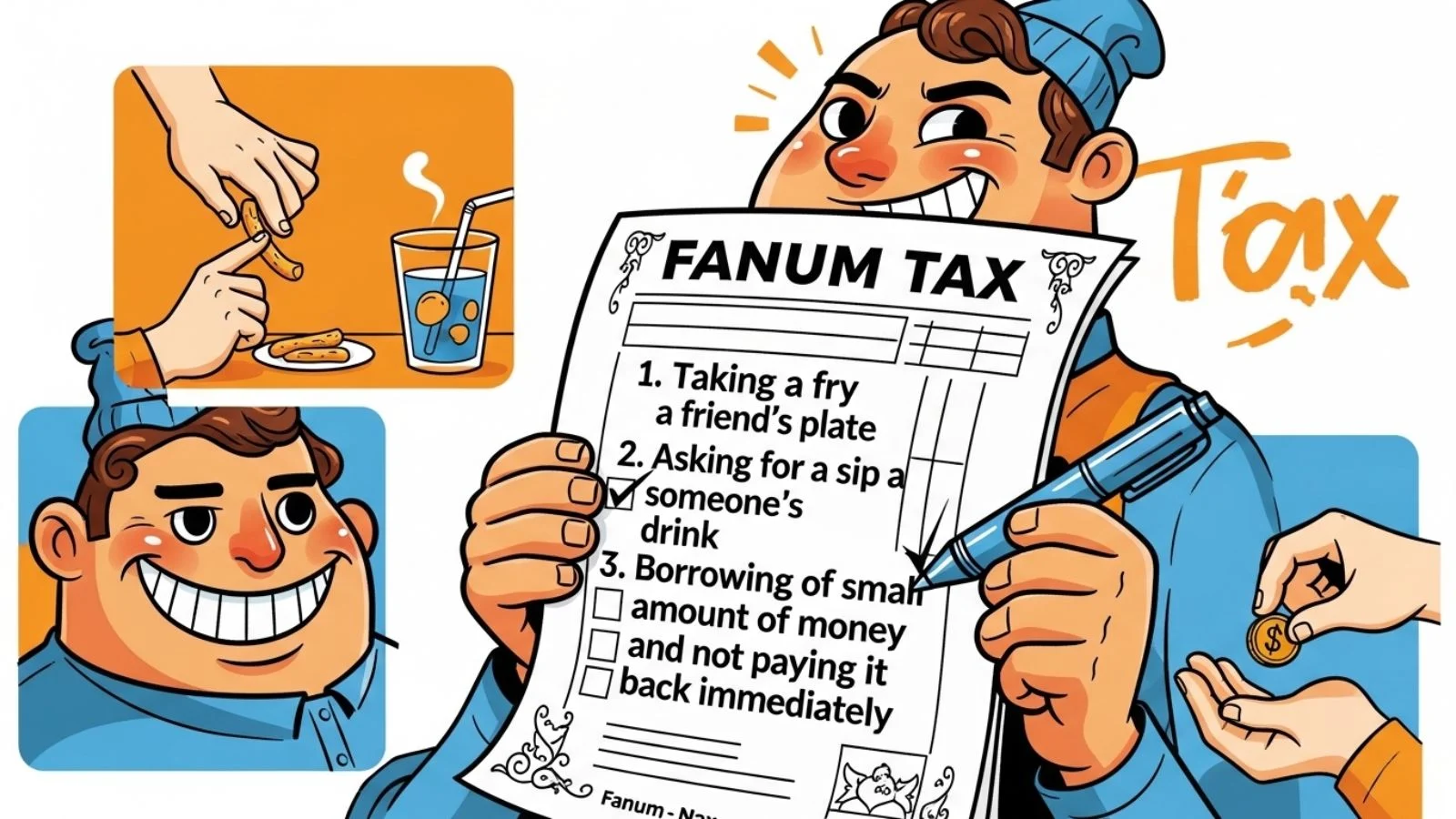
Understanding internet slang can feel like learning a new language. One term that’s been popping up more and more—especially in social feeds, private chats, and meme conversations—is fanum tax. If you’ve seen it online and wondered what it means, why people use it, or when it’s appropriate, you’re in the right place.
In this article, we’ll break down fanum tax meaning in a way that feels human, clear, and grounded in real-life usage. You’ll walk away not only knowing the definition, but also how to recognize it, use it, and even respond to it in everyday conversation.
Introduction
“Fanum tax” is one of those phrases that circulates in digital communities with little explanation—so people often search for it to make sense of it. Some assume it’s a financial term, others think it’s slang, and a few even treat it like a meme or inside joke.
The confusion is real. People encounter it everywhere: on TikTok comment threads, Instagram captions, YouTube discussions, and group chats. Without context, it can feel completely foreign.
This article pulls back the curtain. We’ll look at what fanum tax means, where it came from, how people use it in real conversations, and what it reveals about modern online culture.
Fanum Tax – Quick Meaning
At its core, fanum tax refers to a playful or tongue-in-cheek expectation that someone owes something—usually attention, appreciation, or acknowledgment—because of their fan status, reputation, or influence.
Put simply:
Fanum tax (noun)
A humorous or informal notion that someone must give something extra because of who they are or the audience they’ve built.
Quick Definition
- A mock obligation tied to popularity or influence
- Usually involves expectations of content, attention, or acknowledgment
- Often used jokingly among friends and followers
Quoted Examples
- “Bro hit 1 million followers, time for the fanum tax.”
- “You’re always giving free advice—that’s your fanum tax.”
- “She dropped a teaser clip already? Fanum tax delivered.”
Origin & Background
Language evolves fast online. Terms and phrases often start in niche communities, then spread through social platforms. The phrase fanum tax is rooted in internet subculture, and while its exact origin isn’t pinned to one creator, its shape comes from two distinct ideas:
- “Fan” culture
- People who build communities around content creators, entertainers, or influencers.
- “Tax” as a metaphor
- In everyday language, calling something a “tax” usually implies an expectation or cost that must be paid.
When you put those together, fanum tax becomes a playful way of saying: because you have fans, you owe something back.
This usage grew organically on platforms like TikTok, Reddit, and Discord—places where followers celebrate creators and sometimes joke about what those creators owe their audience.
In many ways, it sits alongside slang like “clout,” “receipt,” and “tea”—words that reflect social currency and expectations.
Real-Life Conversations
To truly understand how people use fanum tax, seeing it in context helps.
WhatsApp Chat
Person A: Did you see Jenna posted that behind-the-scenes clip?
Person B: Yeah, that’s her fanum tax right there. She knows we live for that content.
Person A: I hit 500 followers on my art page.
Person B: Congrats. Now you owe us a time-lapse video. Fanum tax.
Instagram DMs
Person A: Your feed is fire lately.
Person B: Thank you! Trying to pay my fanum tax.
Person A: If you ever post a vlog, I will die.
Person B: That’s on my fanum tax list.
TikTok Comments
Commenter 1: Fanum tax delivered with that new trailer drop!
Commenter 2: Bro owes us more meme reactions now.
These conversations show how fanum tax travels across platforms, always tied to expectations that followers have of someone they enjoy or support.
Emotional & Psychological Meaning
Why does this phrase resonate?
It Signals Reciprocity
Many people today believe that influence comes with responsibility. If you build a following, your audience feels entitled to certain behaviors—be it content, interaction, or engagement.
Calling this expectation a “tax” reflects several psychological and social behaviors:
- Perceived obligation: Followers feel creators owe them attention or content.
- Social currency: Being a fan or influencer carries value, and the “tax” is a playful way of acknowledging that.
- Belonging: Using shared slang like this reinforces group identity.
In other words, fanum tax represents how modern culture blends social roles with playful expectations.
Usage in Different Contexts
Although slang often feels confined to social media, fanum tax appears in a range of situations.
Social Media
Creators use the term to tease followers:
- “Dropping bonus content today—fanum tax paid!”
- Fans jokingly remind creators: “Don’t forget your fanum tax!”
Friends & Relationships
Among friends, it’s often used humorously:
- After a friend throws a party: “That was amazing—fanum tax was paid in full.”
- When someone shares exclusive news: “Fanum tax satisfied.”
Work or Professional Settings
In workplace conversations, it can pop up informally:
- “You’re the team lead now, meeting agendas are your fanum tax.”
- “With those results, you’ve paid your fanum tax to the execs.”
Casual vs Serious Tone
Casual: Lighthearted, playful exchanges
Serious: Acknowledging effort or contribution (less common, but it happens)
People rarely use fanum tax in formal writing or business documents, but it can color internal chats or creative teams.
Common Misunderstandings
Like any slang, fanum tax can be misunderstood.
People Often Think It’s Literal
Some assume it refers to actual tax—like money owed. It doesn’t.
Not Always About Fame
Despite the word “fan,” it doesn’t require celebrity status. It can apply to anyone with influence within a small group—like a gamer, blogger, or team leader.
Not Always Serious
Others try to use it in formal contexts, where it falls flat. For example:
- Incorrect: “Our quarterly fanum tax must be submitted by Friday.”
That sounds strange in business reports.
When Not to Use It
- Legal or financial contexts
- Conversations with people unfamiliar with internet slang
- Formal documents or professional emails
Comparison Table
| Term | Meaning | Tone | Context |
|---|---|---|---|
| Fanum Tax | Expectation of giving something due to influence | Playful | Social media, chats |
| Clout | Social influence or status | Neutral/positive | Internet culture |
| Tea | Gossip or news | Informal | Chats and comments |
| Receipt | Proof or evidence | Neutral | Argument or defense |
| Favor | Someone does something for you | Genuine | Real-world requests |
Key Insight
While all these terms reflect social behavior and interaction, fanum tax uniquely blends expectation and influence in a playful exchange between followers and creators.
Variations / Types of Fanum Tax (8 Common Uses)
Here are different ways people use fanum tax conceptually:
- Content Drop Tax
Short bonus content creators share unexpectedly. - Engagement Tax
Responses or shout-outs to loyal followers. - Exclusive Reveal Tax
Teasers or behind-the-scenes posts. - Appreciation Tax
Messages thanking followers directly. - Award Tax
Celebratory content after milestones. - Challenge Tax
Creators respond to trends because fans expect it. - Reaction Tax
Quick, unfiltered reactions to follower suggestions. - Support Tax
Creators acknowledge fan art or fan pages.
Each reflects a playful recognition that audiences enjoy reciprocation.
How to Respond When Someone Uses It
When someone drops “fanum tax” in a chat, here’s how you can respond based on tone:
Casual Replies
- “All paid up!”
- “Tax delivered.”
- “You owe us more.”
Funny Replies
- “That tax was overdue.”
- “Need a receipt for that tax?”
- “Can I pay in memes?”
Mature/Confident Replies
- “Thanks for the acknowledgment.”
- “I’m glad my work resonates.”
- “I appreciate the support.”
Private or Respectful Replies
- “Thank you for the kind words.”
- “It means a lot that you said that.”
- “I’m grateful for the encouragement.”
Understanding the tone helps keep conversations smooth and friendly.
Regional & Cultural Usage
Slang can shift meaning depending on culture and context:
Western Culture
Mostly tied to online fame and influencer culture, especially in English-speaking countries.
Asian Culture
Used in digital spaces among fandoms and creator communities; sometimes localized or mixed with other slang.
Middle Eastern Culture
Primarily in English-speaking chats and international social media; can blend with regional slang.
Global Internet Usage
Because English is global online, many cultures adopt fanum tax in digital conversations, regardless of native language.
Across regions, the meaning stays largely playful and tied to social expectations.
Frequently Asked Questions
What does fanum tax mean?
A playful expectation that someone with influence owes something—usually content, engagement, or acknowledgment.
Who uses the term fanum tax?
Creators, influencers, and followers in online communities and social media chats.
Is fanum tax serious?
No, it’s mostly humorous and informal.
Can fanum tax apply in real life?
Yes, in casual conversation or metaphorically, but it’s primarily online slang.
Is fanum tax positive or negative?
Positive and lighthearted; it reflects familiarity and community expectation.
Can anyone be subject to fanum tax?
Yes—anyone with an audience or influence within a group.
Is fanum tax common?
It’s growing in digital communities, especially among younger internet users.
Conclusion
Understanding fanum tax meaning gives you insight into how modern online communities think about influence, engagement, and social expectation. It’s a phrase that captures more than a simple definition—it reflects a culture where creators and fans interact playfully, where giving back to your community is part of being part of that circle.
Next time you hear “fanum tax,” you’ll know it’s all about mutual appreciation, shared jokes, and the light-hearted social contract between people who follow, support, and enjoy each other’s presence online.
This term might feel new today, but it’s grounded in everyday conversations that reflect real human interaction—both online and off.
Discover More Post
Semicolon Tattoo Meaning: What It Really Represents in Life and Culture